
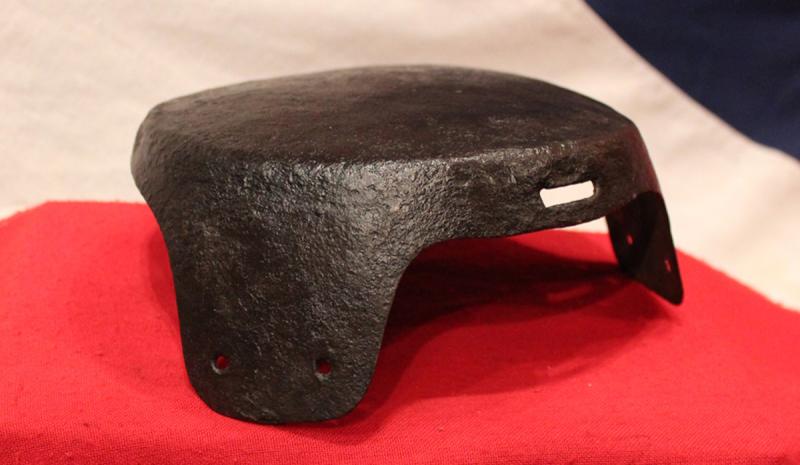
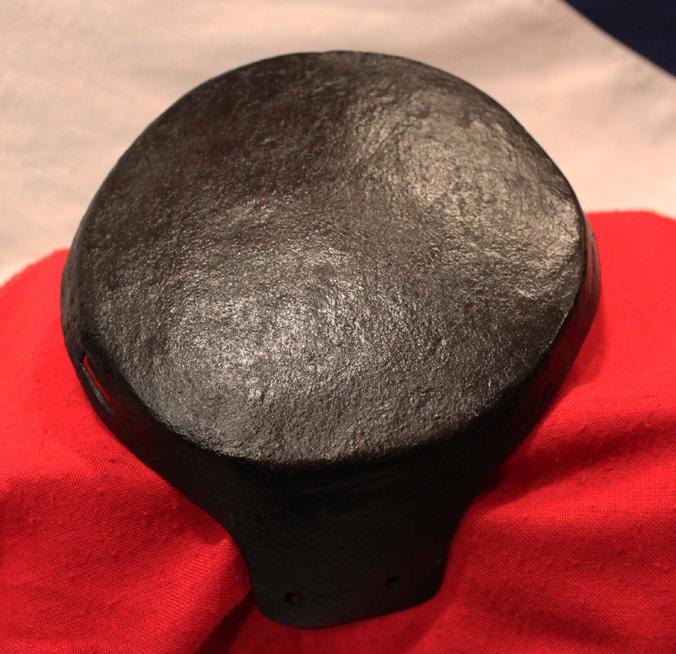
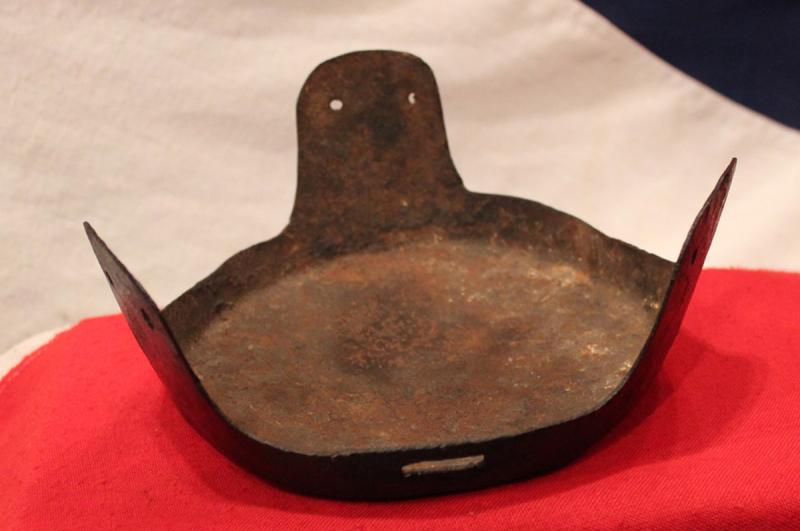
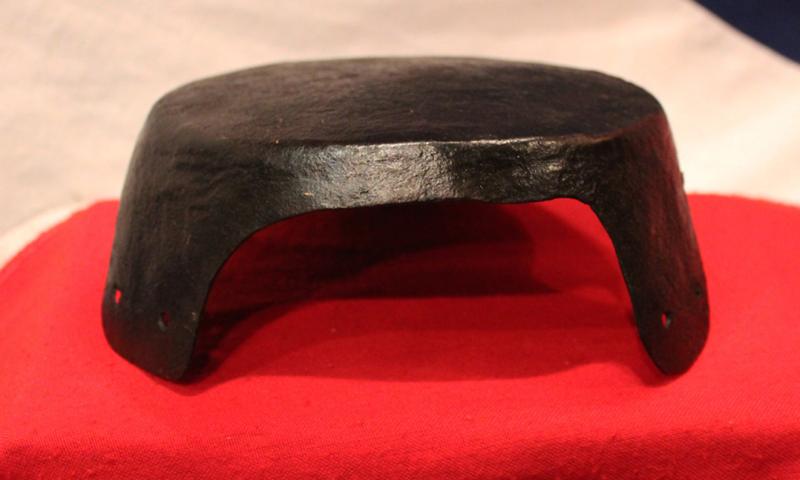
A Most Rare Survivor of the English Civil War. A 'Secrete' Armour Helmet, Worn Inside The Cavalier Hat, or, The Parliamentarian Puritan's Capotain Hat. To Create The Ultimate in Concealed Head Armour
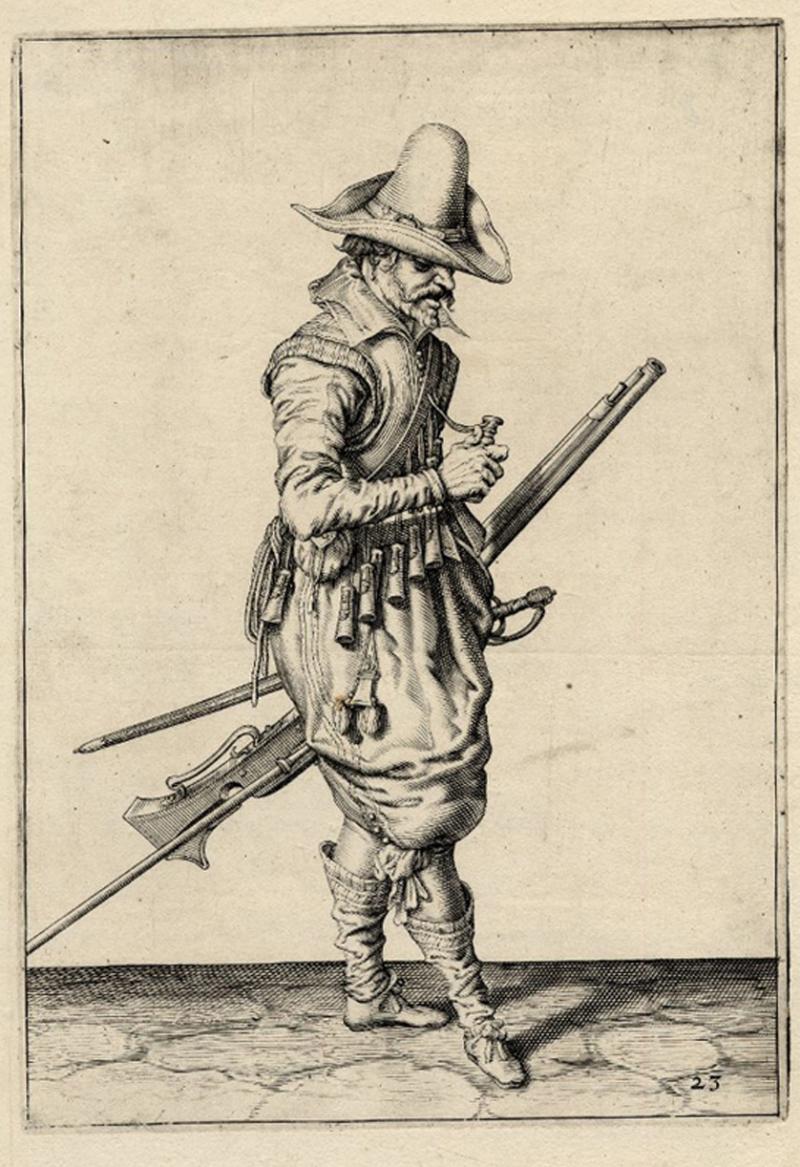
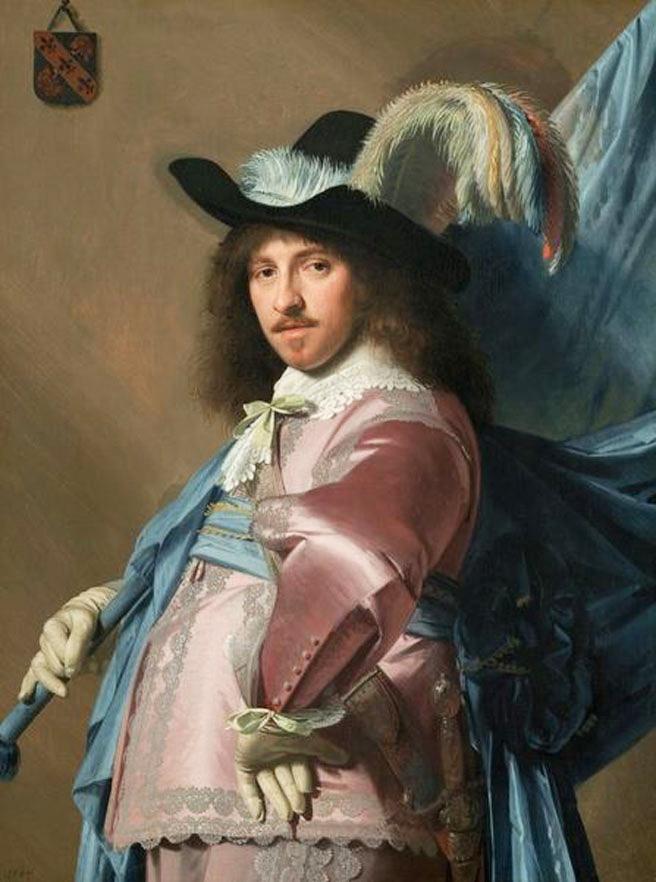
Iron armour concealed helmet, made circa 1640. In superb condition with stitching holes to affix within a Civil War Cavalier hat. In the 17th century, cavalrymen, especially fashion-conscious members of the gentry or aristocracy, who wished to wear fashionable broad-brimmed felt hats, but also retain some level of protection for the head, would employ a hidden helmet called a secrete.
This type of helmet could also be worn by civilians, including some of the judges at Charles I's trial, who believed that their safety was threatened.
The existence of a number of secrete helmets of a very similar type all stored together in the Tower of London suggests that they were occasionally issued to troops as a uniform piece of military equipment during the 1640's
The secrete is a small skull-cap of iron or steel pierced around its rim. The piercing allowed it to be sewn into the inside of a hat. The secrete was then undetectable to any observer, but offered considerably more protection from edged weapons than could a felt hat alone.
Many different designs of secrete were used, some had solid domes, others were ring-shaped with a scalloped lower edge, presumably to save weight. A few exceptional examples had a folding cage of bars, which could be drawn down to afford protection to the face when in action. A further type of head protection which could be considered to fall under the same category, as it was intended to deceive the observer and mimic civilian headgear, was an entire broad-brimmed hat made of iron or steel.
Such hat-helmets were either covered in cloth, or blackened and given a dulled finish so as to resemble felt. King Charles I of England is recorded as possessing such a helmet.
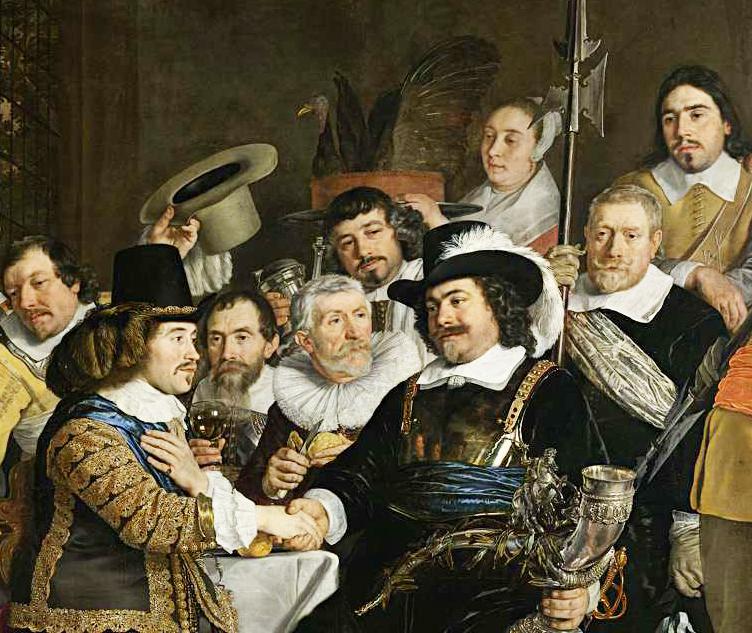
Of course the 1640's Parliamentarians and Puritans would also wear the armoured hat liner within their puritan capotain hat.
Puritans sought to "purify" the Church of England from remaining Catholic-like ceremonies, hierarchy, and ritual. They deeply opposed King Charles I and Archbishop William Laud's promotion of high-church "beauty of holiness", the Book of Sports permitting Sabbath recreations, and Charles's marriage to a Catholic princess.
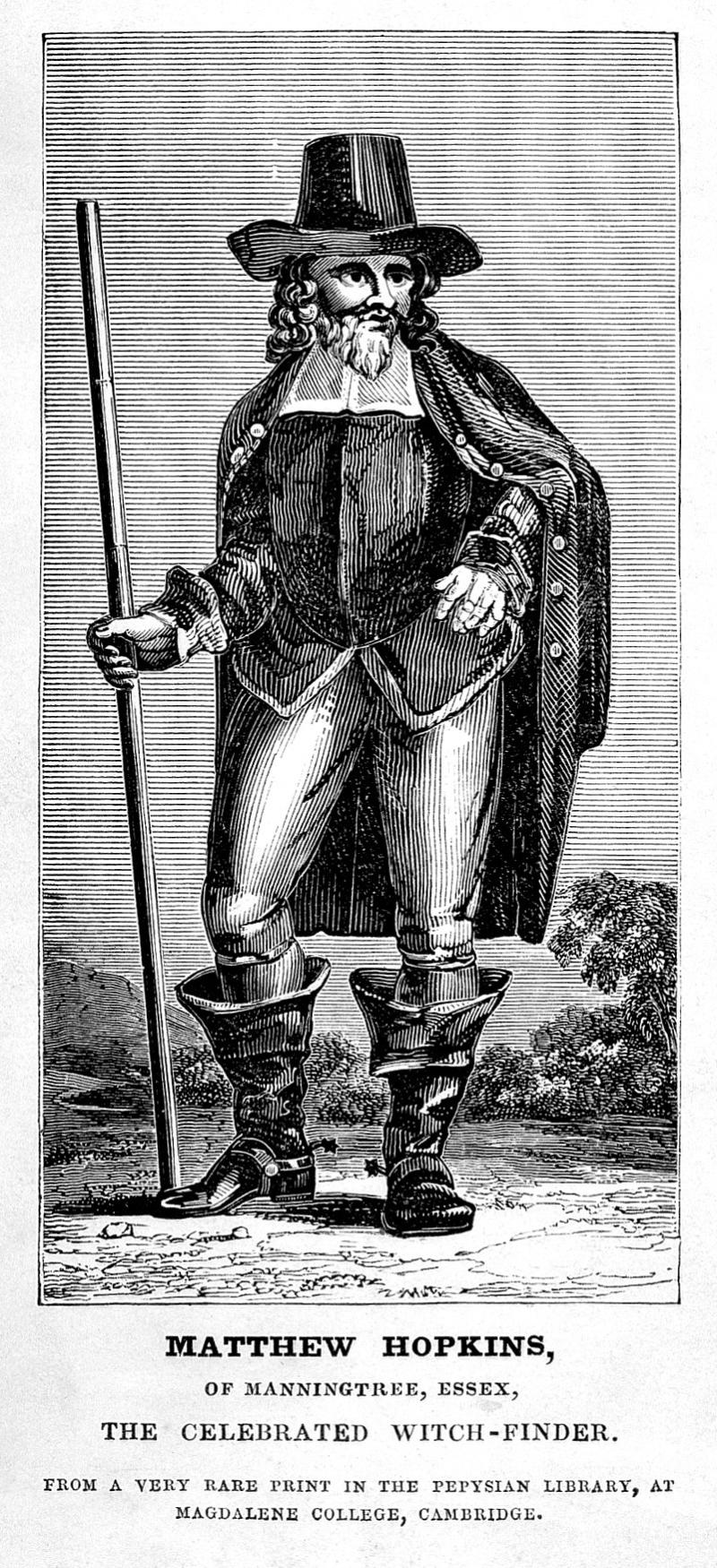
Even Matthew Hopkins, the arch puritan of the time, the Witchfinder General, also had an armoured capotain hat liner apparently.
Matthew Hopkins (c. 1620 – 12 August 1647) was an English witch-hunter whose career flourished during the English Civil War. He was mainly active in East Anglia and claimed to hold the office of Witchfinder General, although that title was never bestowed by Parliament.
The son of a Puritan minister, Hopkins began his career as a witch-finder in March 1644 and lasted until his retirement in 1647. Hopkins and his colleague John Stearne sent more accused people to be hanged for witchcraft than all the other witch-hunters in England of the previous 160 years, and were solely responsible for the increase in witch trials during those years.
His methods of investigating witchcraft drew heavy inspiration from the Daemonologie of King James I, which was directly cited in Hopkins's book The Discovery of Witches. Although torture was nominally unlawful in England, Hopkins often used techniques such as sleep deprivation to extract confessions from his victims.
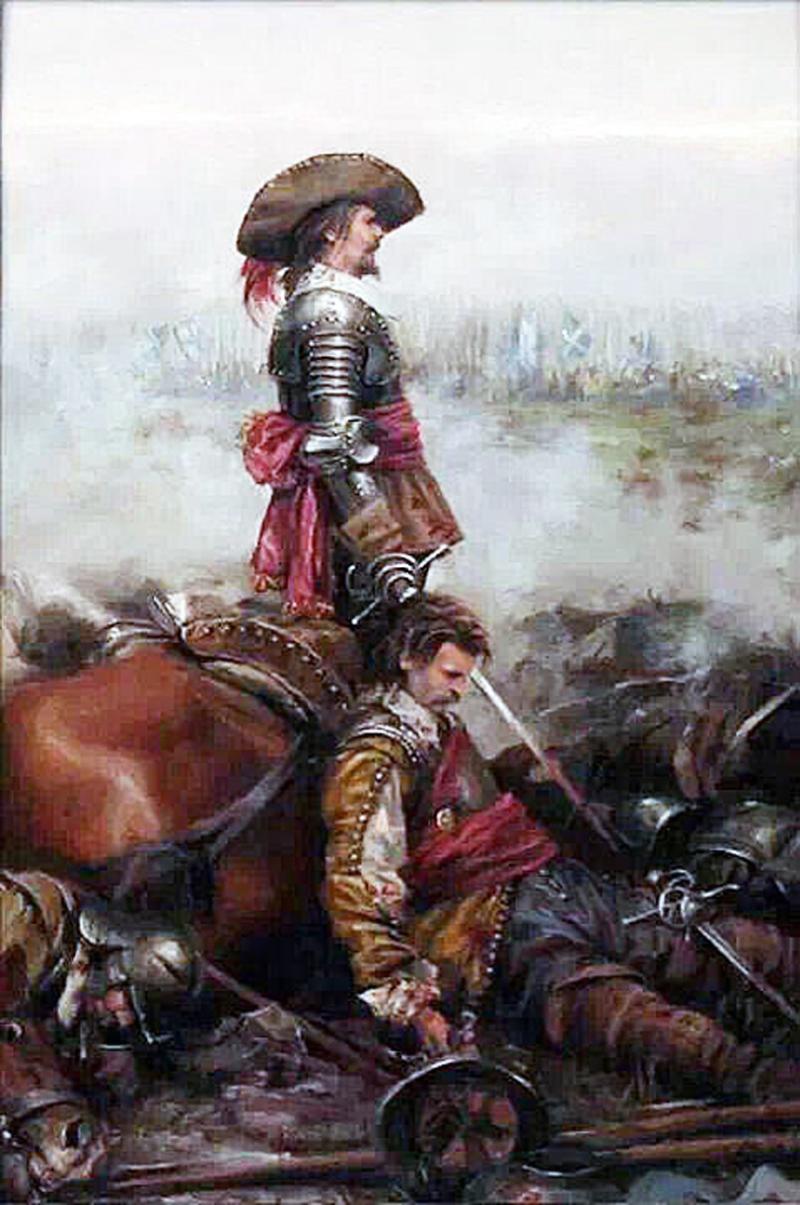
The Roundheads and the New Model Army. Puritans formed a major backbone of the Parliamentarian ("Roundhead") forces. Leaders like Oliver Cromwell built disciplined, ideologically-driven troops (such as the Ironsides) who believed they were doing God's work. After defeating the Royalists in the First and Second Civil Wars, radical Puritan factions in the army and Parliament orchestrated the trial and execution of Charles I in January 1649.
However, as is often the case, extreme religious fervour brought about the effective banishment of all joy, so with much discontent throughout the land it was not long before puritanism was expurgated from society, and the son of King Charles was keenly requested by the people to return from Europe, as a new king Charles IInd, and to bring a semblence of normailty, calm and happiness to Britain once more
Code: 26438
1725.00 GBP