
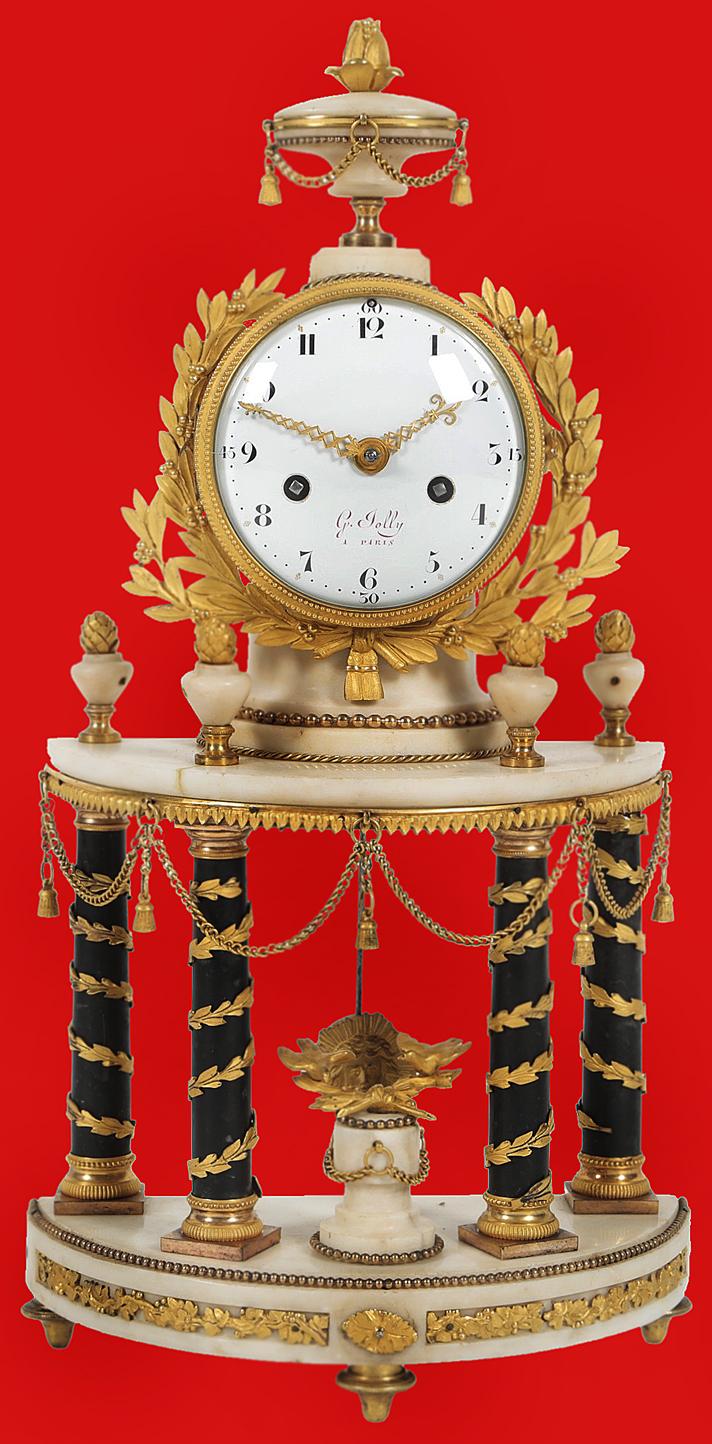
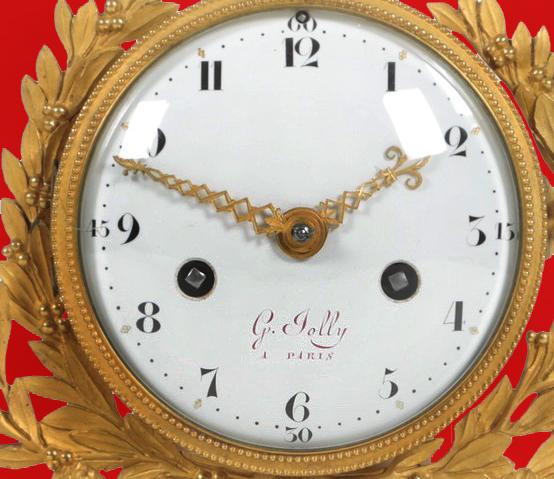
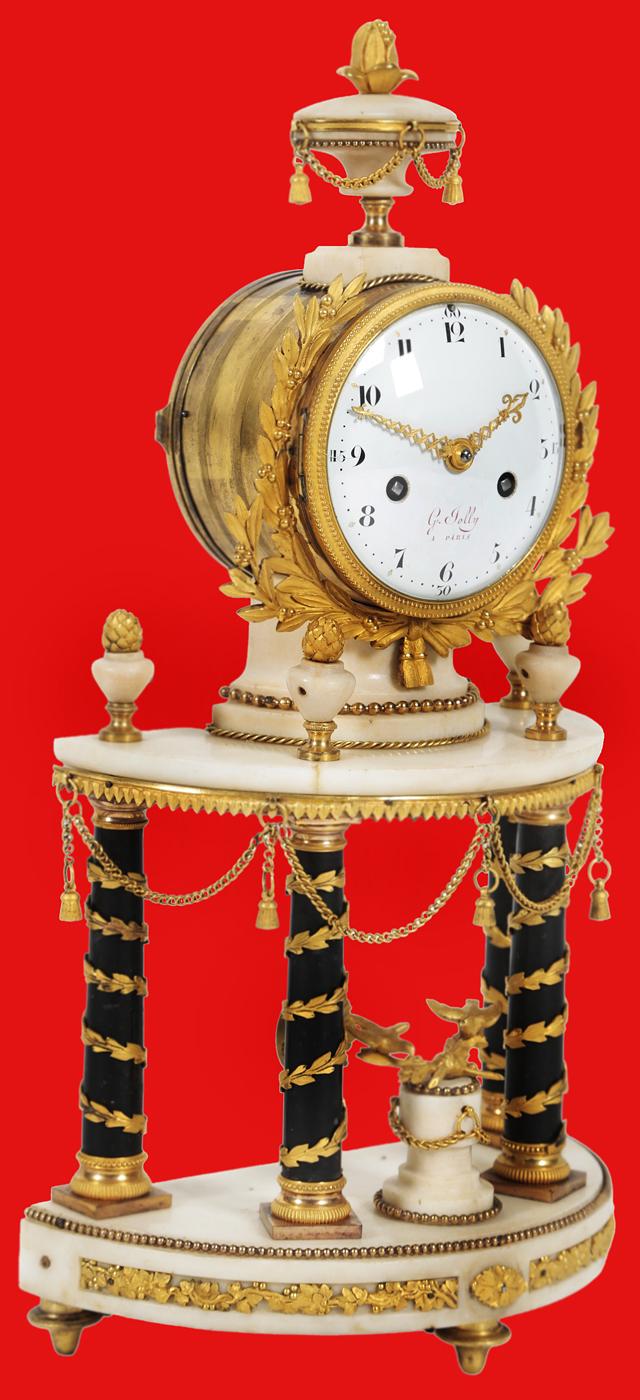

Louis XVI Portico Clock Signed François-Pierre Jolly Known as Gaston-Jolly in White and Black Marble and Gilt Bronze Ornamentation, Enamel Dial Surrounded by a Large Laurel Wreath Sumounted by Four Columns. Napoleonic Directoire Period
Each of the four columns are encircled with gilt bronze foliage, rich decoration of urns, flowers, acorns and chains, radiating mask pendulum, small toupie feet, from the late 18th century to early 19th century Napoleonic era.
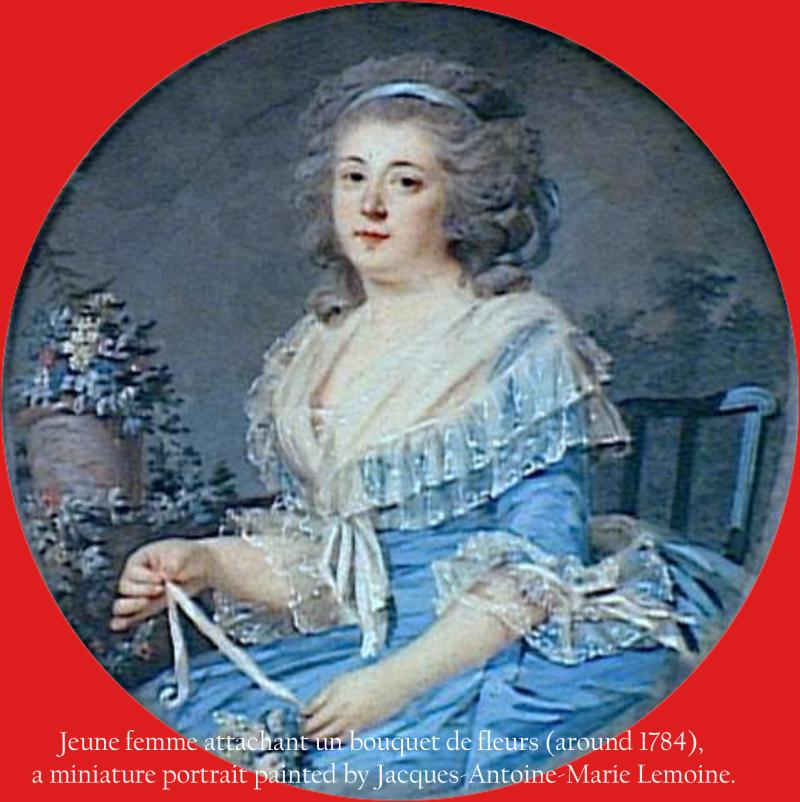
François-Pierre Jolly, known as Gaston-Jolly, is one of the most important Parisian horologists of the late 18th century and the early 19th century. After he became a master, on May 6, 1784, he established his workshop in the rue de Arcis and quickly earned a reputation among Parisian horological connoisseurs. During the Directoire and the Empire, he created several clocks, which were sought-after due to the quality of their movements and their original compositions. He is recorded first in the rue Pavée Saint-Sauveur from 1810 to 1820, then in the boulevard Poissonnière in 1820. Certain of his creations were recorded during the Empire as belonging to important collectors of the day, such as the wife of Charles-Philibert-Marie-Gaston de Lévis, comte de Mirepoix, la comtesse Alexandrine-Marie-Julie-Félicité de Montboissier-Beaufort-Canillac. See picture five in the gallery of her portrait in the Louvre. She is widely believed to be the subject of Jeune femme attachant un bouquet de fleurs (around 1784), a miniature portrait painted by Jacques-Antoine-Marie Lemoine. The piece is housed in the Department of Prints and Drawings at the Louvre Museum. Her father, Philippe-Claude de Montboissier-Beaufort-Canillac, marquis de Montboissier was executed by guillotine in 1794, during the French Revolution.
Another famous collector of Jolly's clocks was Bernard-Charles-Louis-Victor, Marquis de Lostanges, Napoleon’s Chamberlain. During the First Empire, Lostanges-Béduer was noted among Parisian connoisseurs and collectors of luxury decorative arts, notably acquiring fine horological works from renowned clockmakers such as François-Pierre Jolly. Lostanges-Béduer died in 1812, the same year as Napoleon's ill-fated Russian campaign, in which many officers of the Imperial Household participated.
Picture 5 in the gallery is a portrait of renown Gaston {François-Pierre} Jolly clock collector, now in the Louvre 'Jeune femme attachant un bouquet de fleurs (around 1784), a miniature portrait painted by Jacques-Antoine-Marie Lemoine.'
Code: 26430
Price
on
Request