
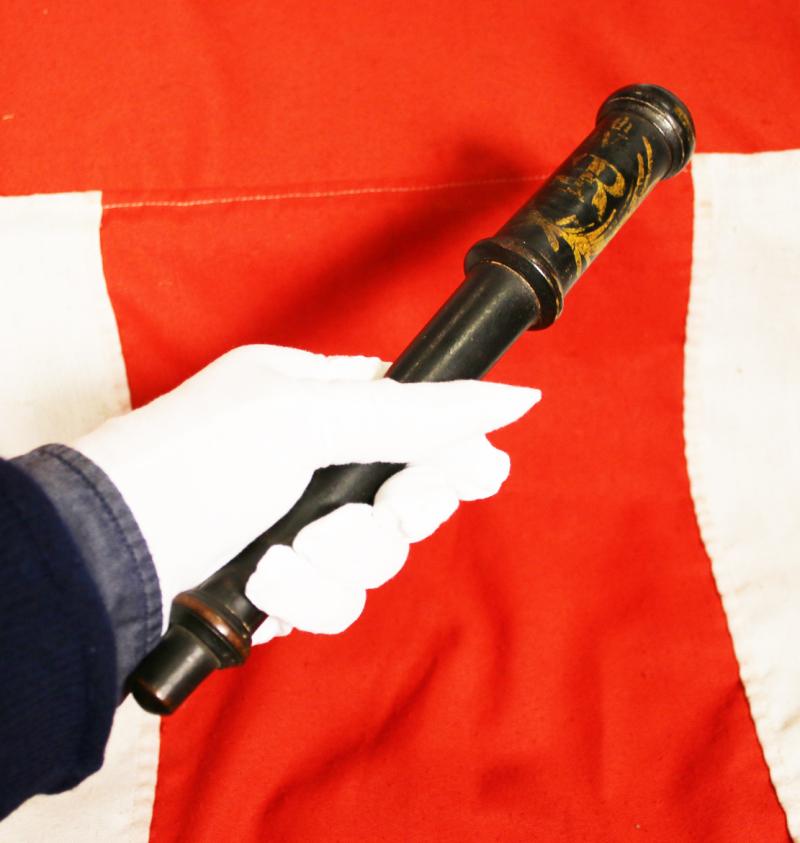
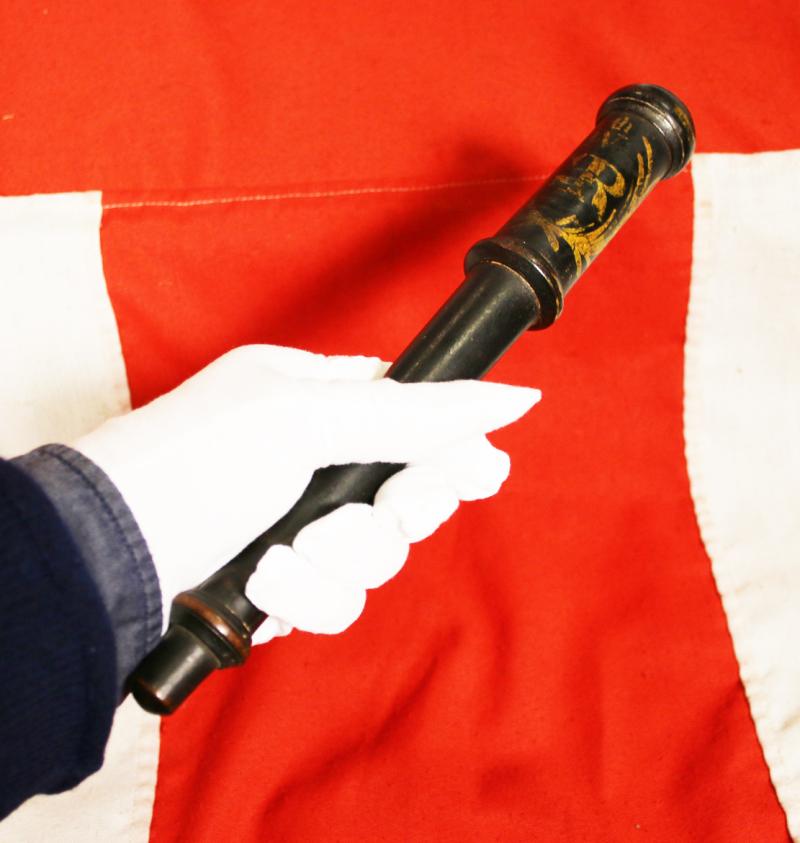
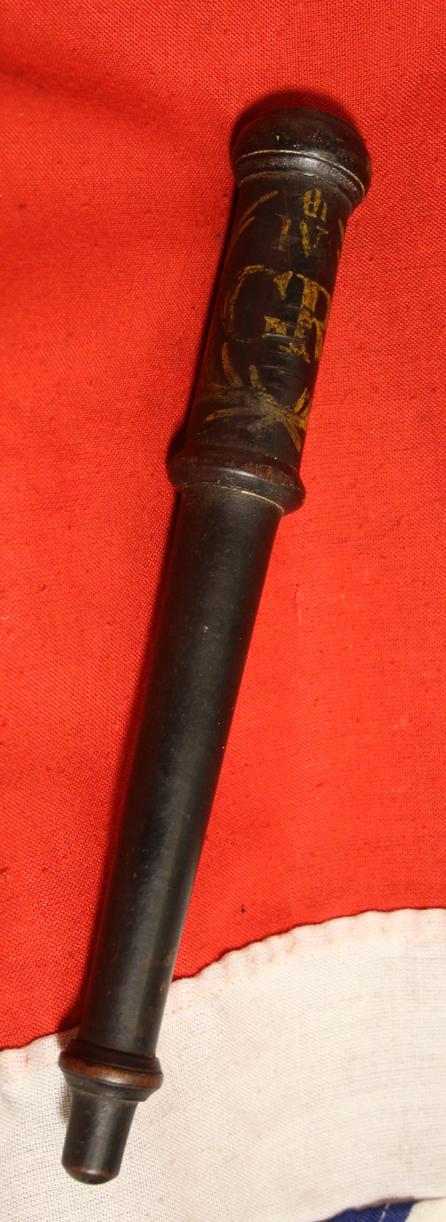
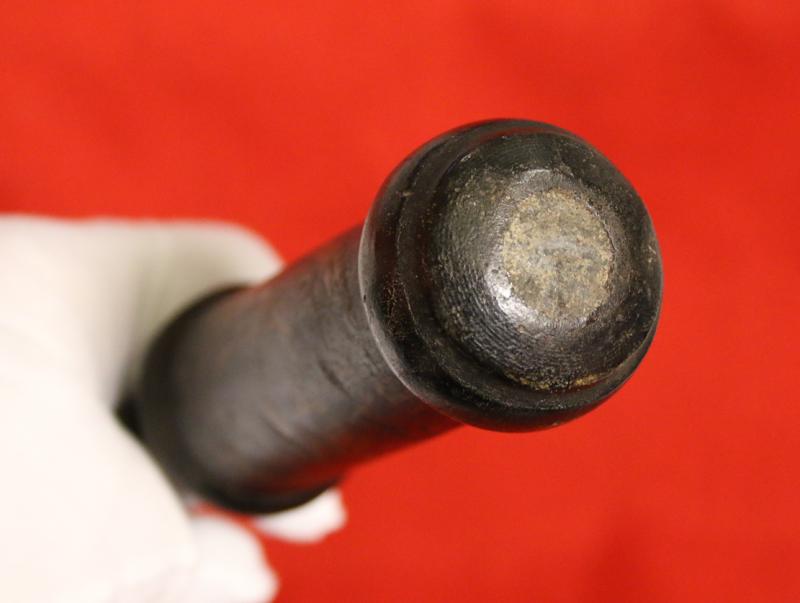
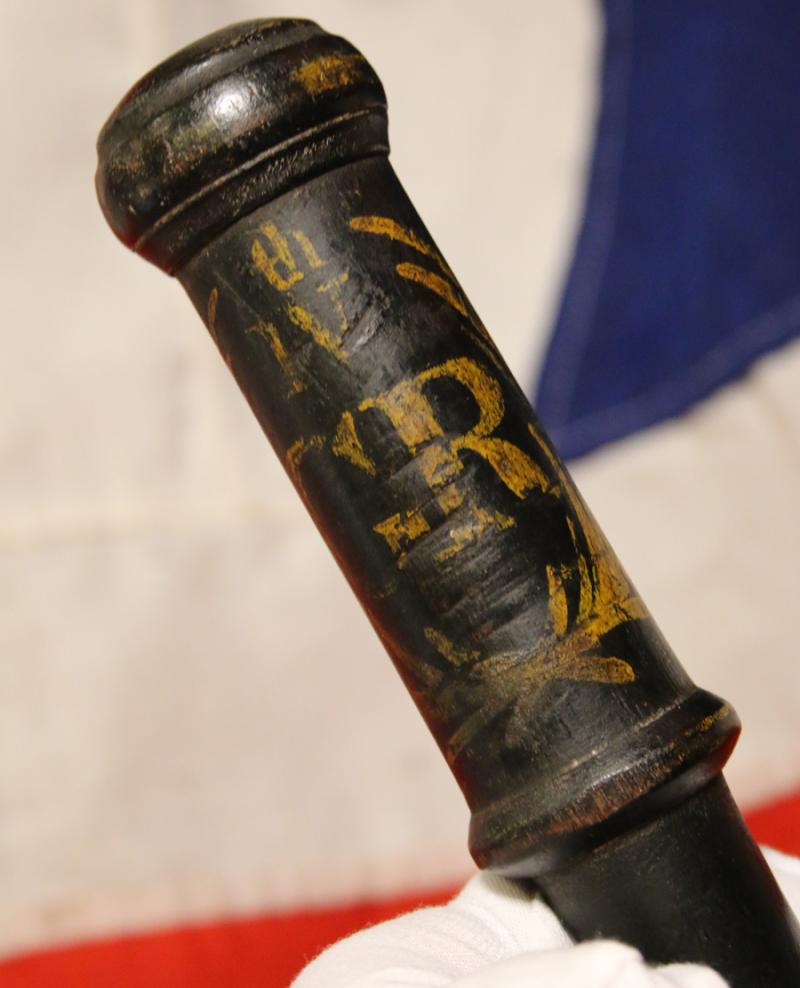
A Very Good King George IVth {The Former Prince Regent} Constable's and Bow Street Runner's 'Weighted' Tipstaff Bearing the King's Crest. With a Leaden End In-Fill.
The tipstaff was a short, ornate staff made of wood, brass, or silver, often topped with a crown and engraved with the royal crest.
Many tipstaves were hollow in the centre, allowing the Runners to roll up and store their official arrest warrants inside.
Because the Bow Street Runners did not wear a standardized police uniform, brandishing or showing the tipstaff—or tapping a suspect with it—served as immediate proof of their legal authority under Crown power
George IV was King of the United Kingdom of Great Britain and Ireland and King of Hanover. He was born on the 12th of August 1762, at St. James’ Palace, the eldest son of George III and Queen Charlotte.
He ruled as Prince Regent from 1811 when his father's illness was judged to be permanent and acceded to the throne in 1820. He ruled for ten years until his death on the 26th June 1830.
The Bow Street Runners were the law enforcement officers of the Bow Street Magistrates' Court in the City of Westminster. They have been called London's first professional police force. The force originally numbered six men and was founded in 1749 by magistrate Henry Fielding, who was also well known as an author.1 His assistant, brother, and successor as magistrate, John Fielding, moulded the constables into a professional and effective force. Bow Street Runners was the public's nickname for the officers although the officers did not use the term themselves and considered it derogatory.2 The group was disbanded in 1839 and its personnel merged with the Metropolitan Police, which had been formed ten years earlier but the London metropolitan detective bureau trace their origins back from there. The brothers set up horse patrols in 1753 which made their group much more advanced.
In the new century, crime rates diminished in the metropolis, therefore the contribution of the Runners to the policing of property offences decreased considerably; they continued to investigate offences in London, but not as actively as they had before. Their incomes from London crime diminished as the position that Bow Street had once held in the commitment of felons to trial continued to erode with the expansion of the patrol and the creation of new police offices from 1792. By the early 1820s, Bow Street was responsible for just over 10% of the accused felons being committed to trial at the Old Bailey.30 After 1815, the Runners' most regular employment was to respond to help requests from prosecutors outside London. These were likely cases in which their skill and experience was thought to be useful in investigating offences in the provinces.31
After the Metropolitan Police Act 1829, which established the Metropolitan Police, the policing responsibilities of the Bow Street magistrates were very considerably diminished. The Bow Street patrol was gradually absorbed into the new police force and Bow Street was left with only the Runners.32 Even then, the Home Office held much of the authority over the activity of the Runners and was mainly concerned to bring Bow Street's finances under control. The Bow Street magistrates' effective loss of authority over the activity of the Runners and the government's concern to control costs meant that the funds for the office were much diminished in the 1830s
Code: 26420
345.00 GBP