
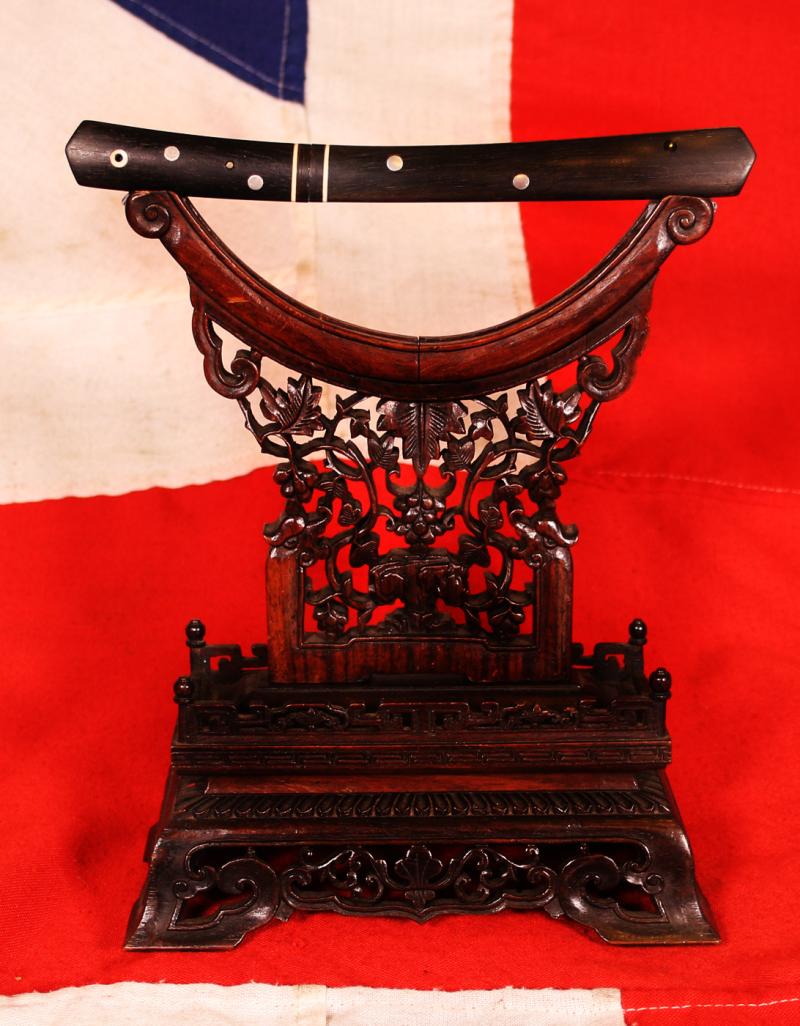
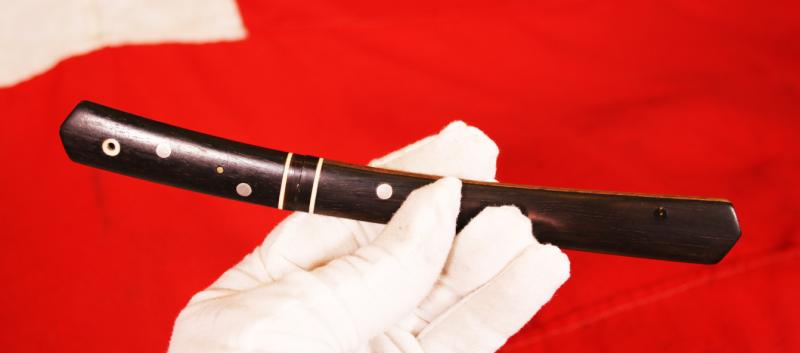
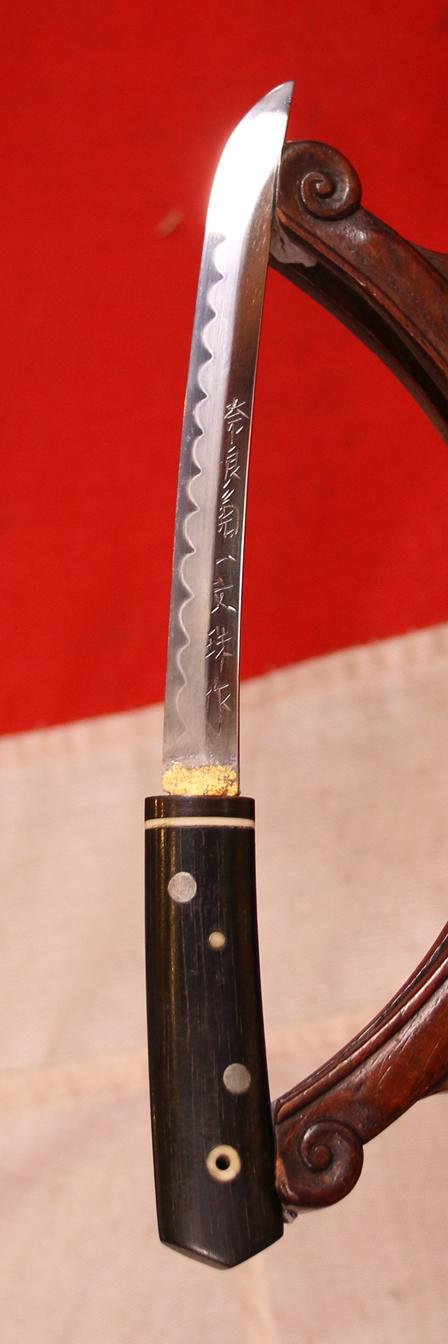
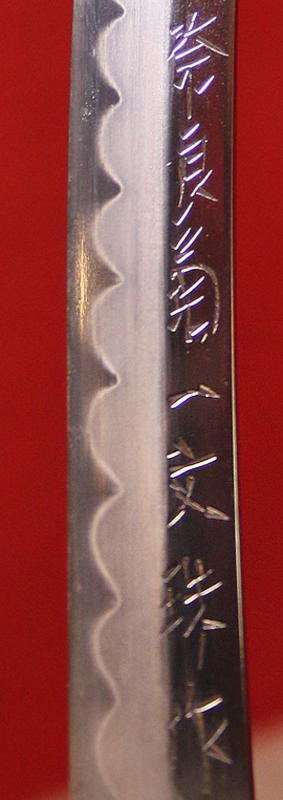
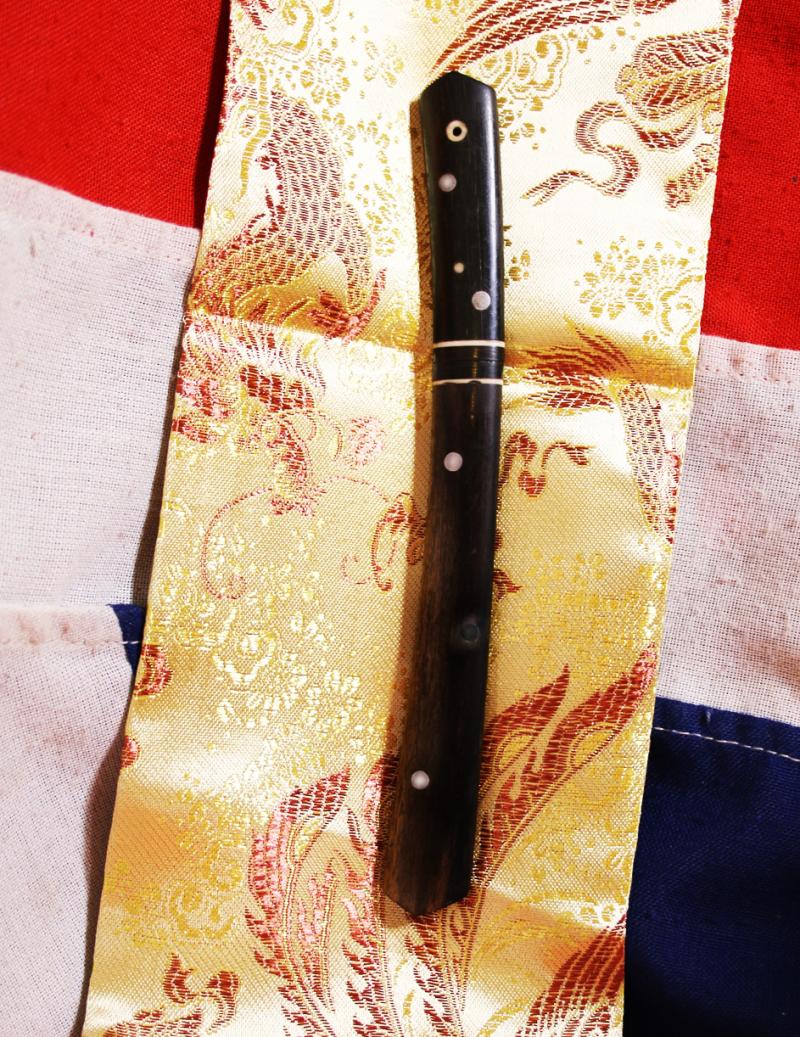
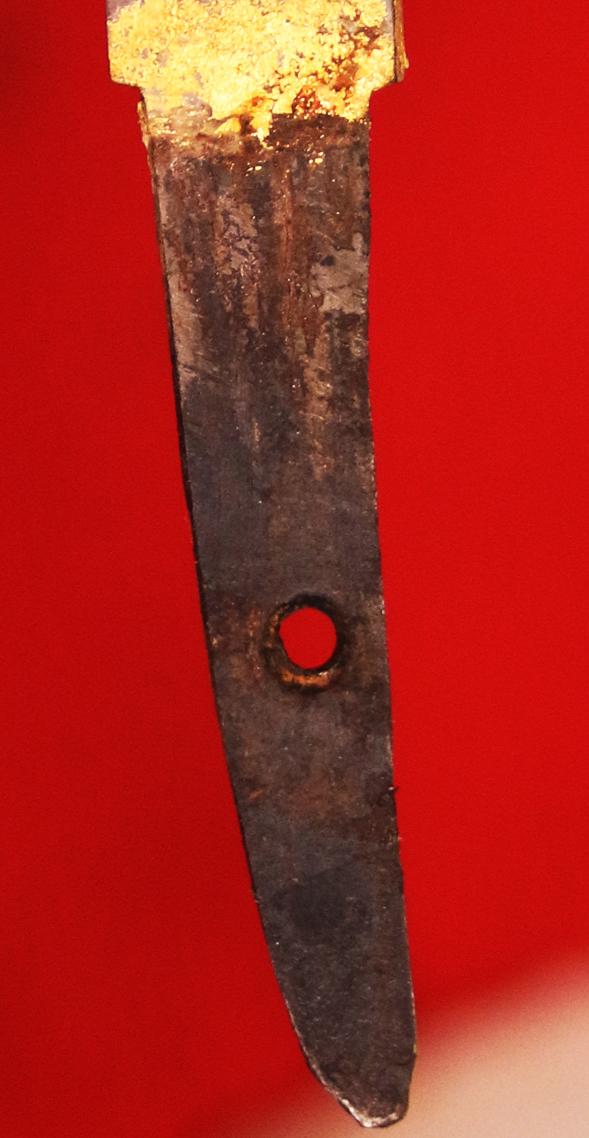

A Delightful & Most Beautiful Edo Period, Japanese Kaiken {Or Kwaiken} Tanto, with Beautifull Hamon Wonderful Polish and Horimono Mei Signature "Made by Tama of the Ichimonji School, Unrivaled Under Heaven."
天下無双一文字珠作
Tenka Musō, a famous Japanese idiom meaning "Peerless in the world" or "Unparalleled under heaven."
A kaiken is a small tanto carried by both samurai men and women for close-quarters or indoor self-defense where longer swords like the katana were impractical.
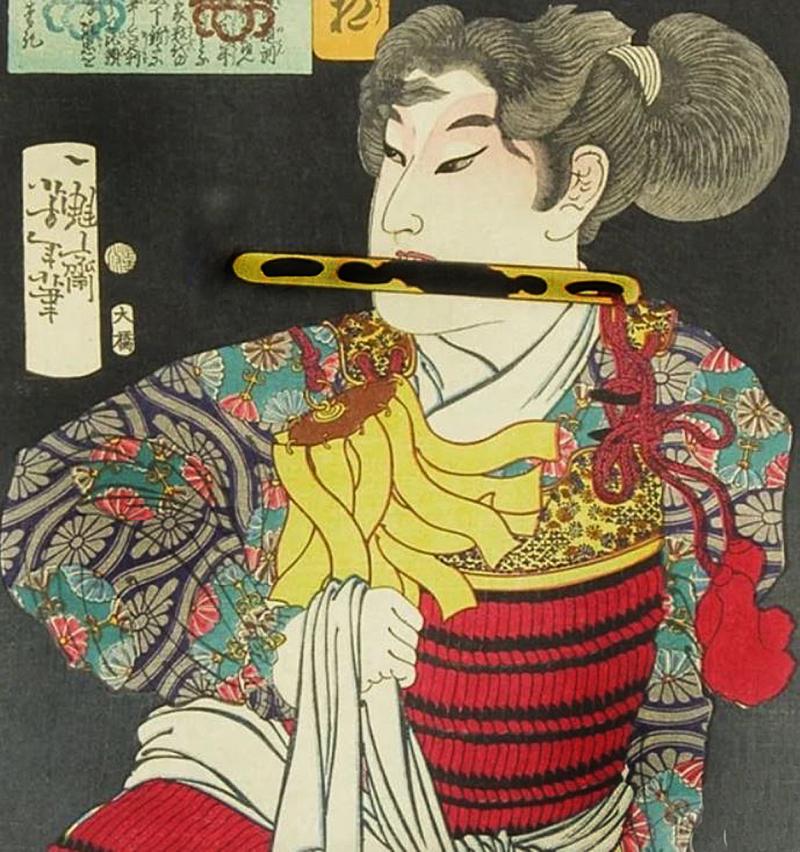
In the case of women's protection, for traditional samurai wives and daughters, they kept the taiken dagger tucked in their sash for personal safety or as a wedding gift symbolizing family honour
Potentially used historically to swiftly cut the carotid artery to preserve honour in moments of extreme crisis, as a form of ritual suicide (Jigai).
The traditionally made smith made blade is incredibly similar to the type of kaiken seppuku tanto that was presented to the Zero pilots, the 'kamikaze' in WW2, and worn around their neck.
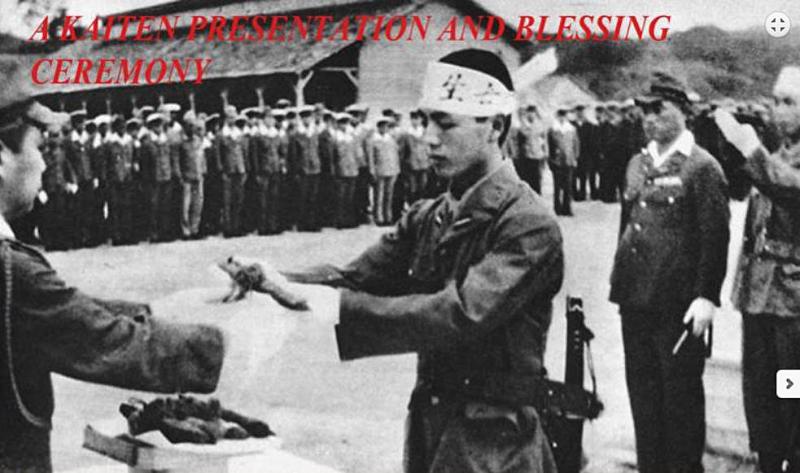
The type as were presented to the WW2 Zero pilots before their Kamikaze suicide missions and also given to or purchased by Kaiten pilots, the Japanese navy's one man human suicide torpedoes. Photo in the gallery shows a WW2 'Kamikaze' pilot being issued his suicide Seppuku tanto in the Kaiten ceremony. Originally they could have had an exterior brown leather cover and neck strap. The pilot had the choice whether to commit suicide, or not. It was not an order, nor directive and if the pilot missed the ship he had the option of killing himself to ask forgiveness of the honourable ancestors for his failure, as many of the planes had only enough fuel for a one way trip. Because the Zero pilot was belted into a very narrow seat and wearing many layers of his cold atmospheric pilot's flying suit with the addition of his life vest; it would be impossible for the aeronautical pilot to commit traditional ritual seppuku. It is said the procedure was to pull the knife out from it's neck sheath and thrust it straight into the throat much like the ladies form of seppuku.
In recognition of the unfavourable progress of the war, towards the end of 1943 the Japanese high command considered suggestions for various suicide craft. These suggestions were initially rejected, but later deemed necessary. Various suicide craft were developed in the Japanese Special Attack Units.
For the Navy, this meant Kamikaze planes, Ohka piloted bombs, Shinyo suicide boats, Kaiten submarines, and Fukuryu suicide divers or human mines. The Kamikazes were somewhat successful, and the second most successful were the Kaitens.
Research on the first Kaiten began in February 1944, followed on 25 July of the same year by the first prototype. By 1 August, an order for 100 units had been placed.
The island of Ōzushima, in the Inland Sea, was used as a training site. The island was equipped with cranes, torpedo testing pits, and launch ramps, and had a large shallow bay for test running and firing. The Kaiten Memorial Museum is now situated there.
Kaiten pilots were all men aged between 17 and 28. Initial training consisted of sailing fast surface boats by periscope and instrument readings alone. When a pilot had advanced past this basic training, he would begin training on Kaitens. Training craft were fitted with a dummy warhead that contained telemetry equipment and an emergency blowing tank that could return the craft to the surface should the trainee dive to a dangerous depth. Kaiten training started with basic circular runs to and from a fixed landmark at a reduced speed; the training advanced to faster and more hazardous runs around rocks and through channels in deeper waters. The more difficult runs required the pilot to surface and check the periscope repeatedly, and required conscientious adjusting of trim tank levels because of the reducing weight as oxygen was used up. When the instructors were confident about a pilot's abilities, they would advance the pilot to open water training against target ships. Training at this level was often done at full attack speed, and either at night or in twilight. The final phase of training would be a submarine launch and more open water attack runs on target ships.
Training was dangerous, and 15 men died in accidents, most commonly collisions with the target vessels. Although the warheads were only dummies, the impact at ramming speed was enough to both cripple the Kaiten and severely injure the pilot.
In action, the Kaiten was always operated by one man, but the larger training models (Types 2, 4, and 5) could carry two or even four.
Kaiten pilots who were leaving for their final missions would leave testaments and messages behind for their loved ones
blade length approx 5 inches long, overall in saya 8.25 inches long
Code: 26379
875.00 GBP