

A Very Fine Koto Samurai 500 Year Old Sword With Rare 'Rabbit Ears' Choji Hamon and Sukashi Tsuba Designed for The 月の兎, Tsuki no Usagi, The Japanese Moon Rabbit, Written in the Konjaku Monogatarishū, 1000 Poems Written in the Heian Period, 794-1185
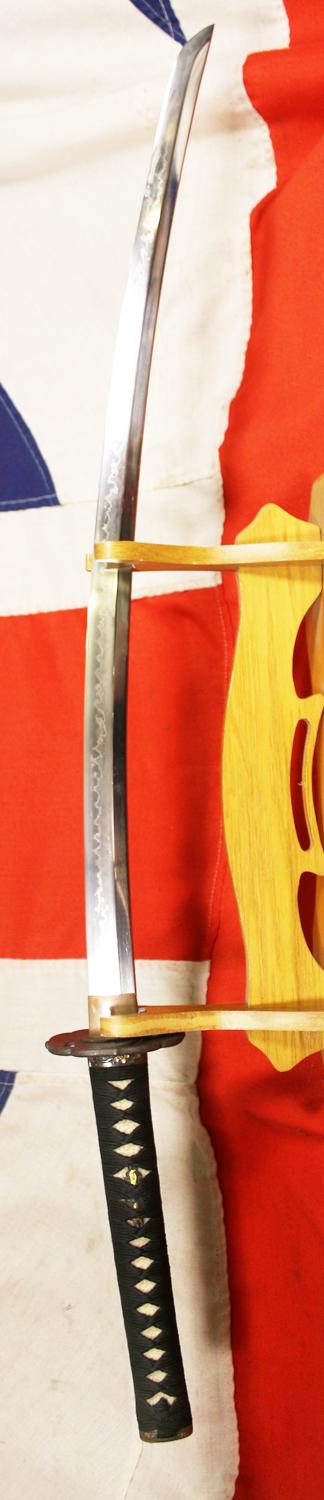
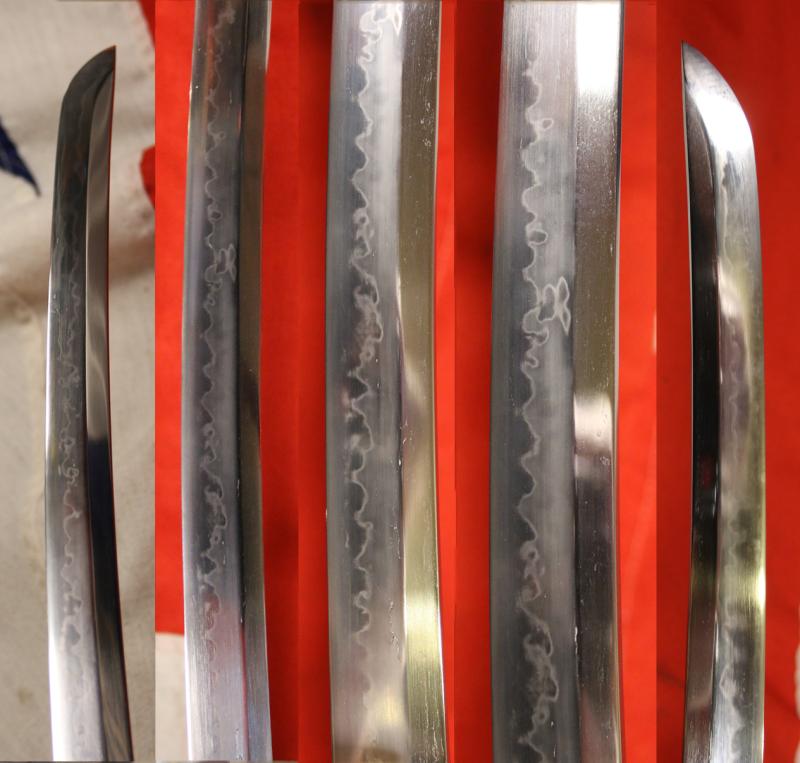
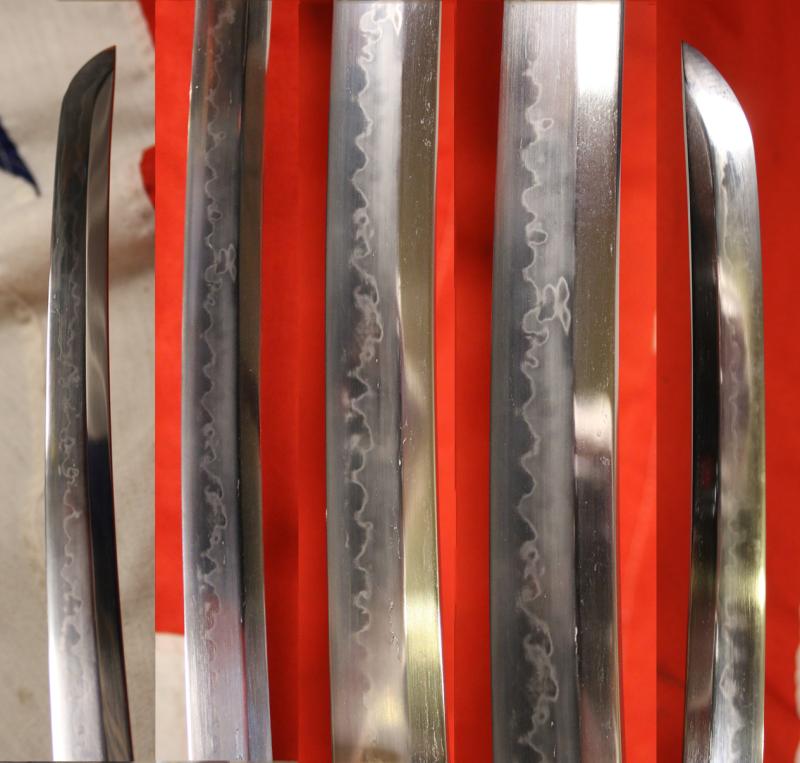
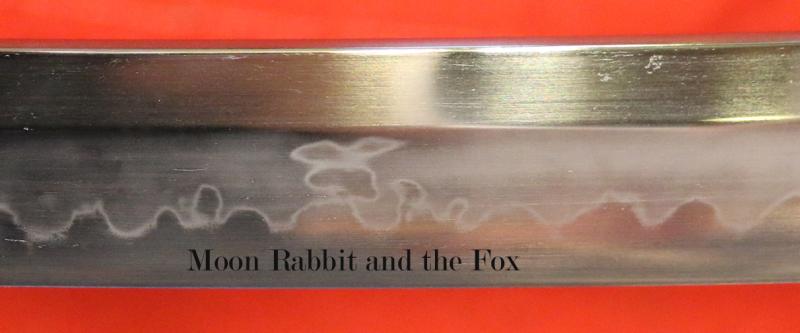
A stunning Koto period sword, of museum quality created around 1550 around 500 years ago, with all its original Edo period koshirae. The blade has an intense and dramatic deep choji hamon that occupies over one third of the blade, and half way down the blade from the kissaki, emerging from the amazing and remarkable deep choji design, is the Moon Rabbit, with its long and pronounced ears, conversing with its companion, the fox, with its bushy tail. Within the incredibly vibrant and complex hamon, it is possible, is concealed their other companion, the monkey.
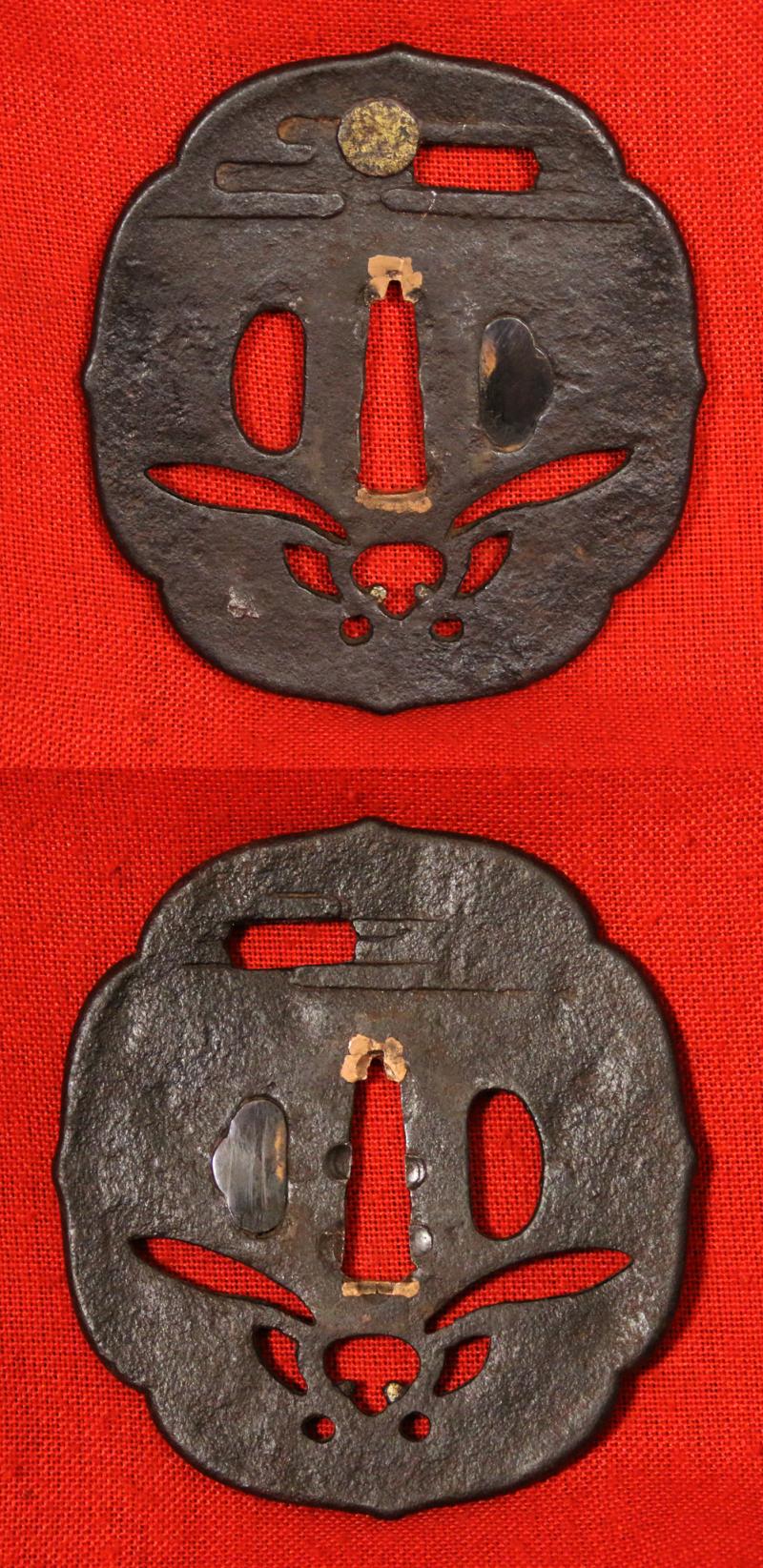
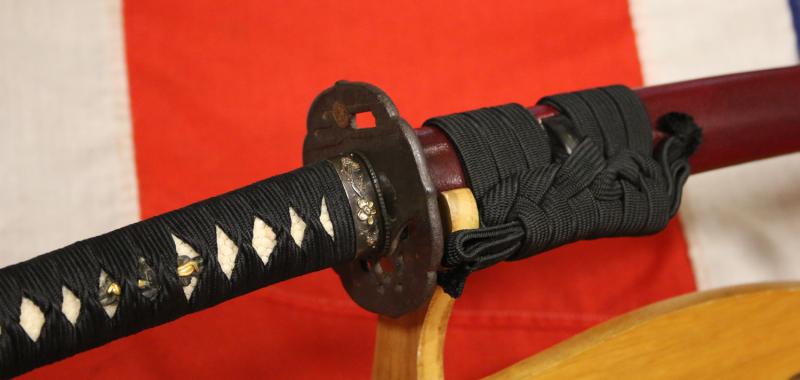
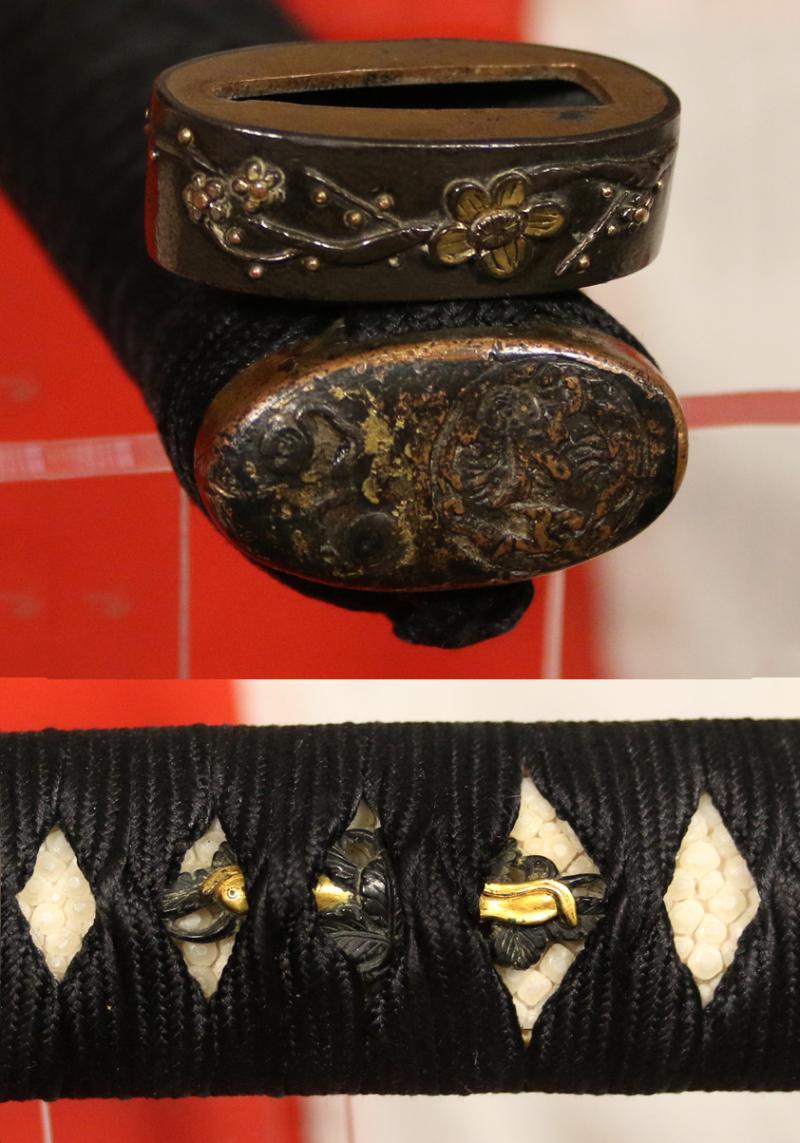
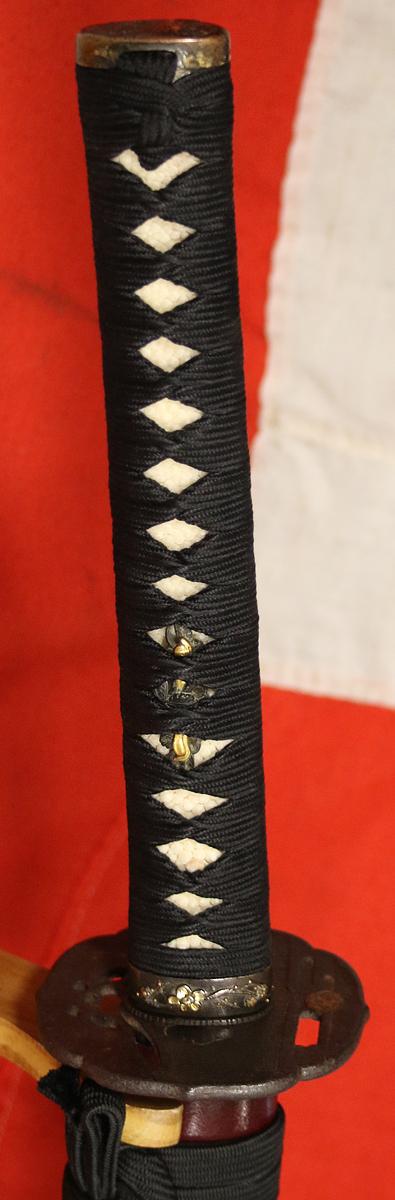
Red and black speckled urushi lacquer saya, black silk tsukaito wrap over gilt and bronze Samurai menuki, and a wondrous early Edo iron mokko sukashi tsuba depicting the Moon Rabbit gold shakudo koshirae with relief flowers.
Elegant deep sweeping Sori with good Funbari.
The Edo sukashi tsuba depicts the fully pierced design, within the large iron tsuba, of Tsuki no Usagi, the moon rabbit, beneath a gold full moon
The Japanese moon rabbit (月の兎, Tsuki no Usagi)
Early samurai warriors revered the moon rabbit (known as Tsuki no Usagi or Gyokuto) because it perfectly embodied the most sacred virtues of their strict warrior code, Bushido, alongside vital tactical attributes for the battlefield. Far from being just a cute folklore character, the rabbit was a potent, formidable symbol of ultimate self-sacrifice, speed, agility, and forward-moving determination
To the samurai, this narrative was the ultimate expression of loyalty and selflessness. A warrior was expected to lay down his life for his lord (daimyo) and his honour at a moment's notice without hesitation. The rabbit represented a fearless embrace of death for a higher duty.
Biologically, rabbits are known for jumping and running forward, finding it difficult to move backward easily. This physical trait was translated by the warrior class into a martial philosophy of relentless forward momentum. Just like the dragonfly (another popular samurai motif), the rabbit symbolized a warrior who never retreats on the battlefield. The moon was a symbol of clarity, enlightenment, and divine protection. By wearing a moon rabbit themed sword or a kabuto helmet with a moon rabbit crest, a samurai was channeling the mystical, shifting power of both the moon and the sea to overwhelm their enemies
The earliest known version of the story in Japan appeared in the Konjaku Monogatarishū, a collection of 1,000+ poems written late into the Heian period (794–1185). Since then, stories of the moon rabbit have graced Japanese folklore and Buddhist mythology.
The myth of the rabbit in the moon is very ancient. The earliest written version comes from the Jātaka tales, a 4th century BCE collection of Buddhist legends written in Sanskrit. The legend was brought along with Buddhism from India to China, where it was blended with local folklore. It came to Japan in the 7th century CE from China, where it was again adapted and adjusted to fit local folklore.
The Japanese word for pounding mochi in a mortar like the rabbit is doing—餅搗き (mochitsuki)—and the word for the full moon—望月 (mochitsuki)—are homophones.
Legends: The Japanese version of the Sanskrit tale appears in Konjaku monogatarishū. A fox, a monkey, and a rabbit were traveling in the mountains when they came across a shabby-looking old man lying along the road. The old man had collapsed from exhaustion while trying to cross the mountains. The three animals felt compassion for the old man, and tried to save him. The monkey gathered fruit and nuts from the trees, the fox gathered fish from the river, and they fed the old man. As hard as he tried, the rabbit, however, could not gather anything of value to give to the old man. Lamenting his uselessness, the rabbit asked the fox and monkey for help in building a fire. When the fire was built, the rabbit leaped into the flames so that his own body could be cooked and eaten by the old man. When the old man saw the rabbit’s act of compassion, he revealed his true form as Taishakuten, one of the lords of Heaven. Taishakuten lifted up the rabbit and placed it the moon, in order that all future generations could be inspired by the rabbit’s compassionate act. The reason it is sometimes difficult to see the rabbit in the moon is because of the smoke which still billows from the rabbits body, masking his form somewhat.
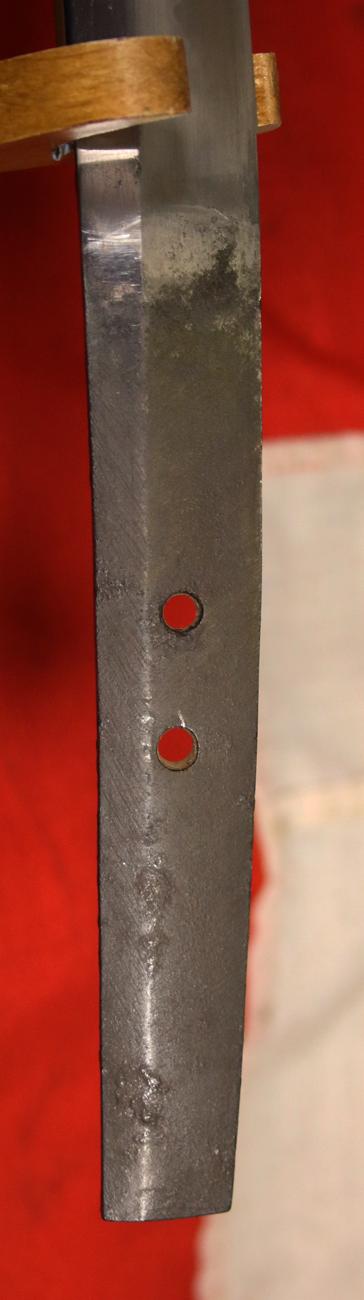
Overall the sword is in super condition, and the hamon is noticably spectacular with thin natural aged lamination lines in areas. The tsukaito is excellent, the tsuba faultless and the fuchi is in shakudo with pure overlaid gold flower heads, also in superb condition, the kashira bears a round clan mon, possibly with a bird within, but now difficult to interpret due to age.
We recall a most interesting nihonto chat we had between us, and two old chums of ours, Victor Harris {curator of Japanese Arms at the British Museum} and Christopher Fox our Japanese edged weapon consultant of over 25 years. It was concerning the types of elaborate hamon and the conversation turned to the detail of art designs within blade hamon such as the very rarely seen Mount Fuji. However , it culminated, with both their agreement, that it was the ‘rabbit ears’ that was likely the rarest of all patterns, that Victor remarked, is a type of intriguing design the average collector may never actually see or even recognise in a lifetime of collecting. And, the skill that must have been required to create stylised forms of animals, yet in such a small part of an elaborate design, that they may never actually be recognised unless searched for. It reminds one of the English furniture maker, aka ‘mouse man’, and he created a tiny carved mouse within the design of every piece of furniture he made.
Code: 26358
7950.00 GBP