
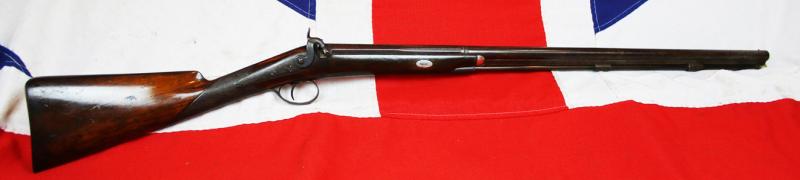
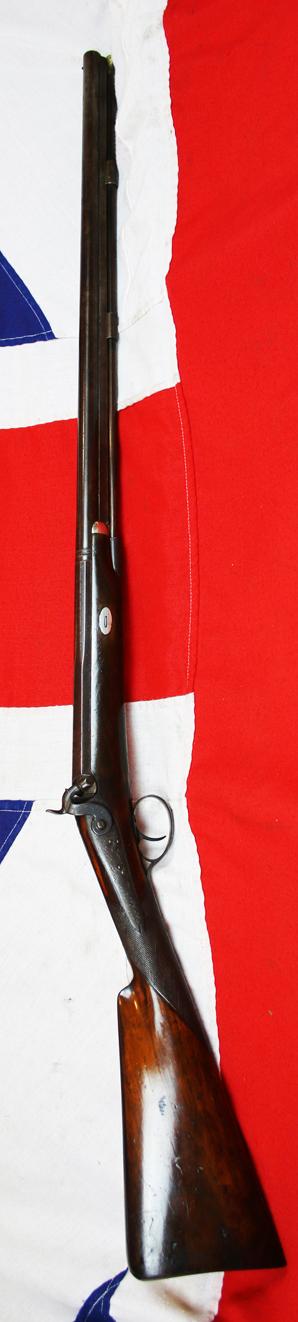
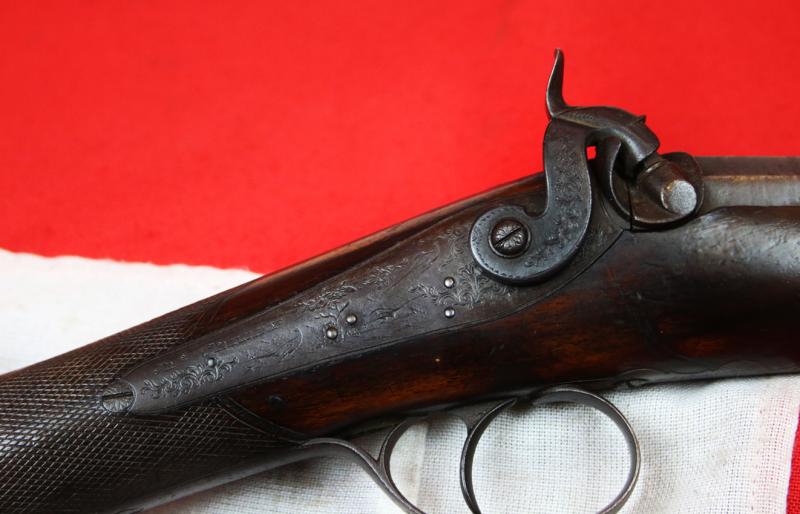
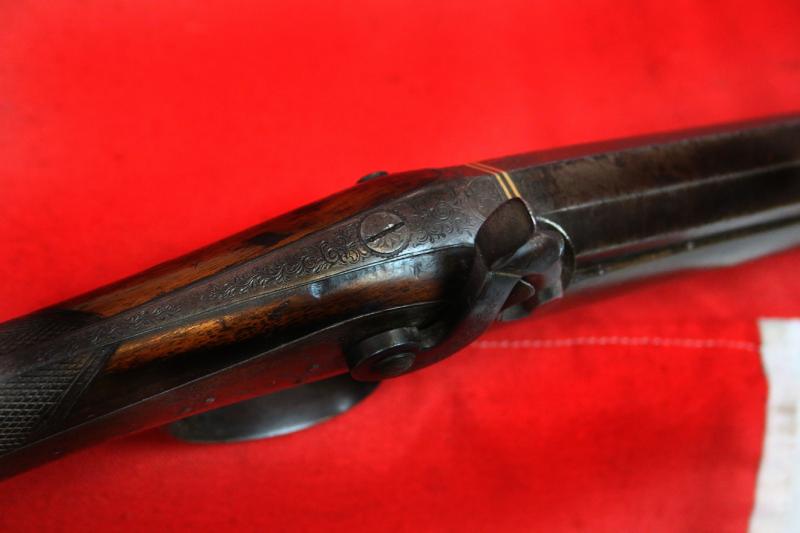

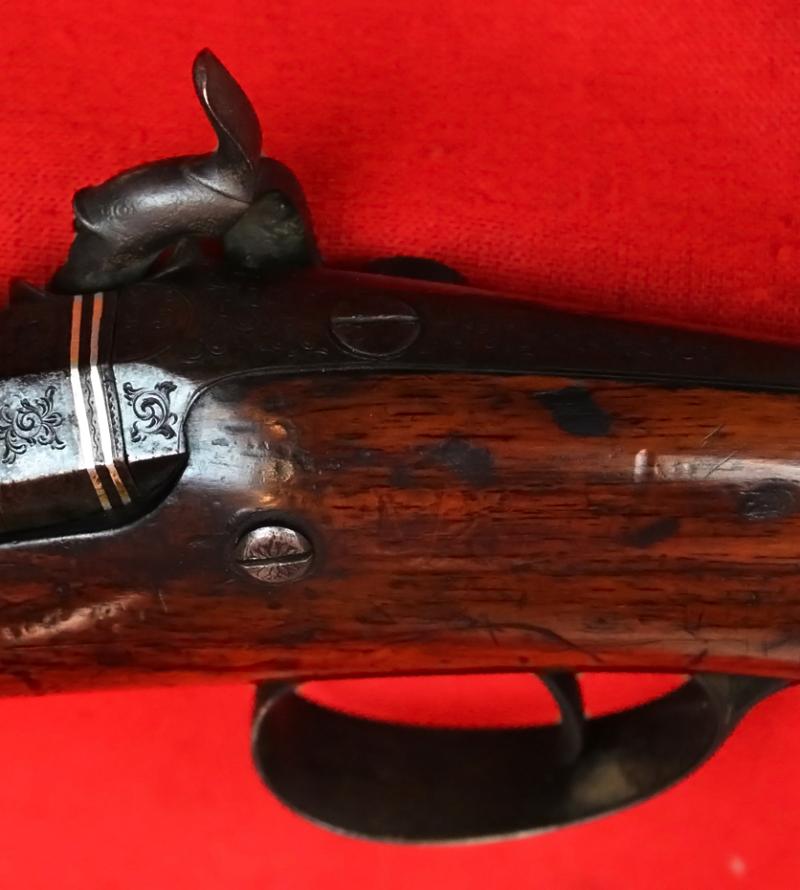

A Most Fine 1840 Bespoke English Fowling Piece, with Finest Elaborate Engraving, Juglans Regia Walnut Stock and and Damascus Twist Barrel. Finely Engraved Throughout with Hunting Dogs, Scrollwork and Gamebirds
By James Catley of Lench St. Birmingham.
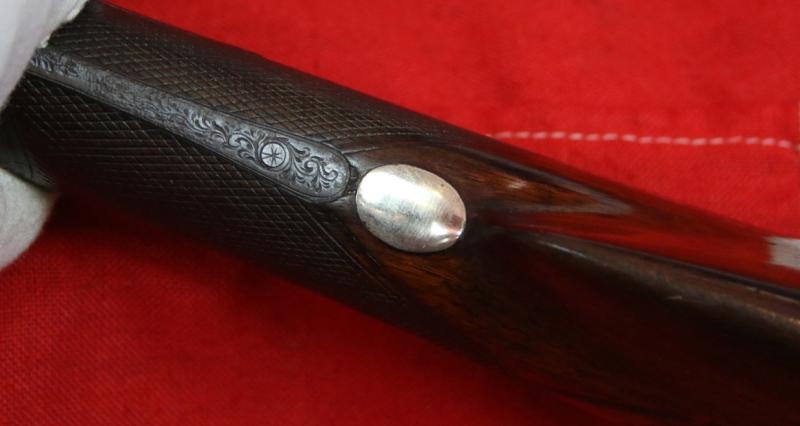
With back action lock prevalent in the 1840's , and a finest damascus 31 1/2 inch long barrel, with twin inlaid gold lines, and hook breech for rapid removal of the barrel. Original rammer, with its concealed threaded worm-screw and cover cap at its farthest end, for the removal of missfires, and the stock has silver escutcheons for a barrel retaining key, again to aid rapid removal of the barrel.
During the 1840s, English fowling pieces (sporting shotguns) reached a pinnacle of mechanical refinement, artistry, and prestige. This decade marked the absolute maturity of the percussion lock system before breechloaders took over, characterized by incredibly fast ignition times, exquisite Damascus steel barrels, and ultra-slim, elegant walnut stocks. London and Birmingham gunmakers set the global standard for luxury sporting arms
By the 1840s, the classic flintlock was considered obsolete for high-end wing shooting. Gunsmiths perfected the copper percussion cap system, utilising "patent breeches" that allowed for near-instantaneous ignition and superior weather resistance.
Barrels were meticulously forged by twisting iron and steel bars together to create striking, intricate patterns (such as curnee, herringbone, or ribbon Damascus). These were finished using a specialized browning or cold rust bluing process that protected the metal while accentuating the elegant swirling pattern.
The lines of 1840s pieces were exceptionally sleek. Stocks were carved from high-grade English or Circassian walnut, featuring fine checkering at the wrist and a slim, gracefully sloping comb. Engraving reached an extraordinary level of detail, featuring tight scrollwork, hunting dogs, and game birds on the lock plates, hammers, and trigger guards.
The 1840s market was dominated by legendary names operating out of London and Birmingham, many of whom pioneered technology still referenced in modern gunmaking today:
This beautiful piece of finest English workmanship, is from the zenith of the worlds greatest gunmaking master craftsmen. It would make a superb piece for interior decoration {no gun safe is required to store antique obsolete arms}, bearing in mind to replace it today, by one of the few remaining and equivalent finest London bespoke gunsmiths, such as Boss or Purdey, would require an expenditure of likely £120,000 plus
All in superb condition for age, with just usual light wear throughout.
Code: 26356
1150.00 GBP