
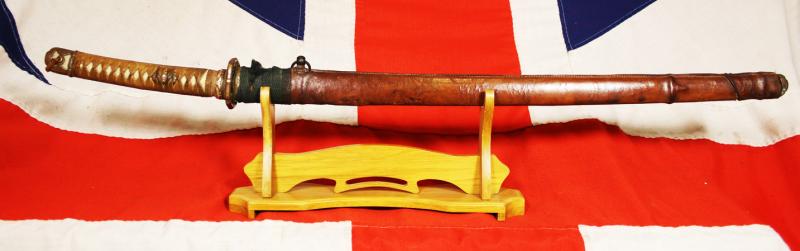



Fabulous 800 Year Old Ancient Ancestral, Museum Quality, Sword, Chokutō (直刀, 'Straight Sword', 10th Century Kofun Style, Mounted In WW2 Officer's Katana Fittings A Wonderful & Rare Historical Rarity From The The Mongol Invasions & The Kamikazi Typhoon
Possibly this swords ancestral blade was used in combat during the time of the great Khan, {Kublai Khan} and his attempted two Mongol invasions of Japan, in 1274 and 1281.
During WW2, which for Japan started in 1936, families of great standing or with samurai backgrounds and ancestry were permitted to allow their son's to wear military mounted swords, but, containing ancient ancestral blades, usually of great significance to the family's history. This is one of those swords. This swords officer's ancestry clearly went back almost a thousand years, thus he must have had great status within Japanese society. It was once estimated only 1 in 100 had such historical swords to carry in combat, while serving their divine emperor Hirohito in WW2, but an original 13th century chokuto sword would have been likely to have been used by fewer than one in a hundred thousand officer's.
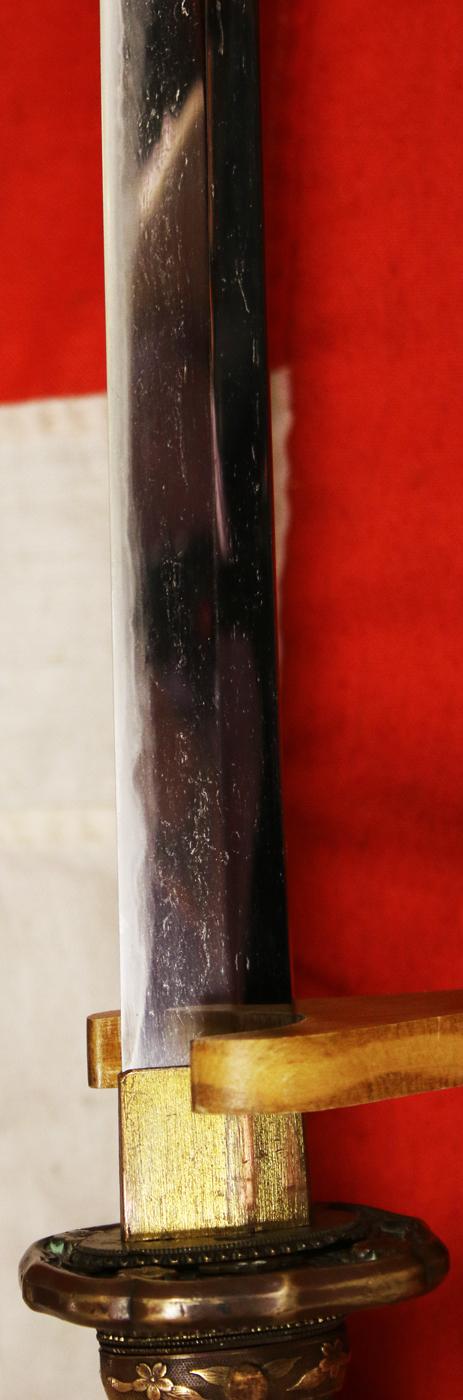
A 13th Century original Koto samurai sword blade in the ancient 1300 year old ancient samurai sword style. Ancestral Japanese officers sword, an early Koto period bladed katana, with a stunning and rare blade form, of a near straight blade in the ancient chokuto style.
A straight, single-edged Japanese sword used from the Kofun era through the middle of the Heian period (around 794 to the 10th century) before curved swords like the tachi became standard.
The chokuto (直刀, "straight sword") is a straight, one-edged Japanese sword that was produced prior to the 10th century. Its basic style is likely derived from similar swords of ancient China. Chokuto were used on foot for stabbing or slashing and were worn hung from the waist. Until the Heian period such swords were called tachi (大刀), which should not be confused with tachi written as 太刀 referring to curved swords.
The chokutō in various styles including these styles declined around the end of the Asuka period (593-710), and only the style called the hōtō-tachi (方頭大刀), in which the decoration on the tip of the handle was rectangular parallelepiped, survived from the Nara period (710-794)
Chokutō typically come in hira-zukuri and kiriha-zukuri tsukurikomi (blade styles) which make them very distinct from later tachi and katana which rarely use these forms. Swords of this period are classified as jōkotō and are often referred to in distinction from Japanese swords.
Chokutō as a weapon died out by the middle of the Heian period, in the 10th century. And as a weapon, it was completely replaced by the Japanese sword, which is known today for its deep and graceful curves. The first sword with this curve was called Kenukigata-tachi (ja:毛抜形太刀), which was made by improving Warabitetō (ja:蕨手刀) used by Emishi in Tohoku region. And Kenukigata-tachi evolved into tachi, which became the mainstream of Japanese swords for a long time.
However on rare occasions the Chokuto style was made in later centuries to represent for its samurai owner the truly ancient style of Japanese samurai's sword, possibly for a samurai whose ancestors had been as such in the 10th century, and he wished to emulate and demonstrate his connection to his earliest samurai ancestor.
The wars and conflicts this sword could potentially seen service are;
Kennin Rebellion (1301 / 1401? listed as 1301 or 1201): A brief regional uprising against the Kamakura shogunate's authority.
Hatakeyama Shigetada Rebellion (1205): A localized purge and battle as the ruling Hōjō clan eliminated powerful rival samurai houses within the shogunate.
Wada Rebellion (1213): A fierce internal conflict in Kamakura led by the Wada clan against the dominant Hōjō regency.
Jōkyū War (1221): A decisive civil war where the Imperial Court under retired Emperor Go-Toba tried to overthrow the Kamakura shogunate; the shogunate won, cementing samurai supremacy over imperial governance.
Miura Rebellion (1247): A violent purge that destroyed the powerful Miura clan, further concentrating power in the hands of the Hōjō family.
Mongol Invasions (1274 & 1281): Kublai Khan's Yuan dynasty attempted to conquer Japan twice, attacking Kyushu. Samurai forces repelled the landings in the Battle of Bun'ei and the second invasion, aided heavily by coastal defenses and the famous kamikaze typhoons.
The Mongol invasions of Japan were two failed military campaigns launched by Kublai Khan of the Yuan Dynasty in 1274 and 1281 CE to conquer the Japanese islands.
The First Invasion (1274)
Kublai Khan sent a fleet of roughly 900 ships and nearly 30,000 troops from Korea.
The fleet attacked the islands of Tsushima and Iki before landing at Hakata Bay on Kyushu.
Japanese samurai fought fiercely, but the Mongols had better group tactics and primitive explosives. However, a massive nighttime storm destroyed much of the Mongol fleet and forced a retreat back to Korea.
The Second Invasion (1281) After conquering the Southern Song Dynasty, Kublai Khan launched a much larger armada of around 4,400 ships and 140,000 soldiers.
The Japanese built stone coastal walls around Hakata Bay, which blocked the invaders from landing easily. Weeks of messy beach and ship battles followed.
A powerful typhoon struck the coast on August 15, 1281, and smashed the Mongol fleet against the rocks
The typhoons that saved Japan were called kamikaze or "divine winds". The high cost of defending the country drained the Kamakura Shogunate's money and led to political weakness.
Overall condition;
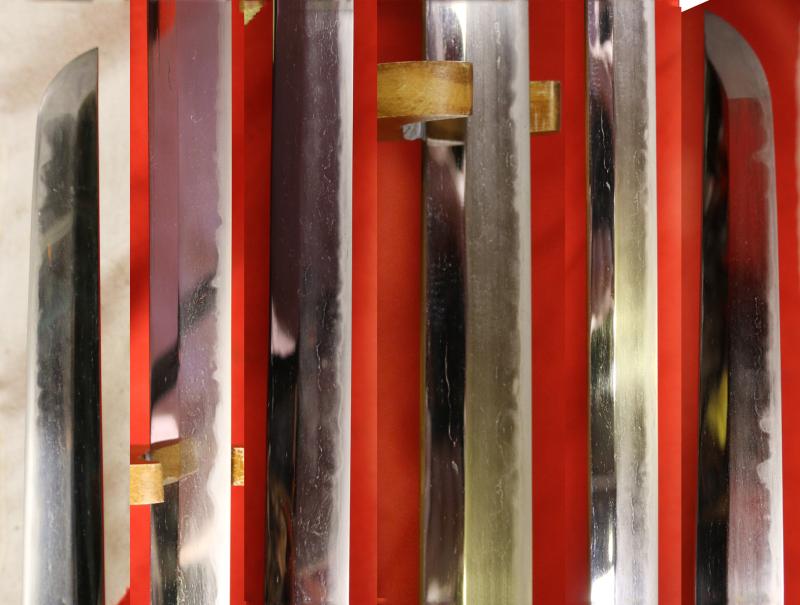
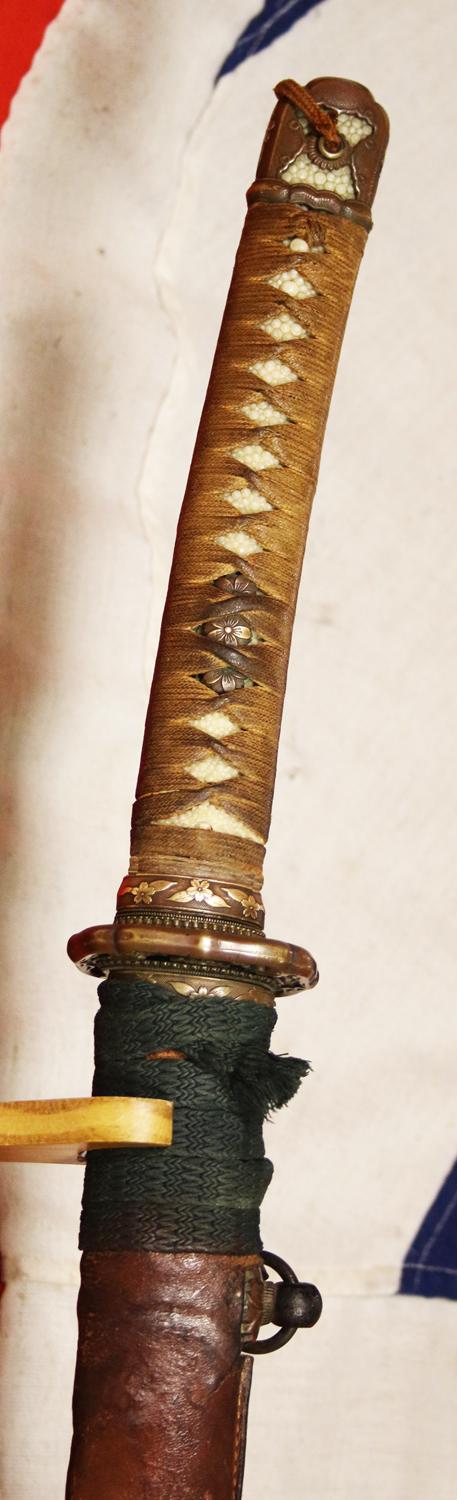
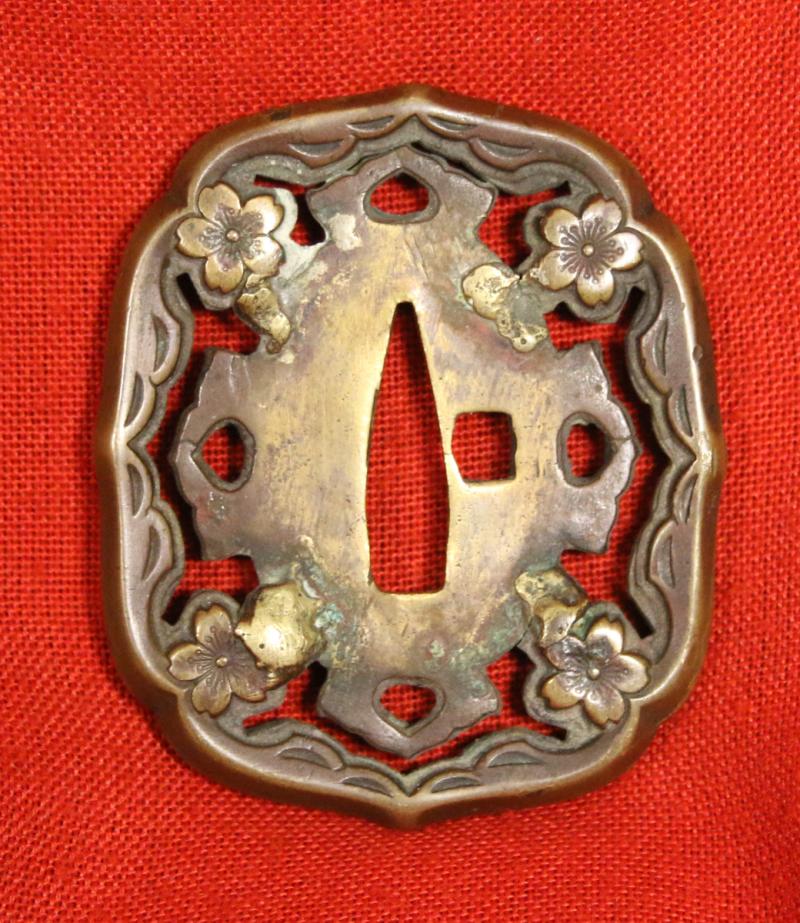
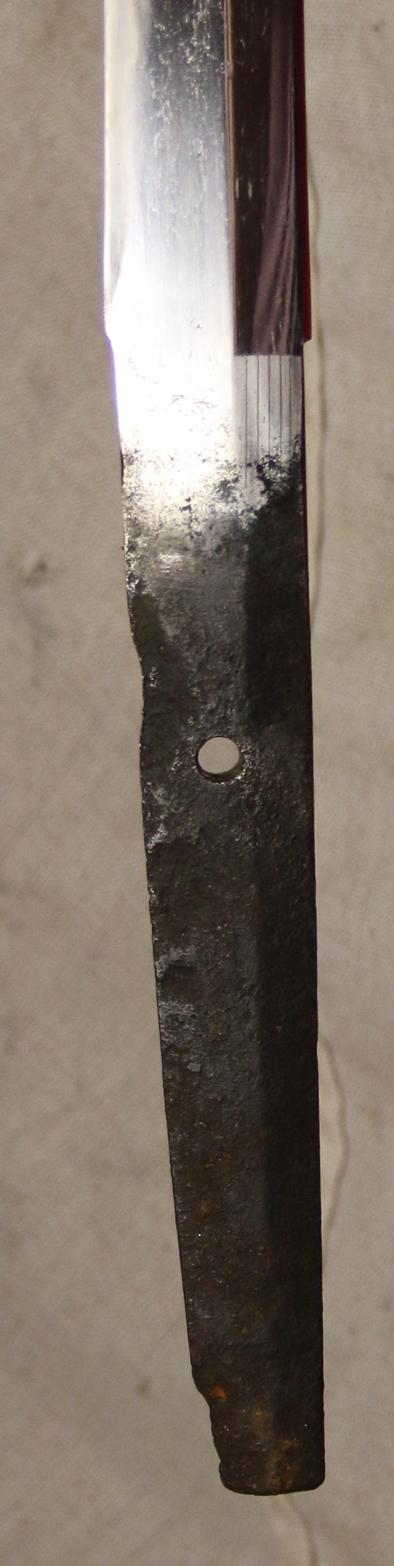
The ancient 800 year old blade is in superb condition for age showing a superb hamon, and hada grain, with just some areas of light surface thinning that is far less that one should expect for a blade so ancient. The WW2 officers mounts are very good, with its leather combat covered metal saya , and its tsuka is very good, with just some age wear to its ito and the samegawa beneath. The tsuba is the early pre war pierced sukashi type, with some small, old, field repairs to one side.
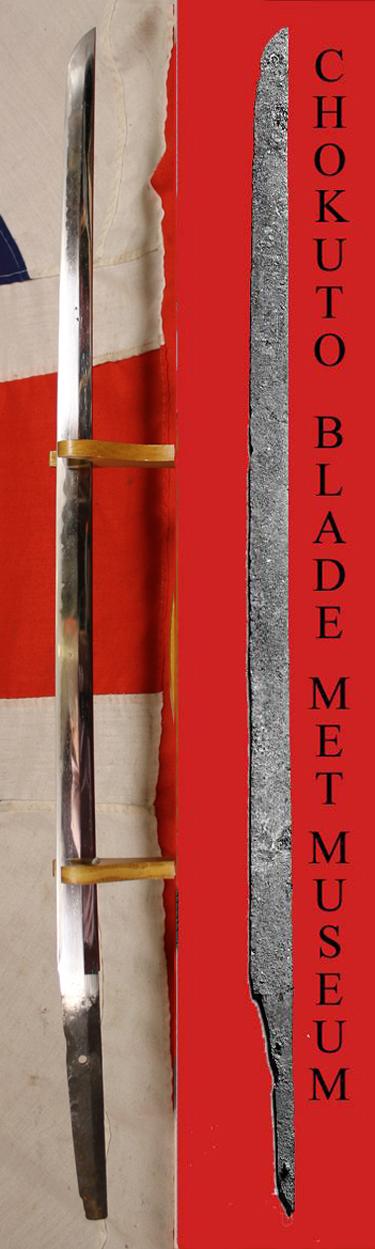
In the MET, The Metropolitan Museum in New York, there is an incredibly similar blade, Title: Blade for a Straight Single-Edged Sword (Chokutō)
Date: 7th century or earlier exhibit number 06.310.6, We show our 13th century chokuto blade next to the 7th century samurai chokuto blade in the MET in New York, as photo 10 in the gallery.
Code: 26343
9950.00 GBP