
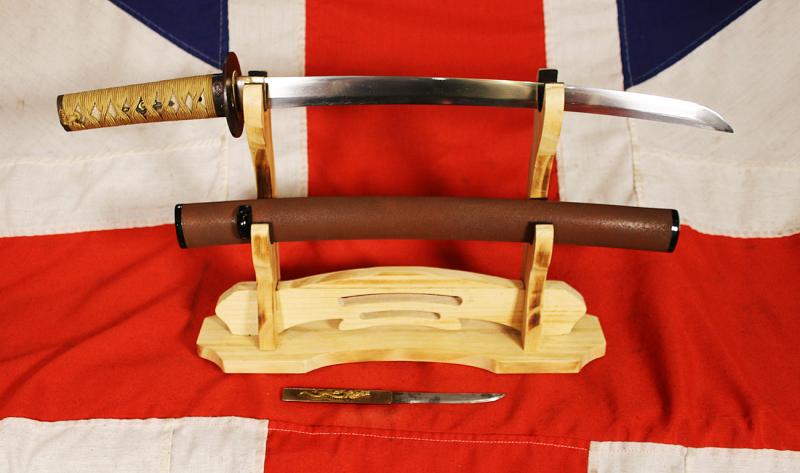
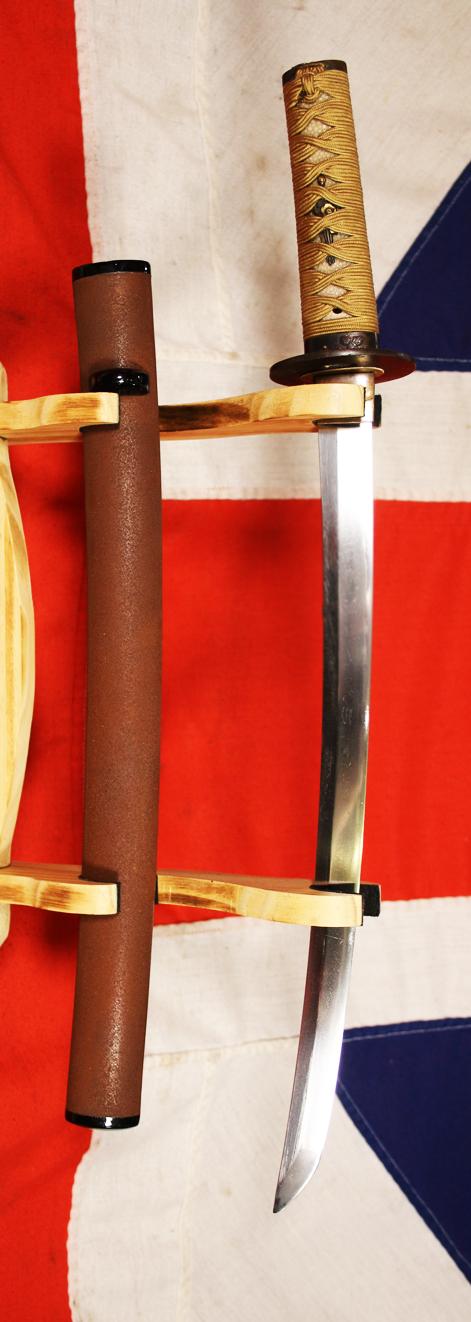
A Beautiful Koto Wakazashi, In Superb Original Edo Fittings and Tsuba With a Masamune Signed Blade. The Koto Era Was From 900 to 1595. Just Returned Today from Full Blade Conservation and it Looks Amazing
Photos of the now finished stunning polished blade, with fine hamon and hada etc. have just been added.
A delightful sword, with a stunning hamon and hada bearing the signature Masamune, associated by legend as the finest samurai sword maker in all history.
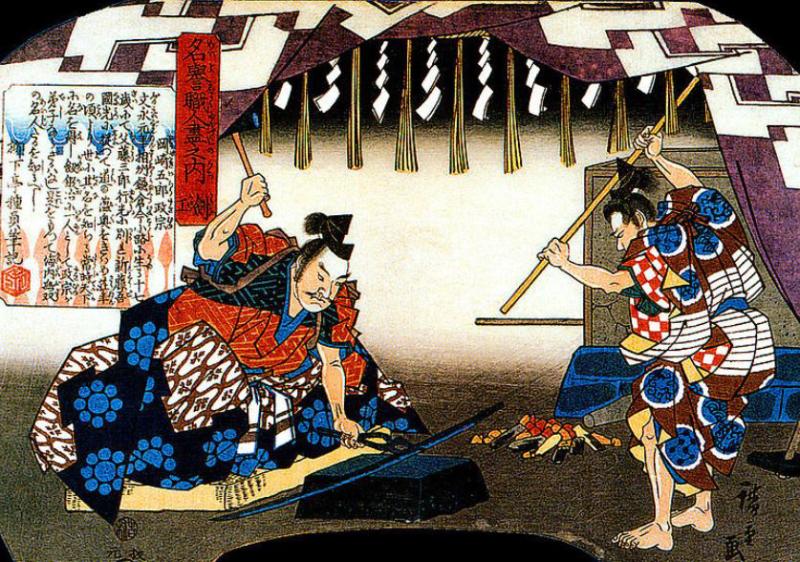
Masamune is generally regarded as the greatest swordsmith in the history of the Japanese sword. His blades, mostly daggers (‘tanto’), were both strong and beautiful and could cut extremely efficiently. Many of the technological advances accredited to Masamune were practical ones brought about by experience gained during the invasions of Japan by the Mongols in 1274 and 1281
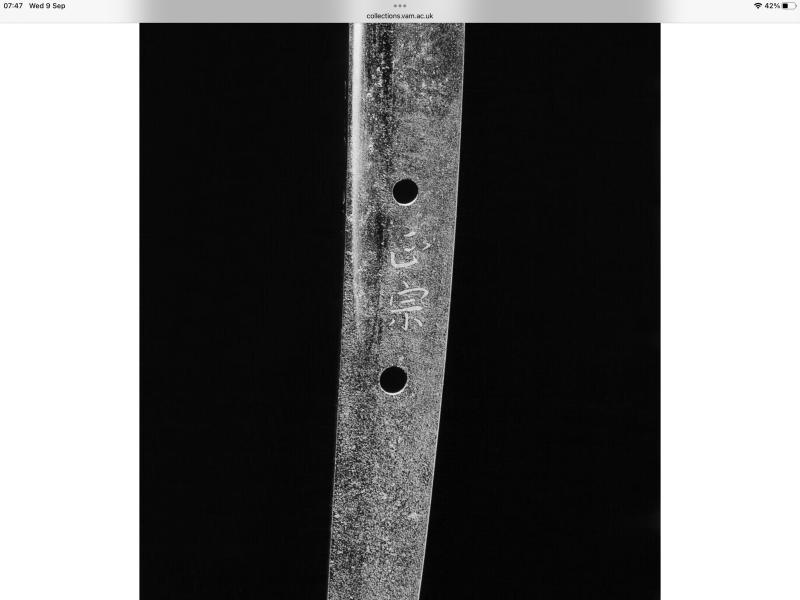
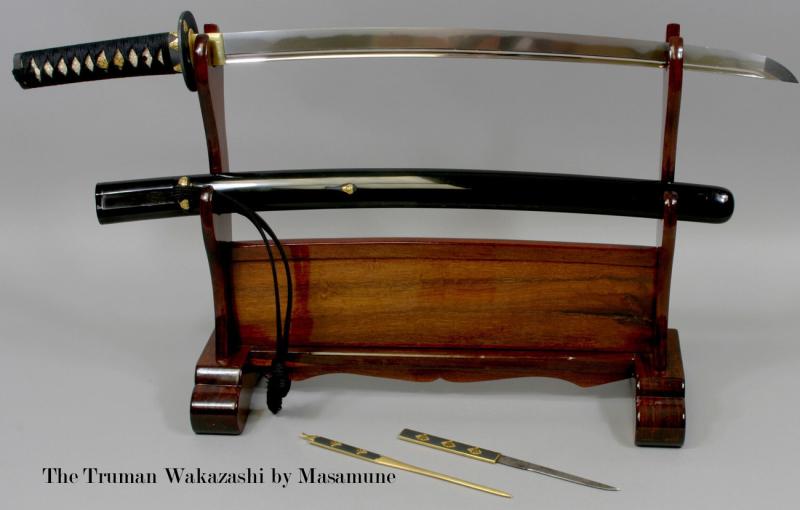
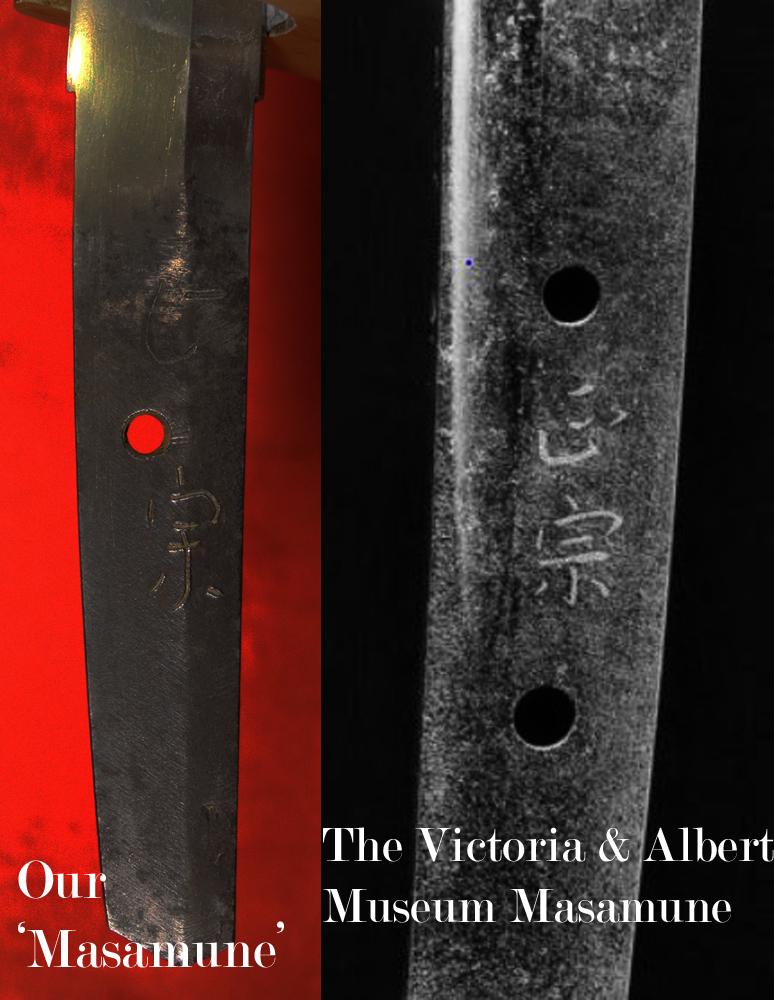
Currently, photo 5 in the gallery, is the Masamune blade signature in the Victoria and Albert Museum. Photo 6 is of the President Truman Masamune wakazashi. Photo 7 is the Victoria and Albert Masamune signature next to our sword's signature. Photos shown for educational purposes only, The museum Masamune's sword sgnature is somewhat similar to our blades signature.
However, we believe its fair to say our beauty is unlikely to have been made by 'the' Masamune, otherwise it would be absolutely priceless, which naturally, it isn't.
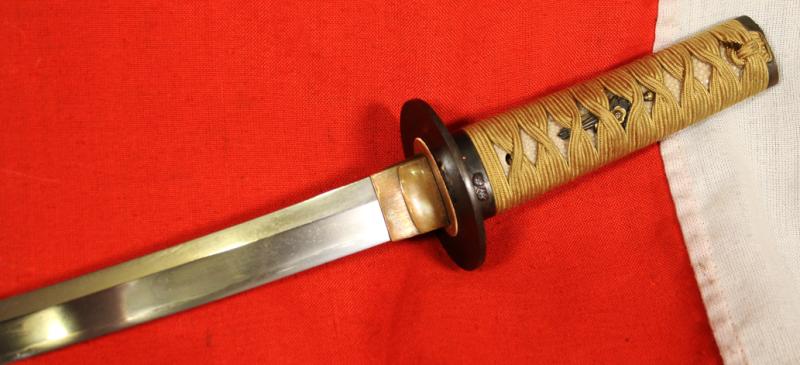
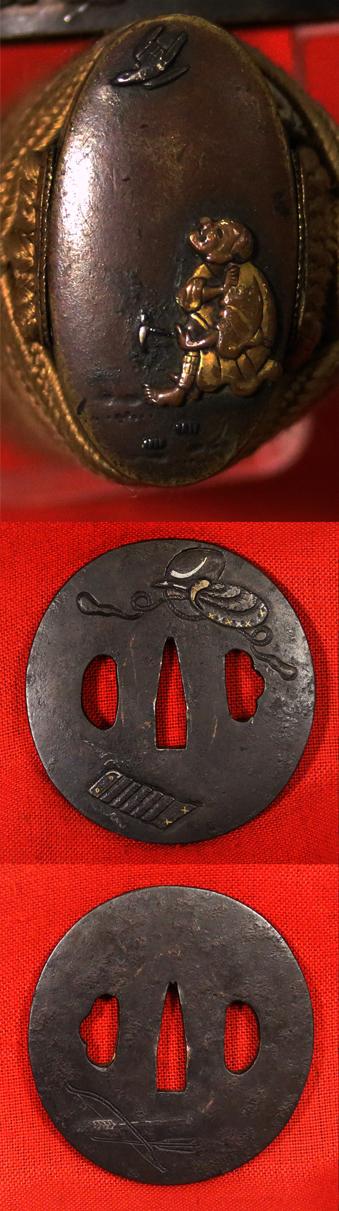
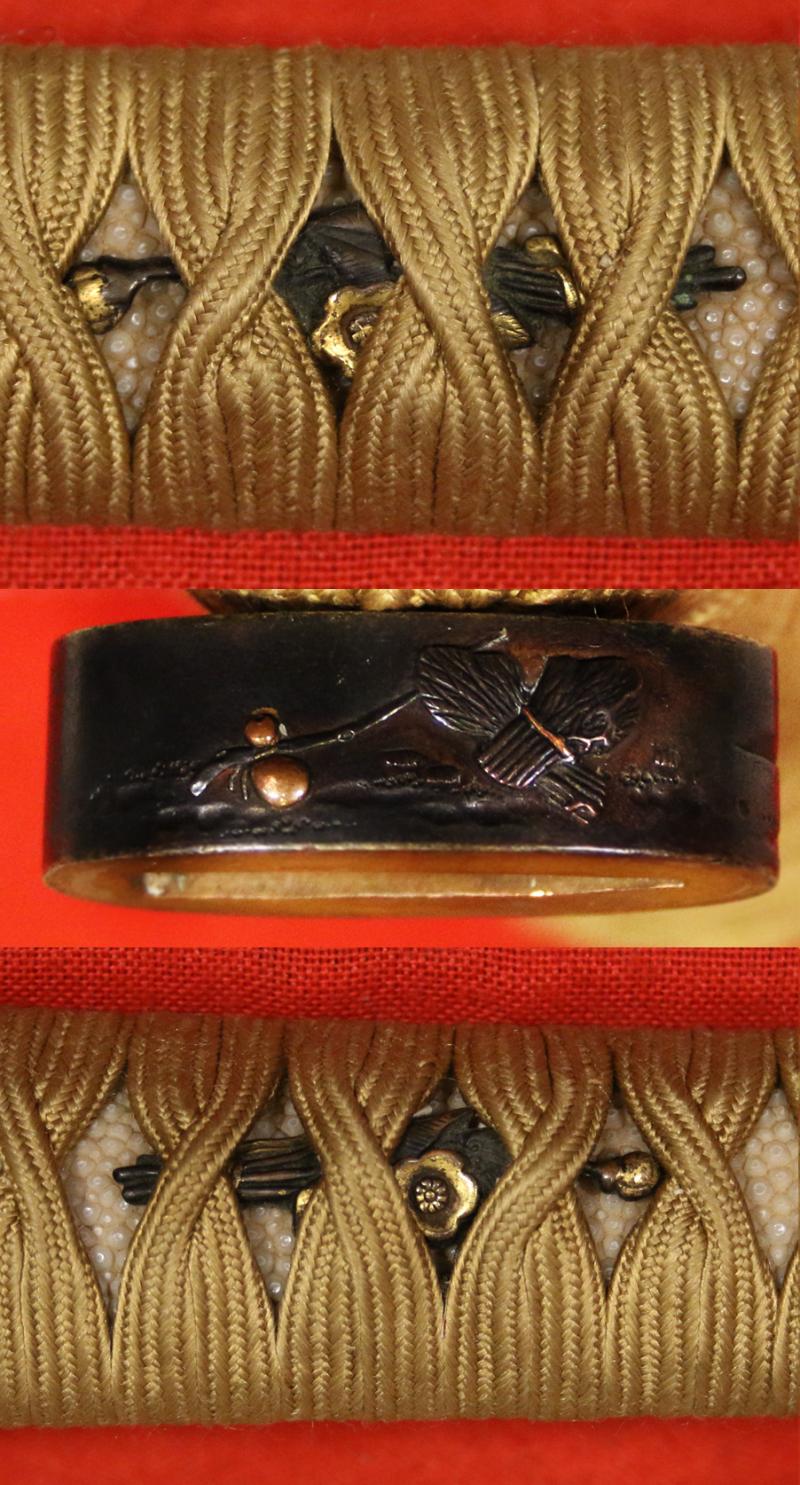
The wakazashi is beautifully presented with fine original Edo mounts and fittings, including, a delightful iron plate tsuba decorated with shallow takebori chisseling of a samurai helmet kabuto, embellished with pure gold and silver, and a samurai armour arm piece, a sode. The reverse side of the tsuba is chisselled with a samurai war bow and an arrow, also embellished with pure silver. The kashira is patinated shakudo with a gold seated samurai holding a kusari, a sickle form weapon, observing a hawk in flight. The fuchi, is also shakudo, with takebori sheaths of wheat next to a flowing river. The menuki, bound beneath gold silk tsukaito, are patinated shakudo of deep takebori in the form of bundles of flower stems, with pure gold decorated flower heads and fruits, and set upon the traditional samegawa giant rayskin. The Edo Period Was From 1603 to 1868
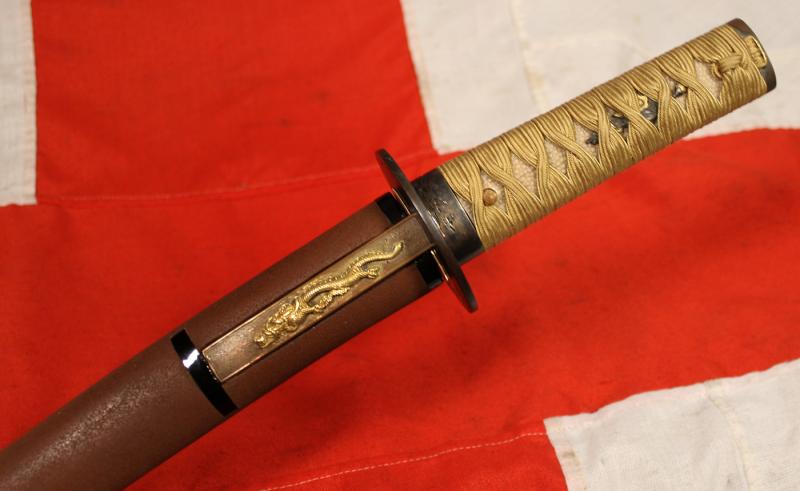
The saya is ishime lacquer in a beautifully rich, russet colour, with polished carved black buffalo horn fittings and a kozuka pocket holding a shakudo kozuka with a deep takebori gold dragon on a nanako ground. The blade has an old, aged polish, showing a fine suguha hamon and near flawless without any trace of combat damage, with a double copper double interlocking habaki {always a nice indicative sign of quality}.
Yet, is it not a wonderful thing to say one owns a Masamune wakazashi, without any of the incredible expense and heaviest of burdens, of having to pay an insurance premium, of around £500,000 a year, for the priveledge of owning an original and real Masamune.
The complete Kyoho Meibutsu Cho (including the two addendum books) list 61 authenticated Masamune being in existence in the 1700s. Surely some unauthenticated swords by him exist/existed, but it can only be hopeful conjecture. It is now believed less than 20 of his masterworks are likely to still exist.
The USA has two (potentially). One in the Truman Library, presented to President Truman by Gen. Walter Krueger, who was in turn gifted the sword by a Japanese noble (likely to gain favour). The Truman Masamune is possibly the "Mori Masamune" wakizashi, just by looking at the dimensions and photographs. The other (if it still exists) is the legendary Honjo Masamune, which was voluntarily surrendered from a private collection to the Japanese police by a member of the Tokugawa family (who chose to give them up instead of register them). It was then handed off to US occupation forces by the Japanese police and it's whereabouts are unknown currently.
Another exists in Austria, which was gifted to Albrecht von Roretz as part of a lot of swords for working to establish modern hospitals in Japan during the late 1800s.
These are the only ‘recorded’ Masamune blades to leave Japan, and none were battlefield trophies.
The British Museum list that they have a sword signed Masamune in their collection, however it is not photographed, so it is felt it is not an original, and thus, like ours that also isnt.
Another is in the Victoria and Albert Museum, acquired in 1912, it is photographed and also bears an attribution by the Ho’nami family of sword appraisers as being by Masamune, however although it is reasonably believed by many to be ‘the’ Masamune, it may be just of the period.
At a friendly chat we had with Chris Fox and Victor Harris {of the British Museum} in our gallery some years ago, in regards to how much an original would achieve if it appeared on the open market, and importantly, was agreed throughout to be genuine, the theoretical sum of 100 million pounds plus was considered as realistic.
https://www.trumanlibrary.gov/photograph-records/64-131
https://www.militaria.co.za/nmb/topic/36521-truman-library-sword/
Victoria and Albert collection, sword accession number M.20:1 to 4-1912. Although not on display.
Code: 26342
7950.00 GBP