
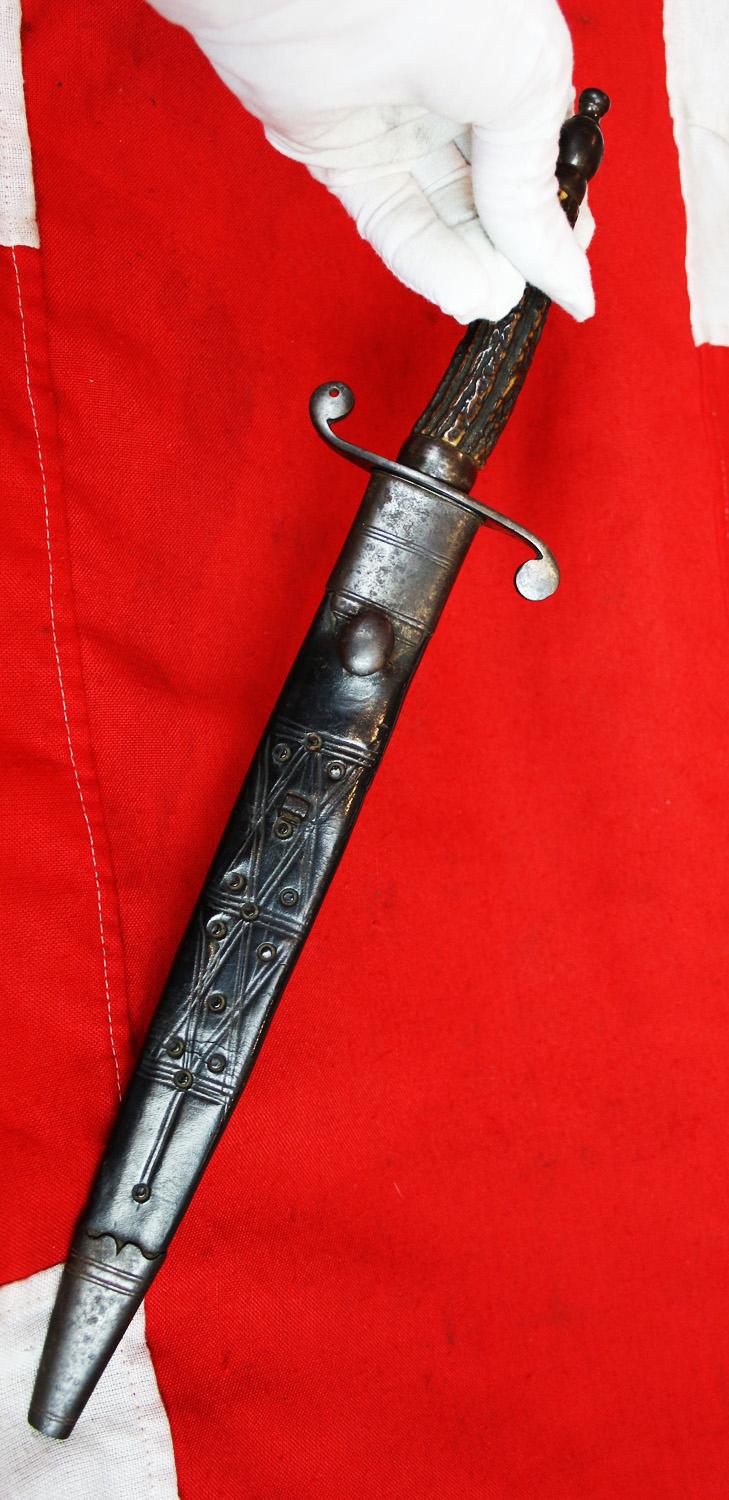
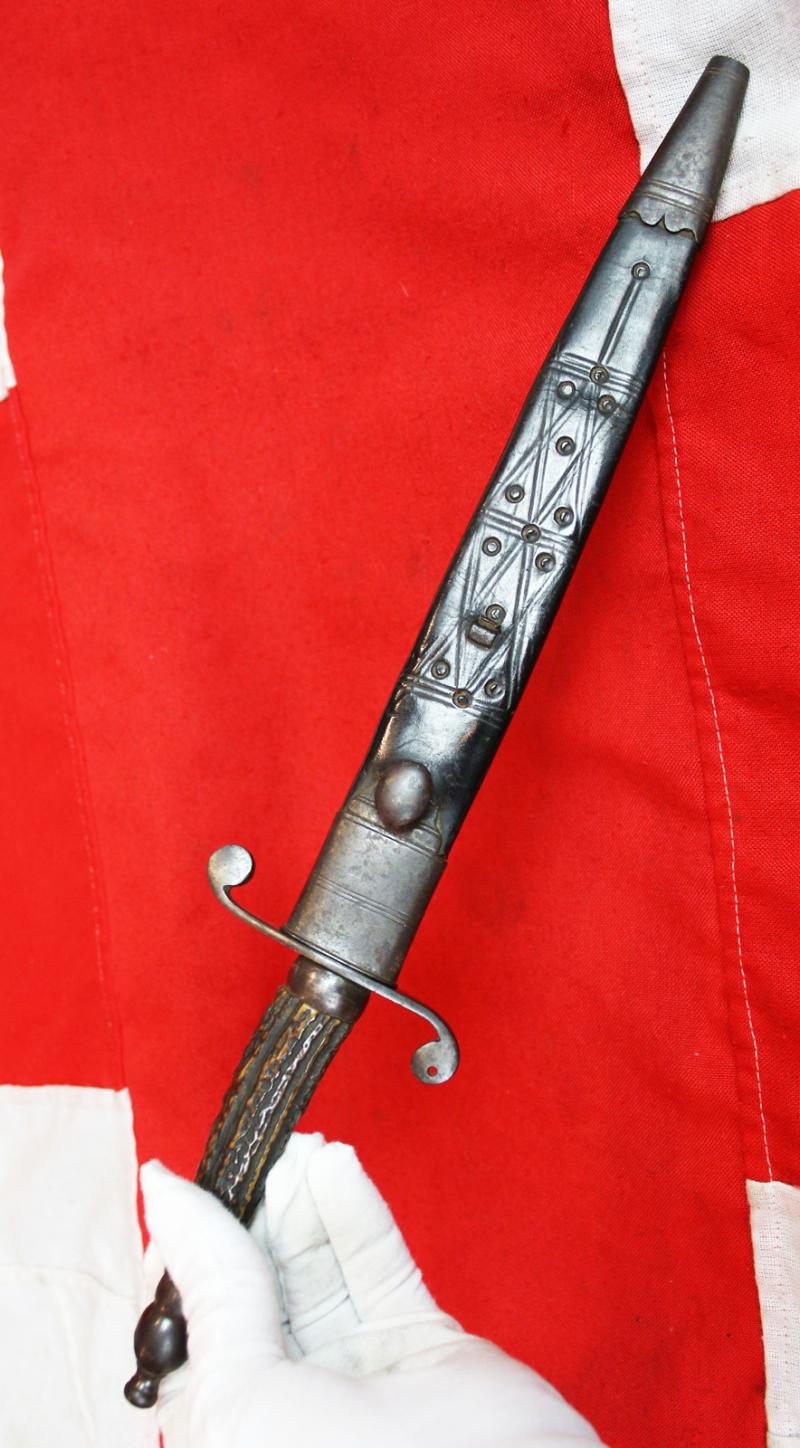
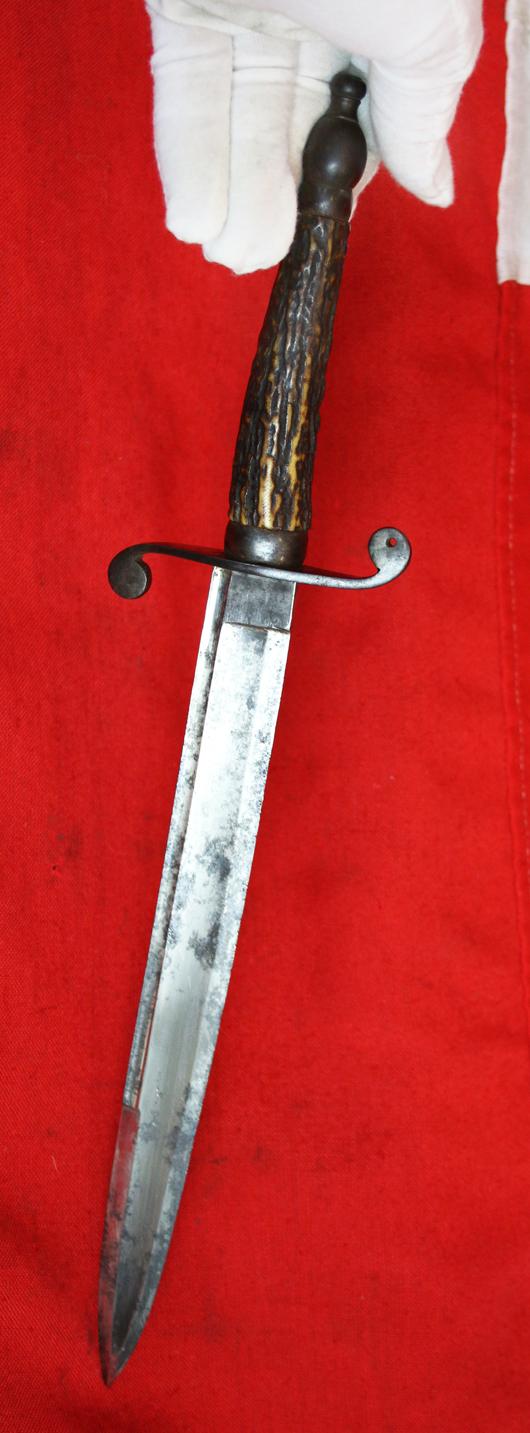
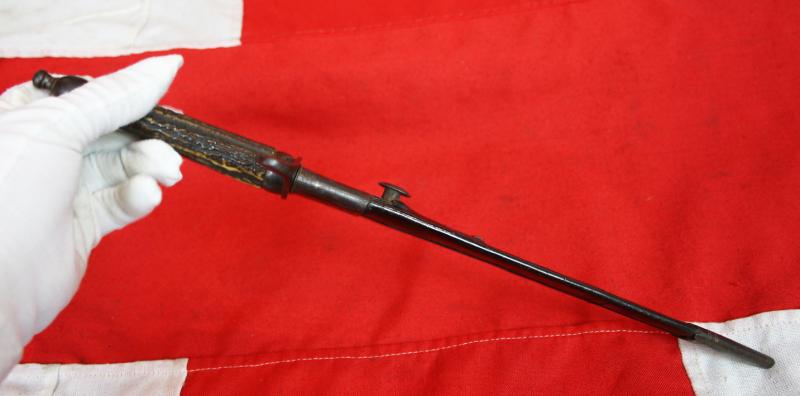
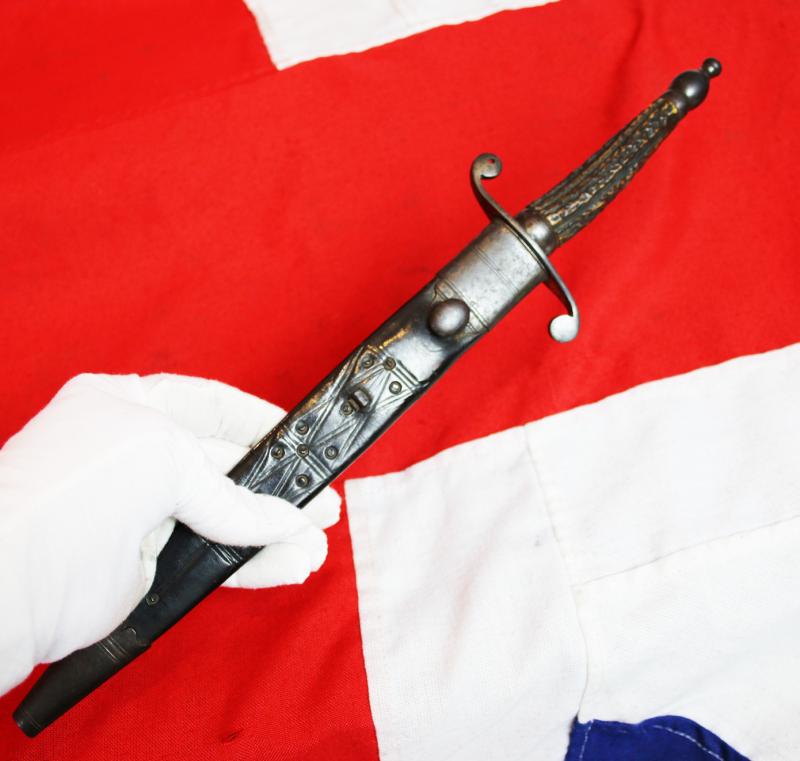
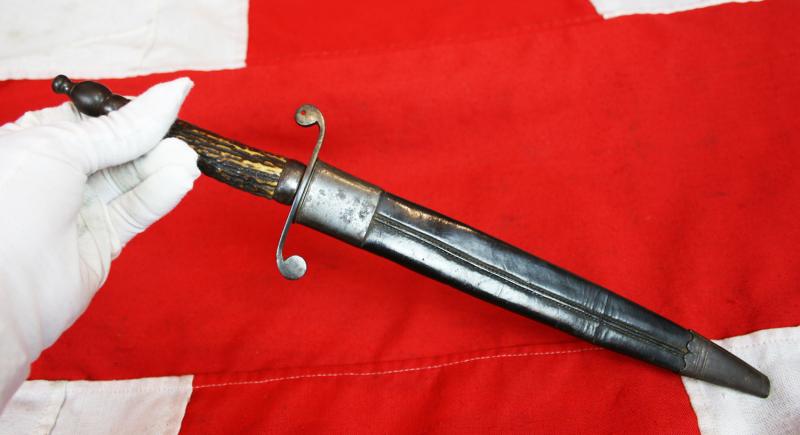
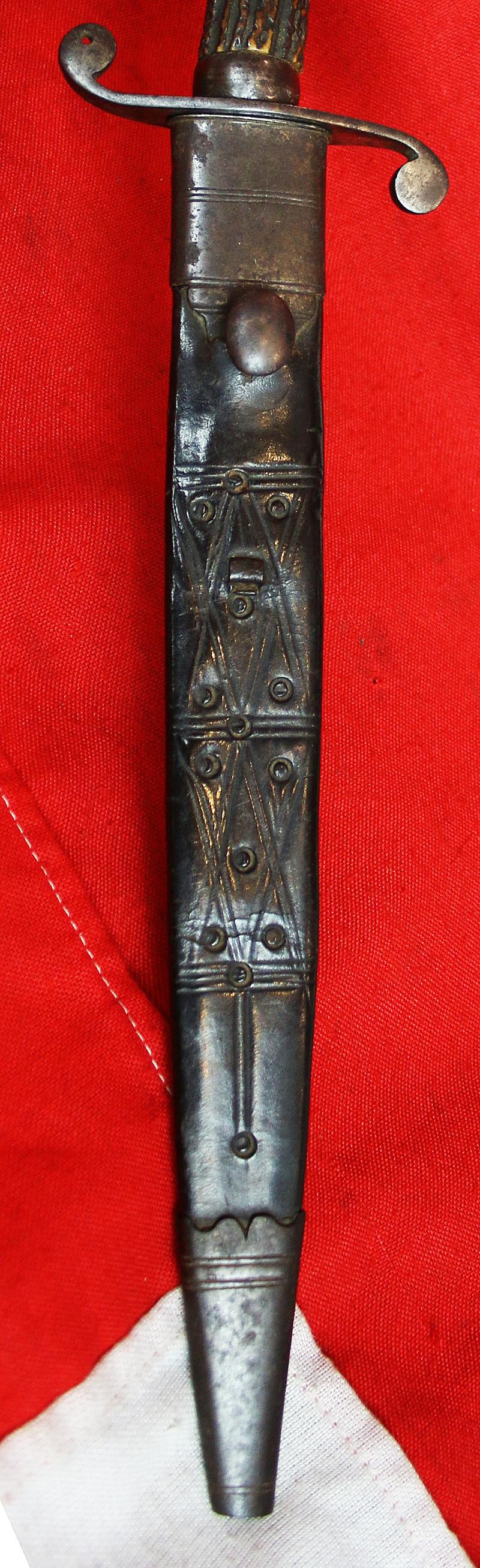
An 18th Century 1770's Royal Naval or Scottish Highlander's Officer's Dirk. Steel and Staghorn Hilt With 'S' Quillons Rare Original Leather & Steel Mounted Scabbard, With Scottish Bullet & Dart Pattern Embossed Leather & Scottish Staghorn Hilt
18th century, original sword and dirk leather scabbards, especially the decorated embossed Scottish type, rarely ever survive.
This form of 'Bullet and Dart' decorative embossing, on 18th century leather scabbards, was very much the mark of Scottish basket hilted swords {aka claymores}, and Highlanders dirks, during the 18th century, but, almost all have subsequently rotted away, or, have been lost due to lack of care and maintenance over the past 300 years, since their time of use.
The condition of this dirk and its scabbard is truly exceptional as certainly as good or better than anything in the Scottish United Services Museum in Edinburgh. The Scottish United Services Museum is now known as the National War Museum, located inside Edinburgh Castle Or within the Royal Collection and the Tower of London Collection. This form of decor for the scabbard strongly indicates its owner was of Scottish descent, especially as its hilt is formed around a Scottish Highland stag's antler.
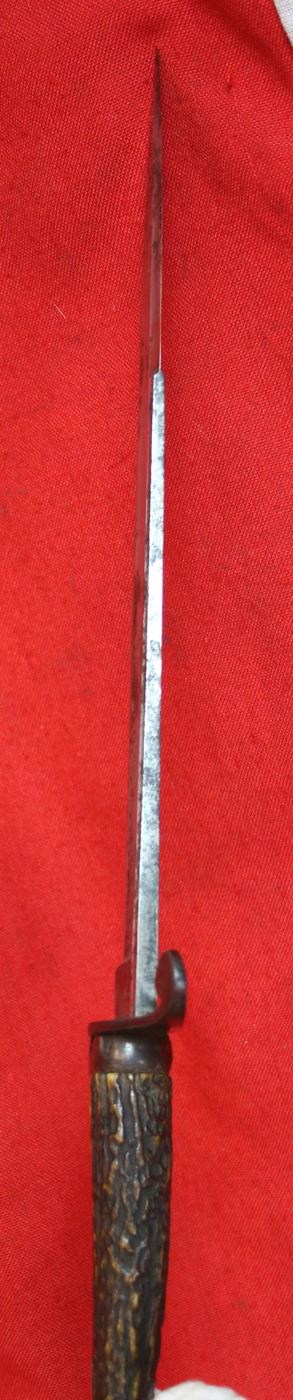
18th Century: Early Georgian-era dirks typically featured a straight, single or double-edged steel blade, an S-shaped guard, and a grip made of various organic materials such as stag-horn ivory or bone. This dirk has a strong blade with a long single cutting edge and a clip back sharpened short cutting edge to the back edge butting up to a back edge narrow fuller, and with a lot of its original bright steel polish.
The traditional Scottish dirk is a probable development from the 16th century but like all medieval societies, the Highlander needed a knife for everyday use. The dirk became symbolic of a Highland man’s honour and oaths were sworn on the steel which was believed to be holy. The following highlights the importance of the dirk in Highland culture
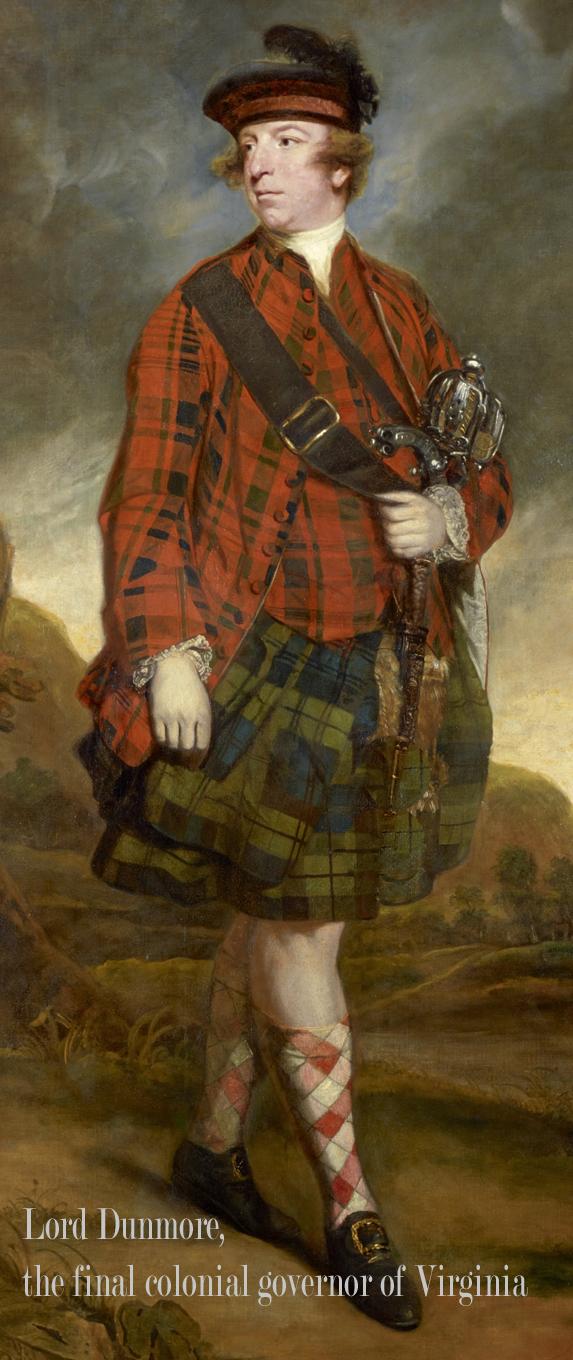
The dirk occupies a unique niche in Highland culture and history. Many Highland Scots were too cash-poor to buy a sword, following the Disarming Acts enacted to erode Highland martial insurrections but virtually every male carried a dirk—and carried it everywhere! If in Japan the katana was the soul of the Samurai, in Scotland the dirk was the heart of the Highlander. In many warrior cultures oaths were sworn on one's sword. Among the Gael, however, binding oaths with the force of a geas (involving dire supernatural penalties for breaking such an oath) were sworn on one's dirk. The English, aware of this, used the custom against the Highlanders after Culloden:
When Highland dress was prohibited in 1747 those Gael who could not read or sign an oath were required to swear a verbal oath, "in the Irish (Scots Gaelic) tongue and upon the holy iron of their dirks", not to possess any gun, sword, or pistol, or to use tartan: "... and if I do so may I be cursed in my undertakings, family and property, may I be killed in battle as a coward, and lie without burial in a strange land, far from the graves of my forefathers and kindred; may all this come across me if I break my oath."
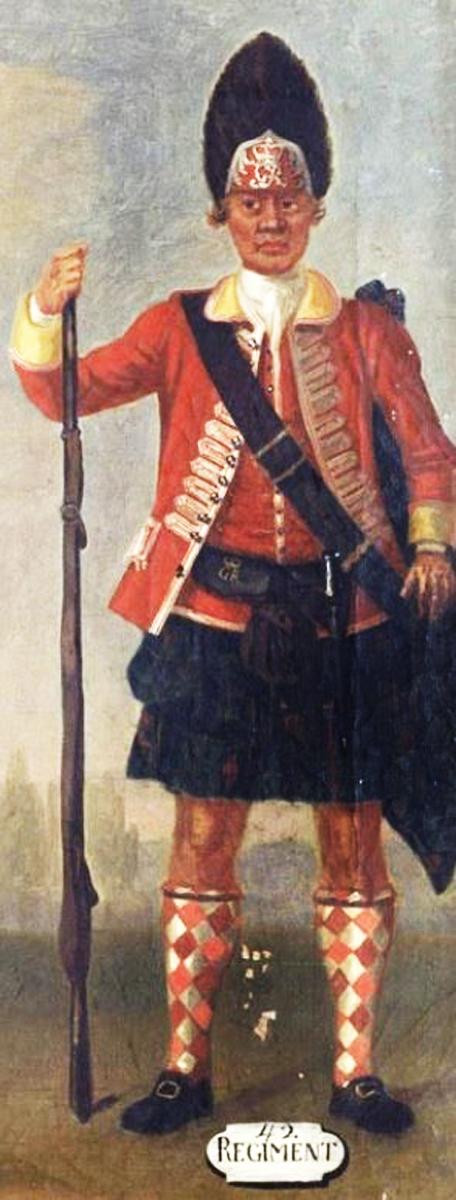
During the period of proscription, only service in a British regiment permitted Highlanders to bear their traditional arms and dress. The 78th Fraser Highlanders, raised in 1757, wore full highland dress uniform; their equipment was described by Major-General James Stewart as including a "musket and broadsword, to which many soldiers added the dirk at their own expense."
When worn, the dirk normally hangs by a leather strap known as a "frog" from a dirk belt, attached by the 'frog' button on the scabbard throat mount, which is a wide leather belt having a large, usually ornate buckle, that is worn around the waist with a kilt.
The Royal Naval dirk around 1770 was a compact, practical sidearm primarily carried by midshipmen and young officers during the Age of Sail for close-quarters combat and boarding actions.
Dirks, originally intended for midshipmen in the Royal Navy, in the 18th century, are described in the book 'Bellerophon' by Edward Fraser p.239.
Fraser says, 'Many Captains wore their old midshipman's dirks in battle as being useful in boarding, for parrying cuts or thrusts'.
Overall almost 16 inches long, blade 10.25 inches long
Code: 26313
Price
on
Request