
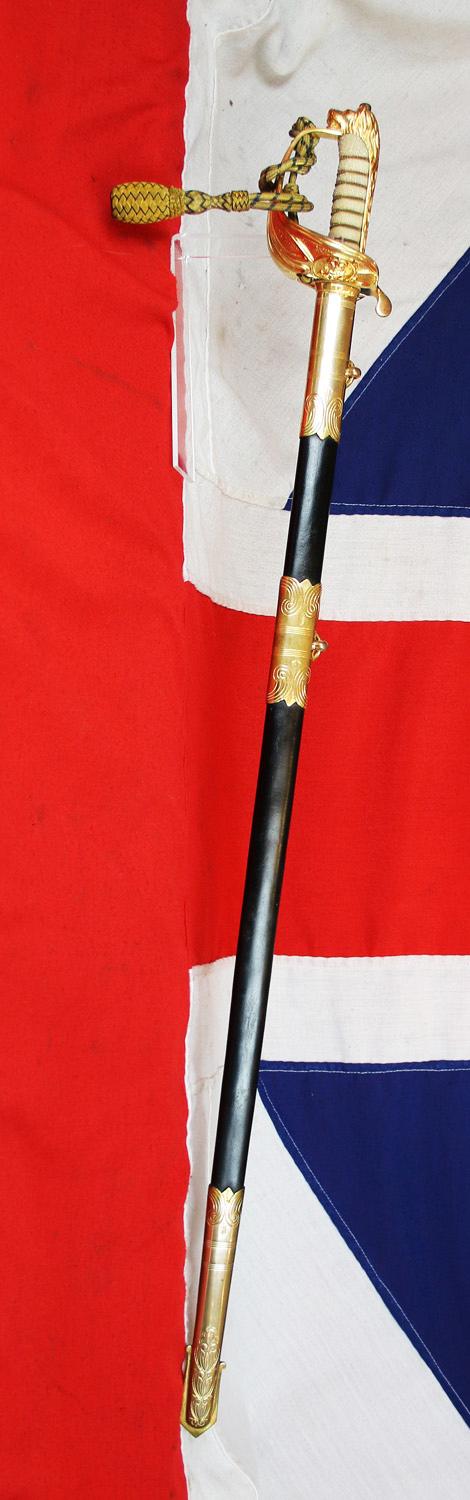
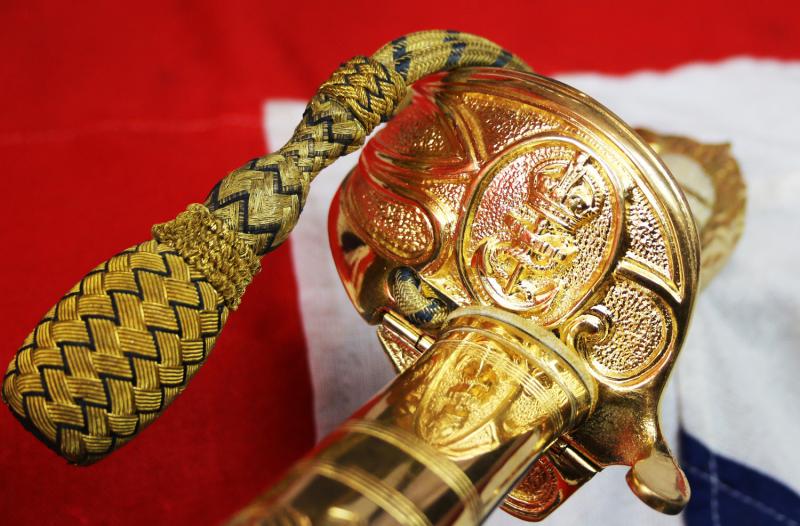
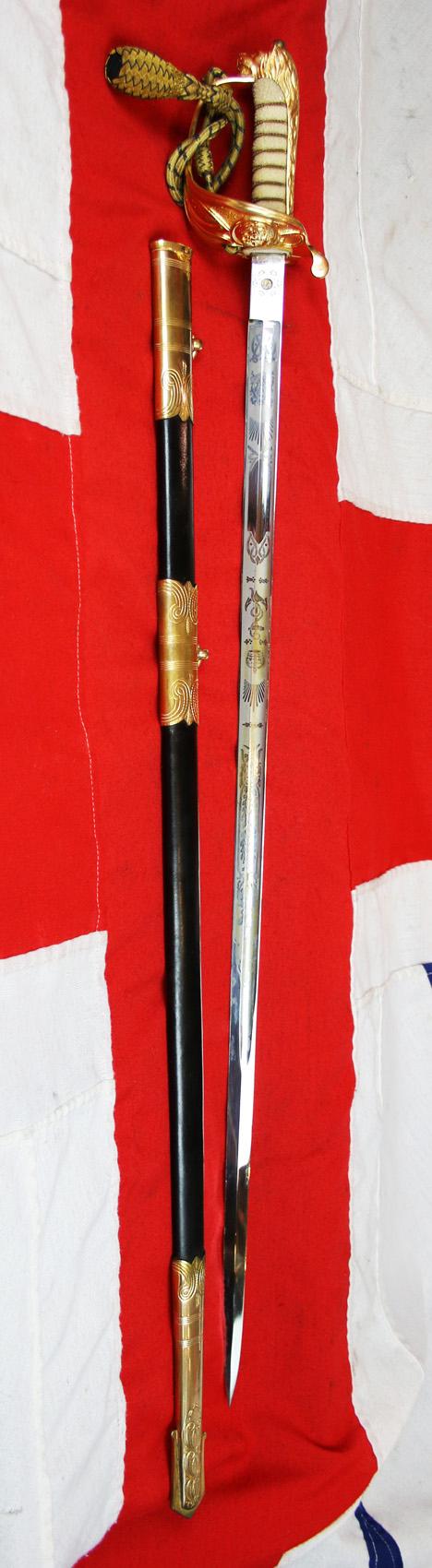
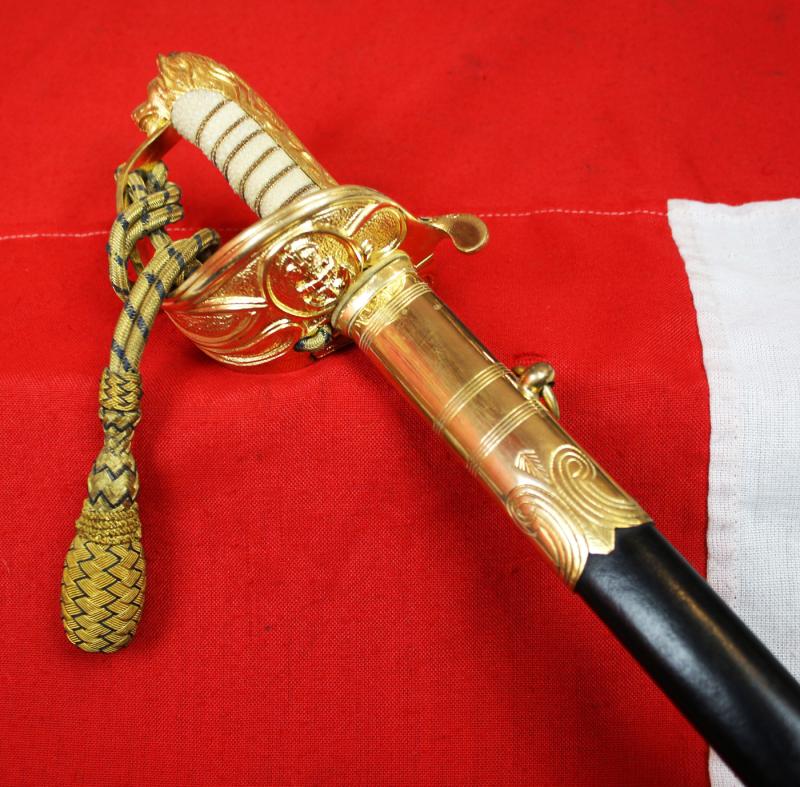
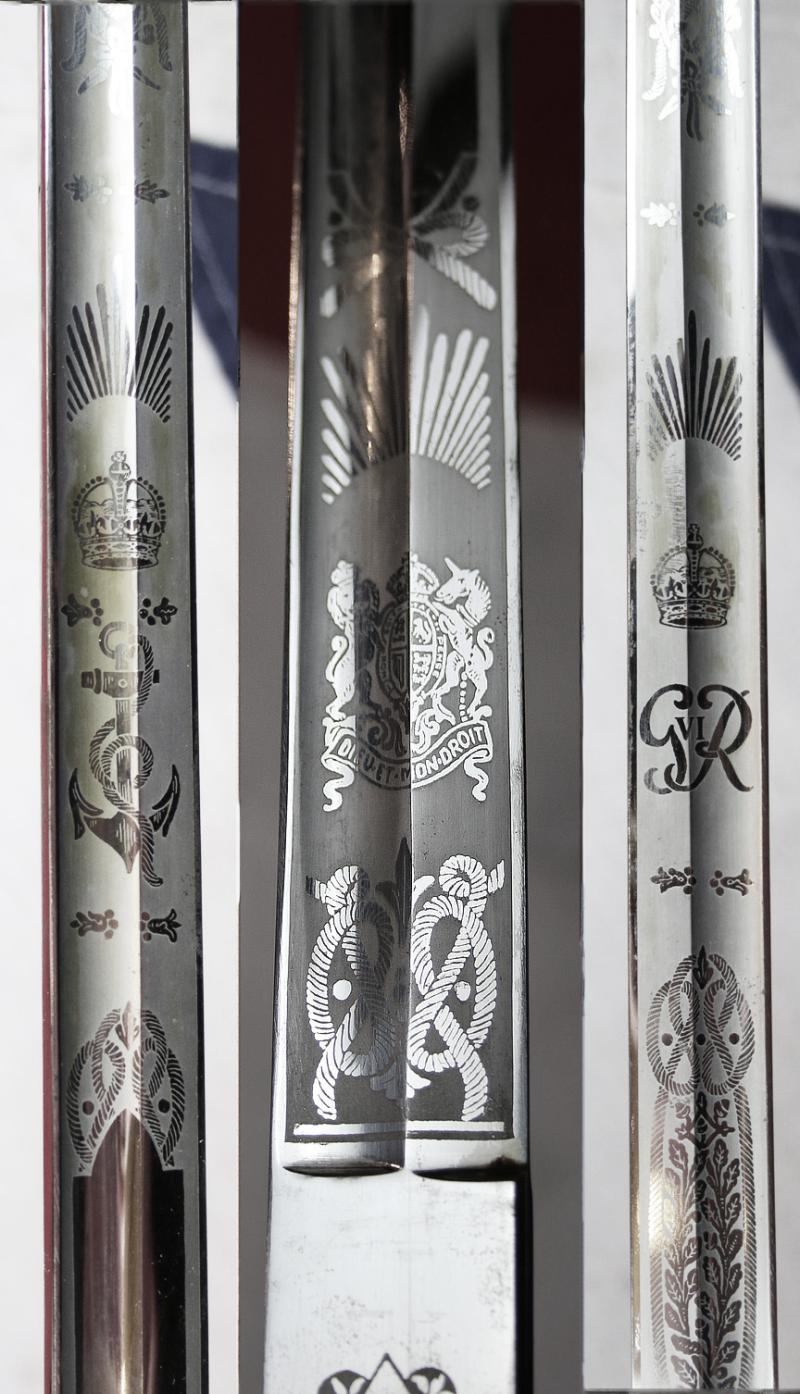
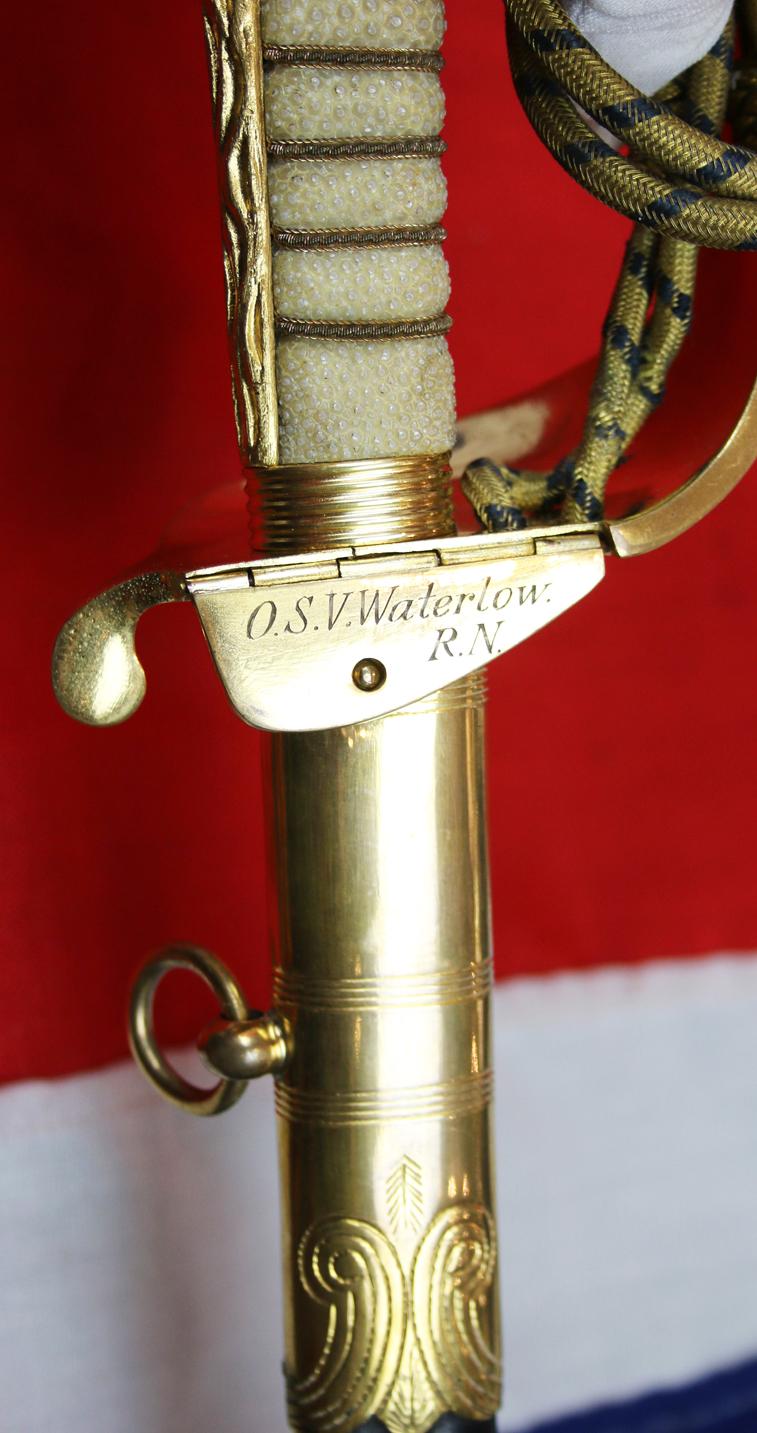
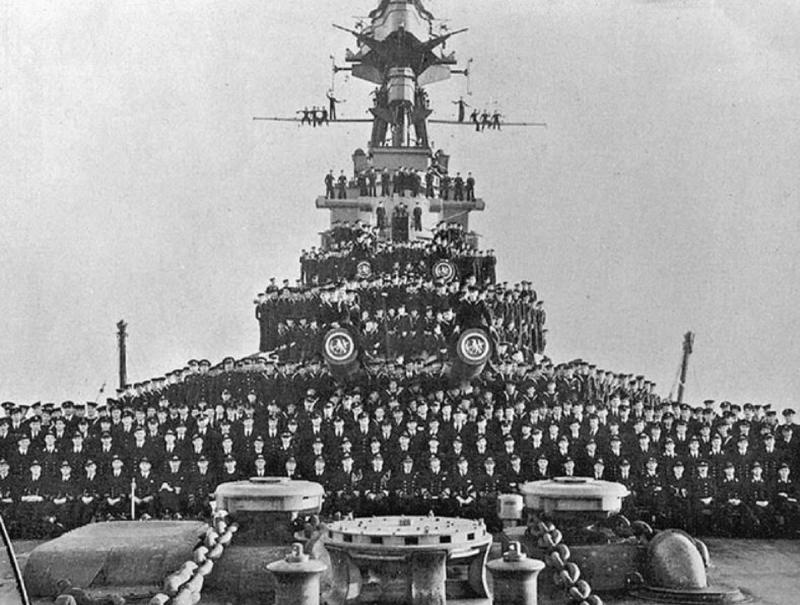
Royal Naval Officer's Sword of Lt. O.S.V. Waterlow D.S.O. M.i.D. A Officer of 'The Mighty Hood', Battlecruiser, HMS Hood. For 20 Years The Largest Warship In the World Tragically Sunk by the German Battleship Bismark May 1941. & The Loss of 1415 Crew
For those of you that are serious maritime collectors, we have the privilege to have acquired a superb and historical 20th century Royal Naval sword, that has just arrived, a stunning 'named' officer’s sword of Lt. O.S.V. Waterlow D.S.O. M.i.D, a former member of the tragic HMS Hood’s ships company.
His brother was also a member of the ship's company, and was KIA in the sinking.
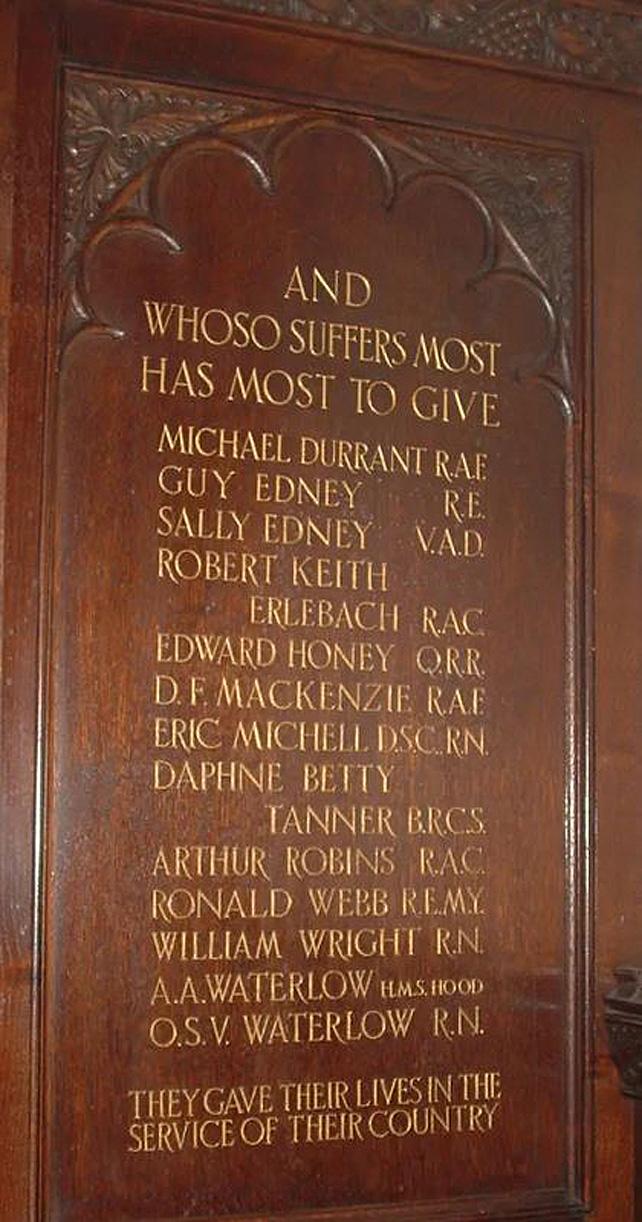
See the memorial plaque in the gallery, for both brothers that served on the Mighty Hood, that were lost at sea, in St Mary's Church, Oatlands, Surrey.
Lt. Oscar Stephen Verity Waterlow, and his brother Signalman A.A.Waterlow are both listed on the crew list by the HMS Hood Association.
HMS Hood, one of the most famous warships in the world, was an Admiral-class battlecruiser and the largest warship in the Royal Navy for 20 years.
Affectionately known as "The Mighty Hood," she served as a potent global symbol of British power.
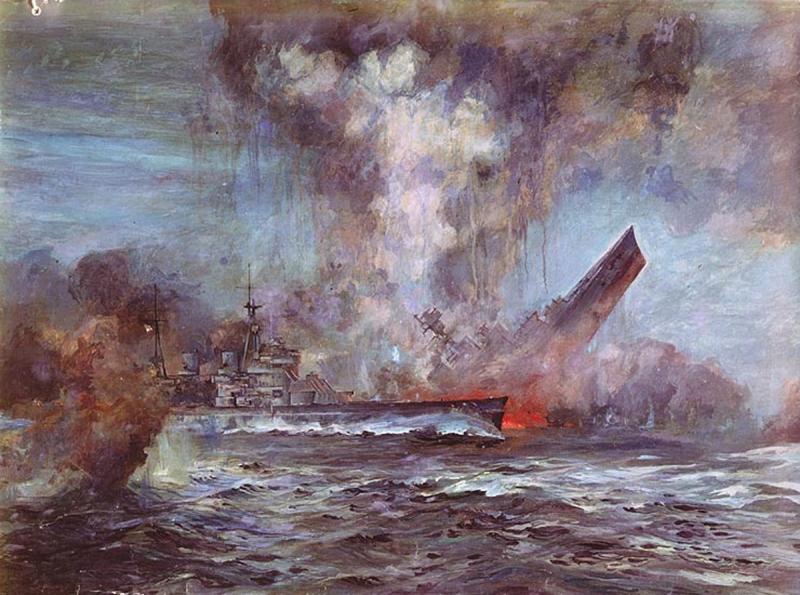
During World War II, in the Battle of the Denmark Strait a fatal shell from the German battleship Bismarck struck her in May 1941, causing a catastrophic explosion that claimed 1,415 lives.
Probably the most infamous sinking of a British warship in history. A naval tragedy almost beyond comprehension for the people of Britain at the time.
On May 24, 1941, HMS Hood and the battleship HMS Prince of Wales intercepted the German battleship Bismarck and cruiser Prinz Eugen in the Battle of the Denmark Strait. During the engagement, a single shell from the Bismarck pierced Hood's armour and detonated her internal magazines. The ship broke apart and sank in just minutes. Tragically, there were only three survivors from a crew of 1,418
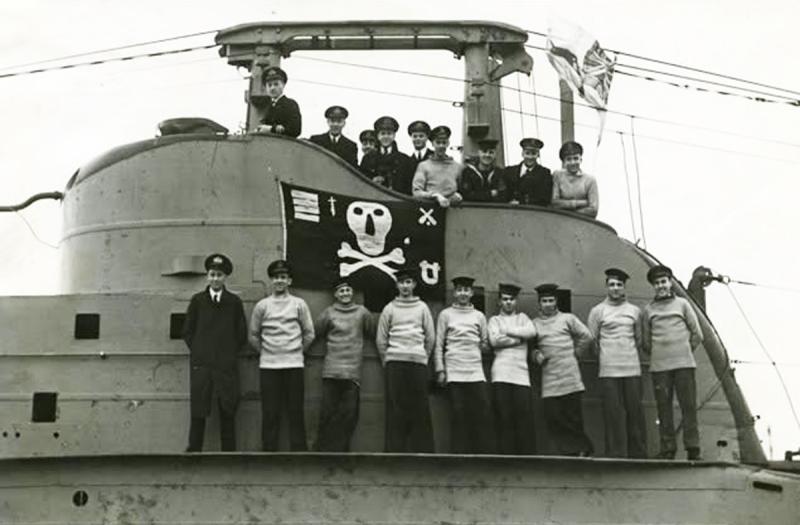
A KIA officer whose brother was also part of the Hood’s crew, and was lost at sea in the Hood's great combat battle and subsequent sinking. Both brothers were lost at sea in WW2, one on the Mighty Hood, the other, Lt. O.S.V. Waterlow D.S.O. M.i.D, R.N.,who had earlier transferred off the Hood, to serve as Lt. of a submariner crew, HMS Talisman, was also lost at sea, in its own tragic sinking off the Italian coast. Lt Waterlow was awarded the D.S.O. in May 1942 for five Mediterranean War Patrols during the period August-December 1941, aboard the submarine Talisman.
When war with Germany was declared, Hood was operating in the area around Iceland, and she spent the next several months hunting for German commerce raiders and blockade runners between Iceland and the Norwegian Sea. After a brief overhaul of her propulsion system, she sailed as the flagship of Force H, and participated in the destruction of the French fleet at Mers-el-Kebir. Transferred to the Home Fleet shortly afterwards, Hood was dispatched to Scapa Flow, and operated in the area as a convoy escort and later as a defence against a potential German invasion fleet. In May 1941, Hood and the battleship Prince of Wales were ordered to intercept the German battleship Bismarck and the heavy cruiser Prinz Eugen, which were en route to the Atlantic, where they were to attack convoys. On 24 May 1941, early in the Battle of the Denmark Strait, Hood was struck by several German shells, exploded, and sank with the loss of all but 3 of her crew of 1,418.
The Battle of the Denmark Strait on May 24, 1941, was a pivotal WWII naval clash where the German battleship Bismarck and heavy cruiser Prinz Eugen intercepted the Royal Navy's battlecruiser HMS Hood and battleship HMS Prince of Wales. In a brief eight-minute firefight, a shell from Bismarck detonated Hood's magazine, sinking the pride of the Royal Navy with all but three of her 1,418 crew.
Operating under Operation Rheinübung to break into the Atlantic shipping lanes, the German fleet aimed to bypass heavy Royal Navy surface units. British Vice Admiral Lancelot Holland, aboard HMS Hood, ordered his ships to close the distance to German forces at a rapid pace to shield Hood's notoriously thin deck armour from plunging long-range fire.
At 05:52 AM, the British forces engaged at a distance of about 12.5 miles (23 kilometers). In the subsequent exchange, Bismarck concentrated her fire on the Hood. Shortly after the British turn to port, German salvos struck HMS Hood near her mainmast, resulting in a catastrophic explosion that broke the vessel in two. Despite the total loss of the Hood, the engagement proved strategically detrimental to Germany. HMS Prince of Wales survived the initial clash but sustained heavy damage. Before retreating, she successfully fired three shells into the Bismarck. One of these hits ruptured the German battleship's fuel tanks and disabled a forward boiler, severely limiting her speed and forcing the Bismarck to abandon her Atlantic raiding mission and attempt to head for a French port for repairs.This damage ultimately led to the historic, days-long Royal Navy hunt for the Bismarck, resulting in her sinking just three days later on May 27, 1941
Submarine Talisman, with, as part of the boats compliment, Lt O.S.V. Waterlow, had a relatively short but active career, spending most of her time in the Mediterranean.
One of her first actions was the capture of the French fishing vessel Le Clipper, which was then used to observe U-boat movements off the Gironde estuary before being brought into Falmouth, Cornwall. She later attacked HMS Otus by mistake, but was unsuccessful. She went on to sink two sailing vessels with its deck gun, the Vichy-French passenger ship Théophile Gautier and the Italian merchant Calitea, as well as destroying the grounded wreck of the German merchant Yalova. She also unsuccessfully attacked the German merchant Salzburg and an Italian convoy, missing the Italian merchant Lauretta, and being heavily depth charged by the escorting Italian torpedo boat Libra.
Talisman left Gibraltar on 10 September 1942 carrying supplies to Malta, where she was due no later than 18 September. She reported sighting a U-boat off Philippeville, Algeria on 15 September; a Gibraltar-based Sunderland of 202 Squadron was sent out and caught the Italian submarine, probably the Alabastro, on the surface and sank her.
Nothing was heard from Talisman again and she failed to arrive at Malta. She is presumed either to have hit an Italian mine off Sicily or to have been destroyed by Italian surface forces on 17 September. She was declared overdue on 18 September 1942.
This historical sword has been specialist artisan cleaned and conserved for two full days, and returned its original gilding and blade to as new condition.
Naturally, as such, it is perfectly suitable for current service use
Code: 26294
Price
on
Request