
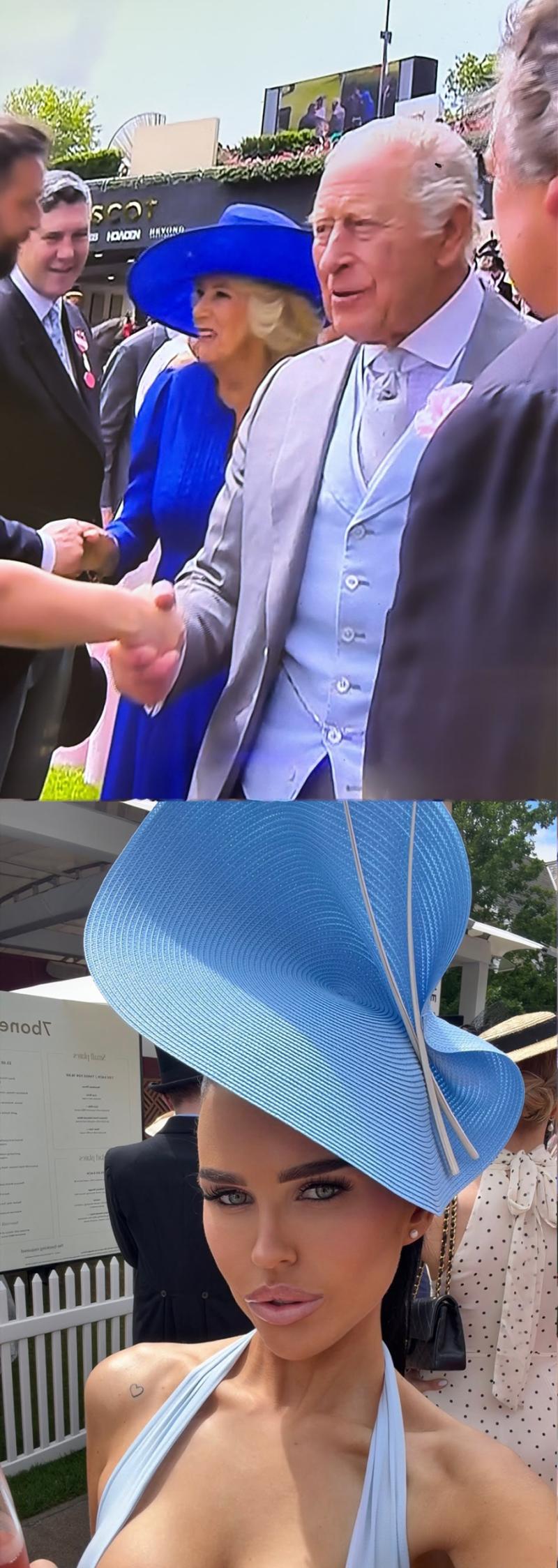

Our Girl 'Holly' Invited to Pop Over To Ascot To See Their Majesties { Ensuring Beforehand Her Outfit Co-ordinates Nicely} Her Grandmother Judith Used To Regularly Ride Against the Queen at Royal Windsor Horse Show
1711
QUEEN ANNE FINDS A PLACE FOR "HORSES TO GALLOP AT FULL STRETCH"
In 1711 it was Queen Anne who first saw the potential for a racecourse at East Cote, declaring that it looked an ideal place for “horses to gallop at full stretch” while out riding. Her Majesty’s Plate, worth 100 guineas and open to any horse, mare or gelding over the age of six, took place on 11th August. Each horse was required to carry a weight of 12st and seven runners took part. The race consisted of three separate heats which were four miles long (each heat was about the length of the Grand National), so the winner would have been a horse with tremendous stamina.
1822
AN ENCLOSURE FIT FOR A KING
Although a Royal Stand dates back to the 1790's, the Royal Enclosure that current regulars are used to at Ascot was conceived in 1822 when King George IV commissioned a two-storey stand to be built with a surrounding lawn. Access was by invitation of the King. The Royal Enclosure was further developed in the mid-nineteenth century when the Emperor of Russia, Nicholas I, visited Ascot for the first time as a guest of Queen Victoria and her husband Prince Albert. The concern raised from an impromptu descent in to the winners’ enclosure by the Royal Party prompted authorities to enclose the area in front of the Royal Stand in 1845. To this day entry is still by invitation only.
2012
DEFINING A LEGACY
In Memorium; one of our friends and esteemed regulars Sir Henry Cecil
Sir Henry Cecil trained a then record 75 winners at Royal Ascot. He had dominated the meeting from the late 1970s through to the mid-90s before enduring a fallow period. Those rocky times were exorcised in his last years, thanks to his training of the wonder horse Frankel. It completed a glorious renaissance, all the more remarkable considering he was battling a terminal illness.
The highest rated horse in flat-racing history, Frankel, retired unbeaten after a career which included five appearances at Ascot and a stunning victory in the Queen Anne Stakes at Royal Ascot 2012.
Code: 26265
Price
on
Request