
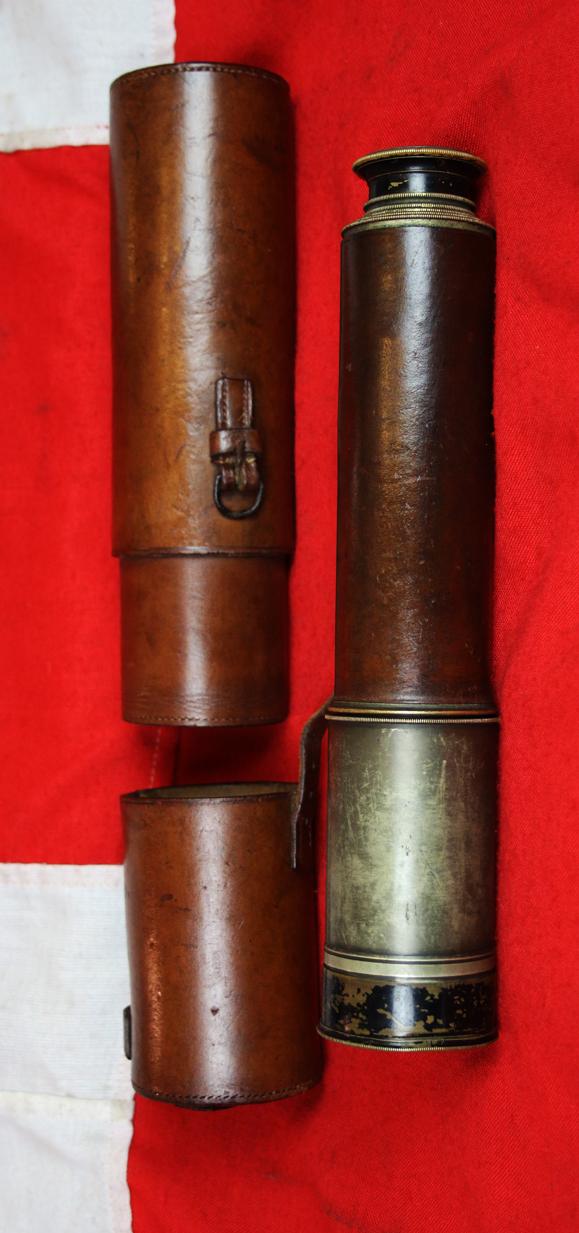
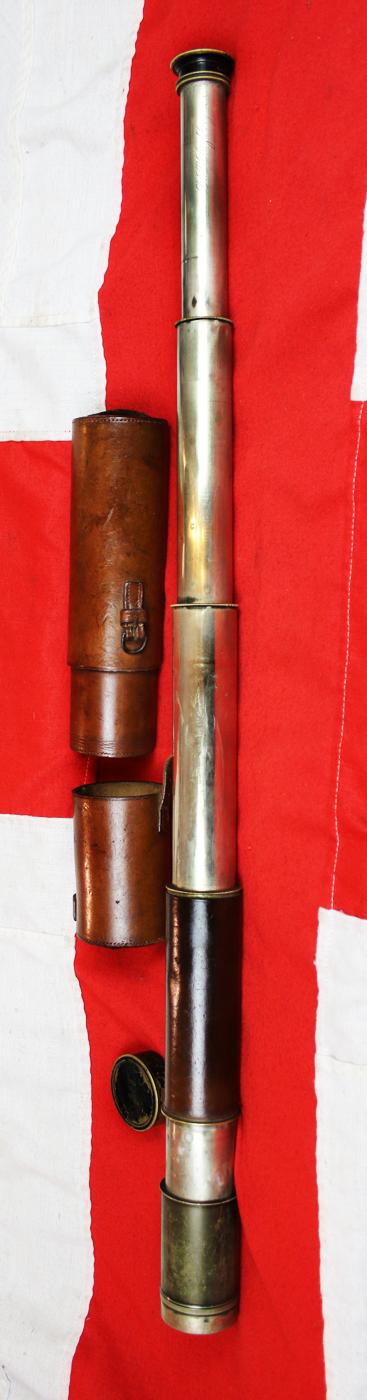
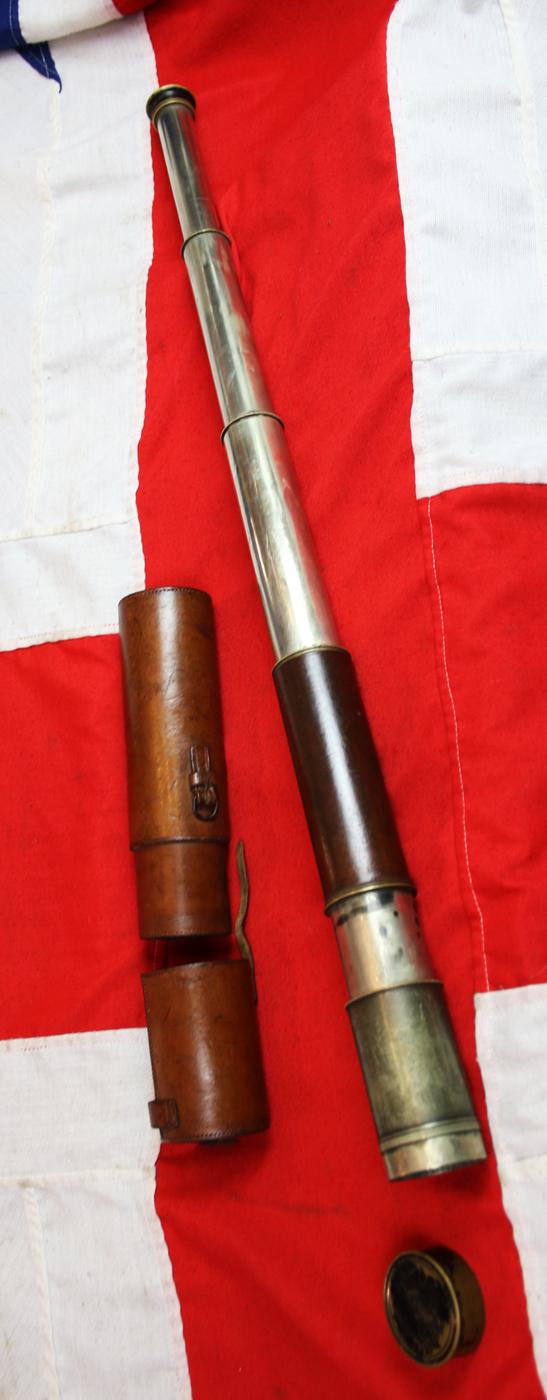
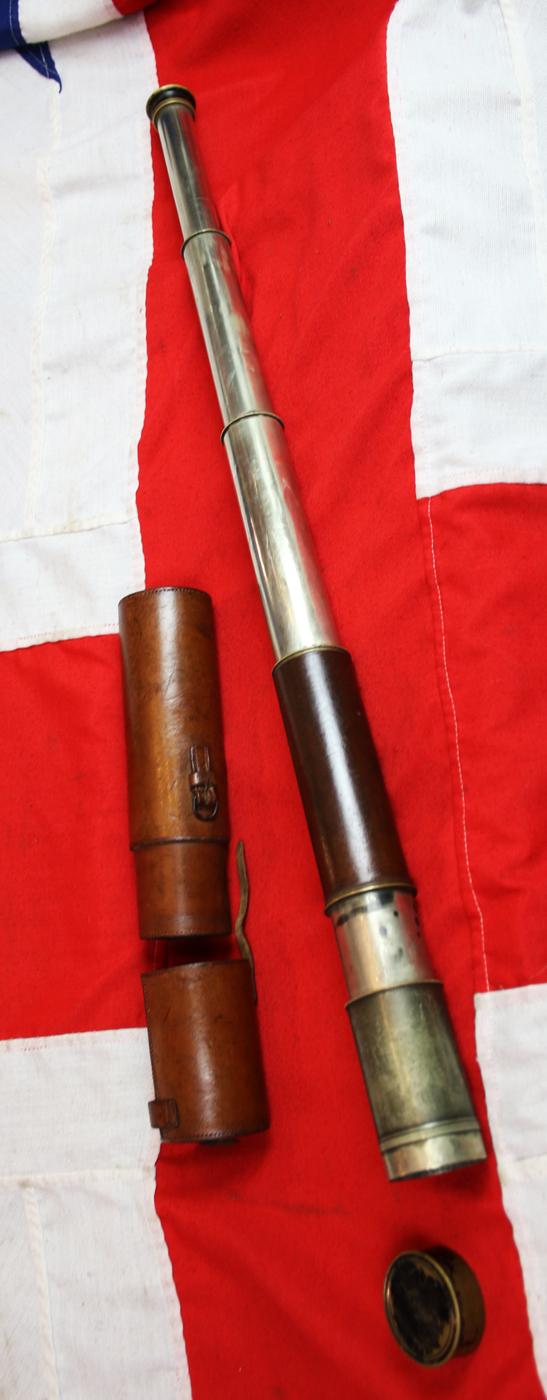
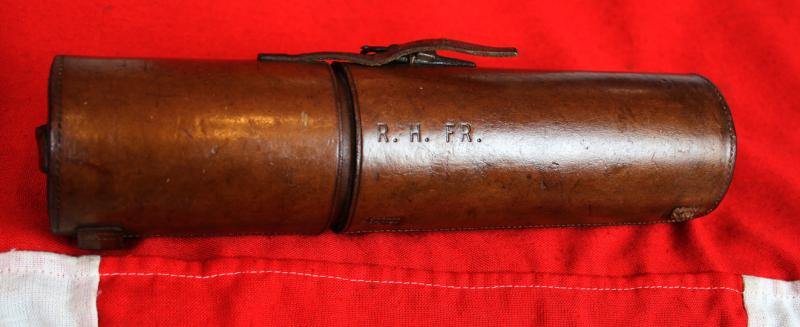
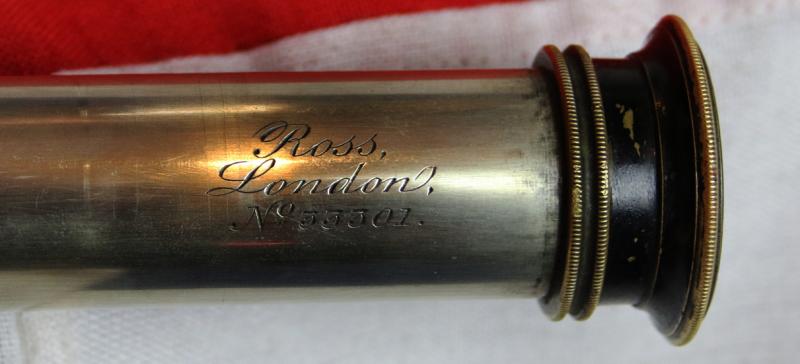
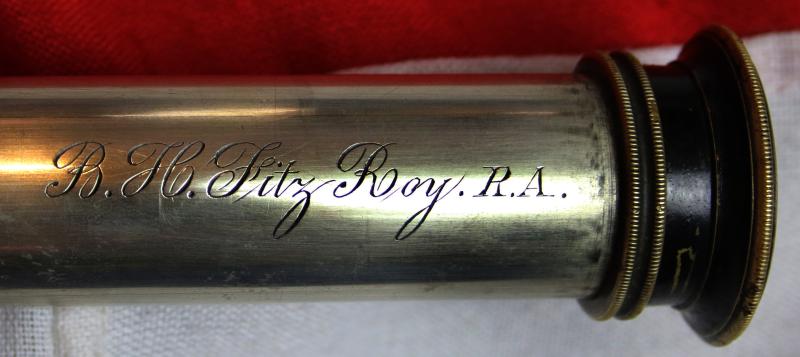
A Stunning, Finest, And Historical Antique Ross Telescope, English, 3 Draw, Terrestrial Refractor, Boer War Period, Named For Major Robert Hope Fitzroy. Royal Artillery. Ross Is One Of The Great Names In The World Of British Optical Instruments.
In exemplary condition, a superb telescope of great Boer War and WW1, military, 'identifiable' provenance.
Major Robert Hope Fitzroy, Royal Artillery.
Major Robert Hope Fitzroy (1881–1952) was a British Army officer who served in the Royal Garrison Artillery. Born on September 10, 1881, he was the son of Lieutenant-Colonel William Fitzroy and Gertrude Mary Wentworth.
He had the following military and personal profile; He began his military career around the time of the Second Boer War (1899–1902). And became a major in WW1 in the RGA, the Royal Garrison Artillery.
The RGA operated the huge heavy artillery at the Western Front.
The RGA grew into a very large component of the British Army, being armed with heavy, large-calibre guns and howitzers that were positioned some way behind the front line and had immense destructive power. With the new long-range small arms available to the infantry in the era before World War I, artillery fighting in the infantry line was increasingly vulnerable to small-arms fire. The solution to this was the principle of standing off and engaging the enemy with indirect fire. Henceforth the artillery would be positioned well behind the infantry battle line, firing at unseen targets, controlled by a forward artillery observer. Later in the war, advances in the science of gunnery enabled guns to be aimed at co-ordinates on a map calculated with geometry and mathematics. As the war developed, the heavy artillery and the techniques of long-range artillery were massively developed. The RGA was often supported by the Royal Flying Corps (RFC) who had devised a system where pilots could use wireless telegraphy to give corrections of aim to the guns. The RFC aircraft carried a wireless set and a map and after identifying the position of an enemy target the pilot was able to transmit messages such as A5, B3, etc. in Morse code to an RFC land station attached to a heavy artillery unit, such as Royal Garrison Artillery Siege Batteries.
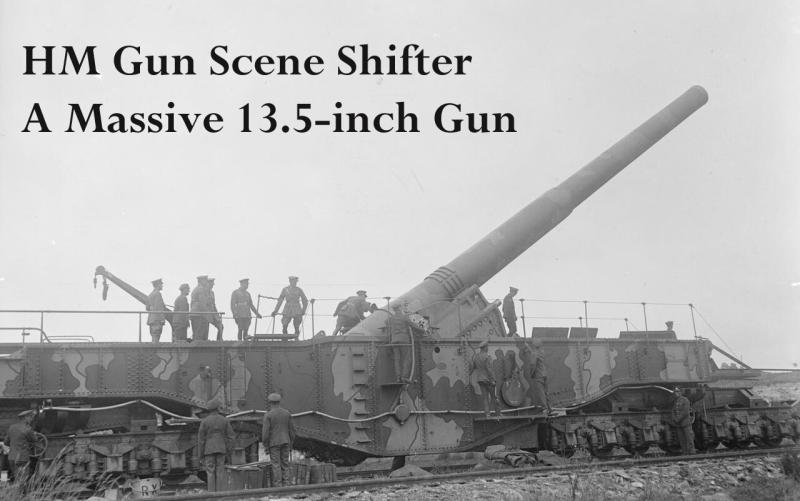
HM Gun Scene Shifter was a massive 13.5-inch British railway gun that saw active service across two world wars. Today, its incredible legacy lives on through the history of British heavy artillery.
A breakdown of its operational history:
World War I
The original 14-inch barrel was initially built to equip an Imperial Japanese Navy battleship, but the order was canceled.The "Shift": Requisitioned by the British Army, it was mounted onto a railway chassis and given its iconic name.Western Front: Operated by the Royal Garrison Artillery in France, it provided crucial long-range interdiction fire on strategic German infrastructure like railway junctions.
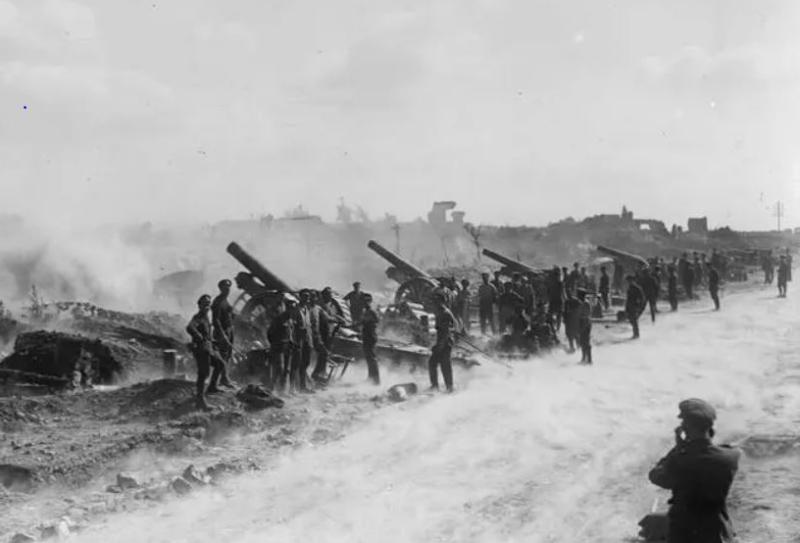
Two pictures in the gallery of HM Gun Scene Shifter and the Second Battle of the Somme. A Battery of 8-inch howitzers (Royal Garrison Artillery) in action on the roadside at St. Leger.
Code: 26226
895.00 GBP