
Truly Exceptional, Original, Highest Grade Napoleonic Wars Period Museum Piece Silver Miquelet, A Magnificent Musket Dated 1776 Presented To Ali Pasha the Lion of Alexandria. An All Silver Mounted Miquelet Gun, Another Was Presented to President Jefferson
Just returned today from silver conservation.
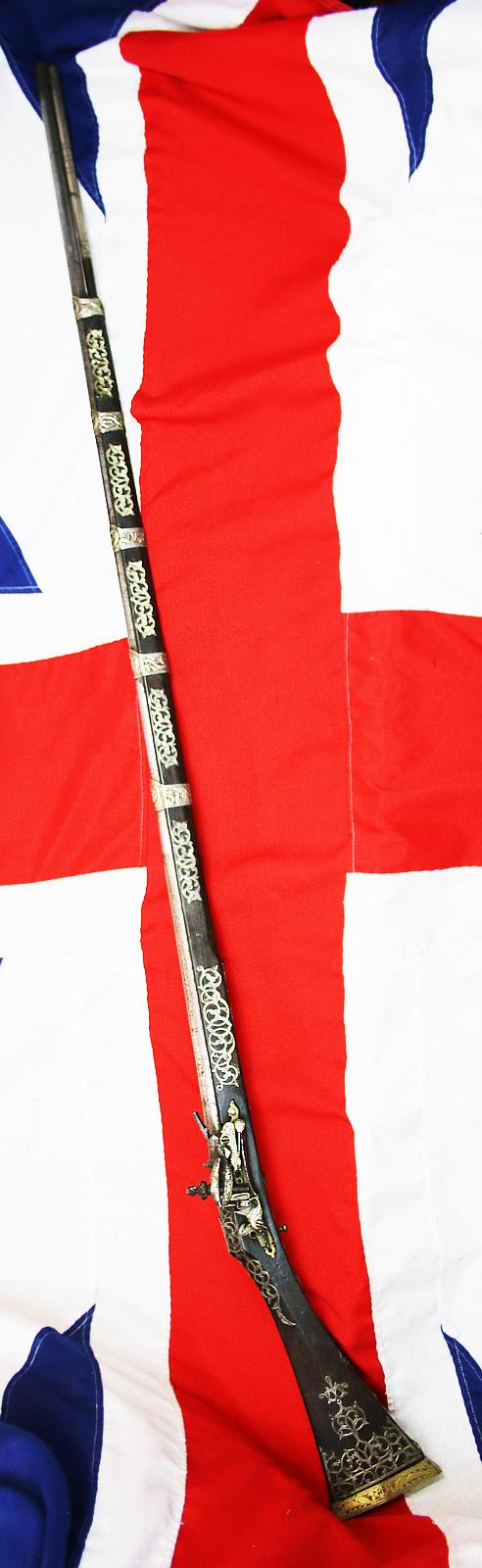
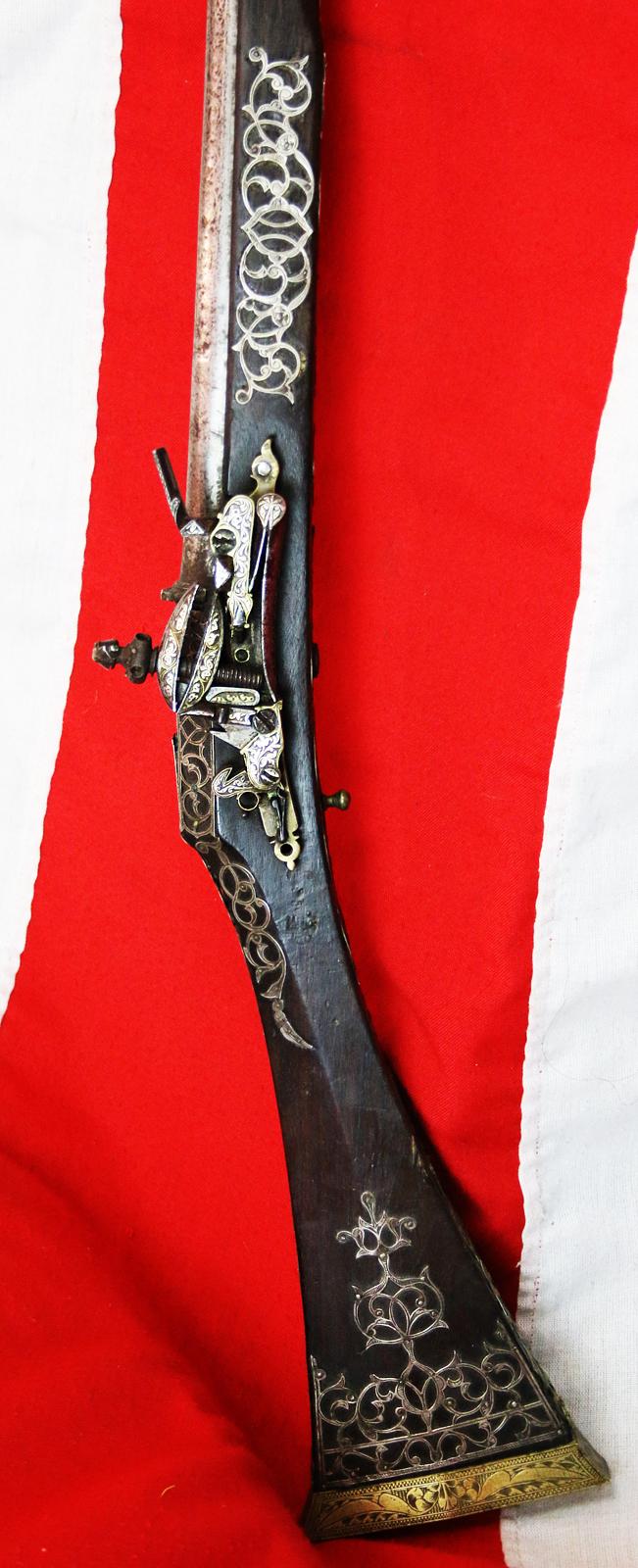
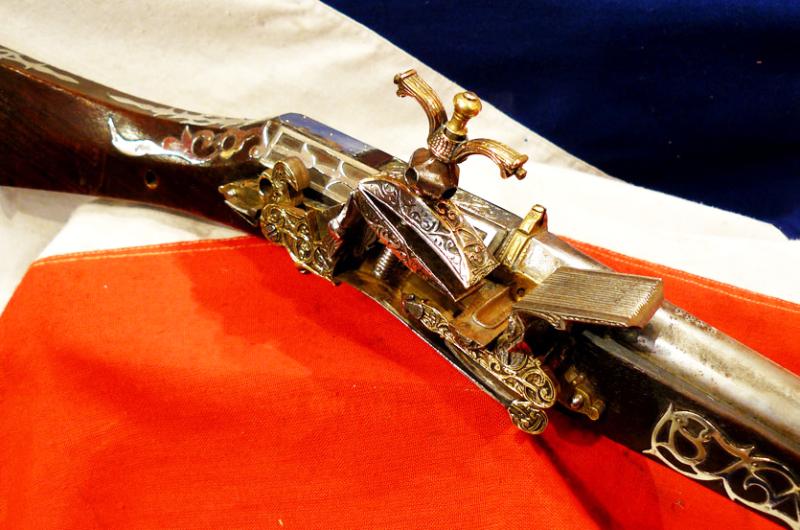
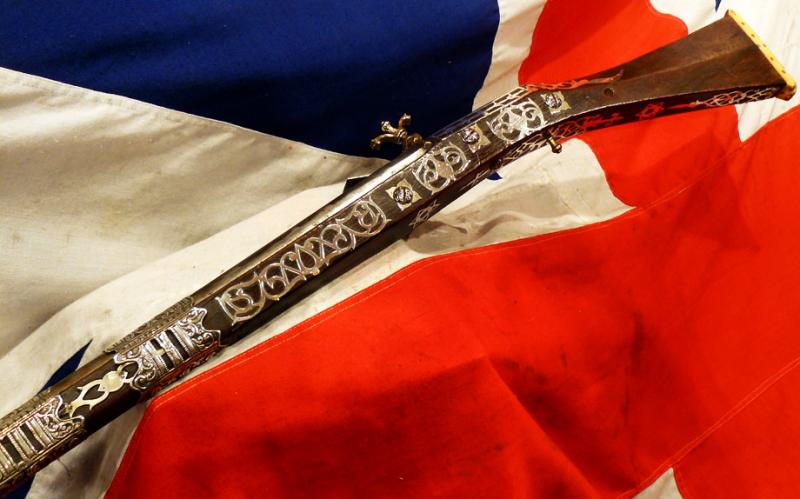
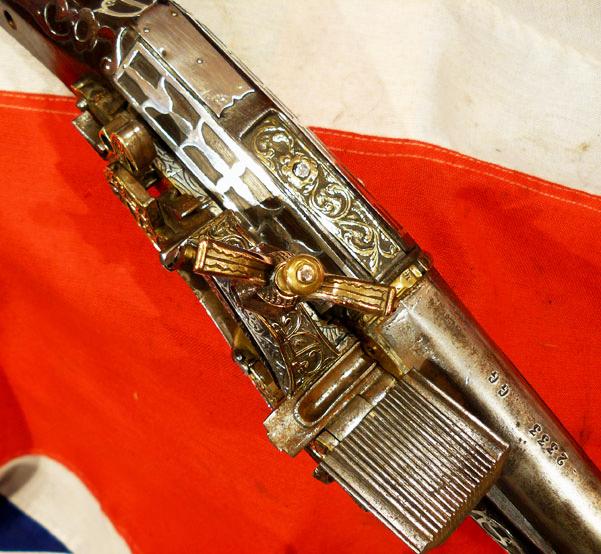
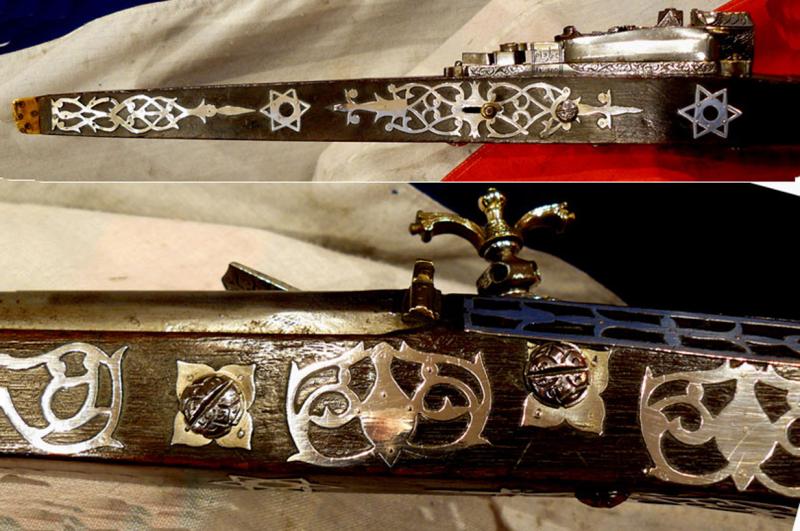
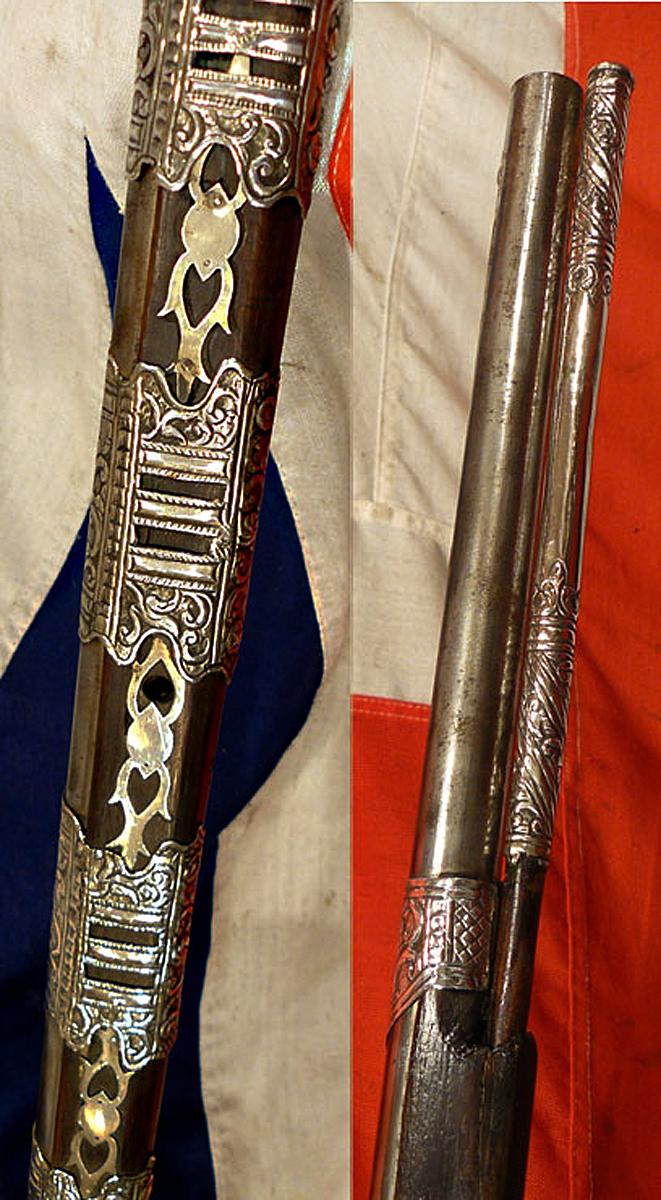
Dated lock 1190 AH which translates to 1776 to 1777 AD. combined with Sultanate mark in script. The lock is stunningly inlaid with silver and gold. The walnut gunstock has around twenty intricate panels of rococo silver inlaid throughout, a very fine long barrel inlaid with an intricate silver design and held by five silver mounting capuchine bands. The ram rod has a long silver fore-end. The stock has a brass butt-stock end, superbly engraved throughout.
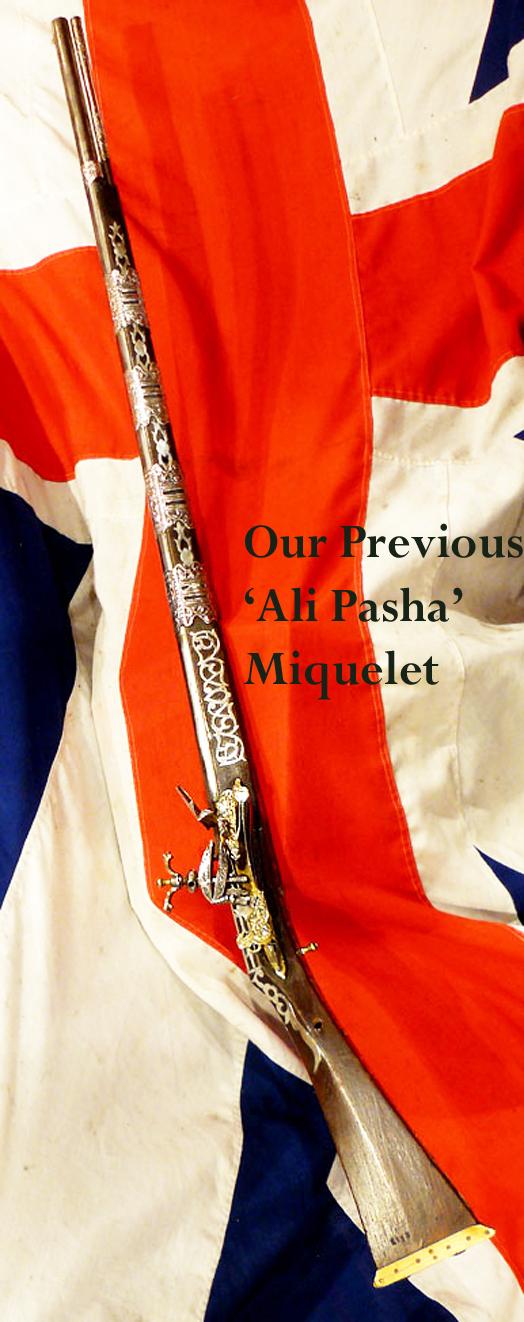
We were astounded when we were offered this fabulous presentation piece, also from the peak of the Ottoman Empire, that was almost certainly e near pair, presented to Ali Pasha, 'The Lion of Alexandria' the famous Great Pasha and ruler in the Ottoman Empire, to another, near identical Miquelet example, that we sold just a few months ago. It is also a near pair to one presented to President Thomas Jefferson {now in the Smithsonian}
Intriguingly, it is more than possible this fabulous silver mounted long gun was likely presented to Ali Pasha in order to counteract its previous presentation pair. When this Miquelet presented it may have been so gifted on behalf of either, The Duke of Wellington or Napoleon Bonaparte, as they were both currying favour with the Great Pasha, in order for him to change allegiances, which he did, from Napoleon to Wellington, and then assisted the Ottoman Army to eject napoleon from Egypt in 1802.
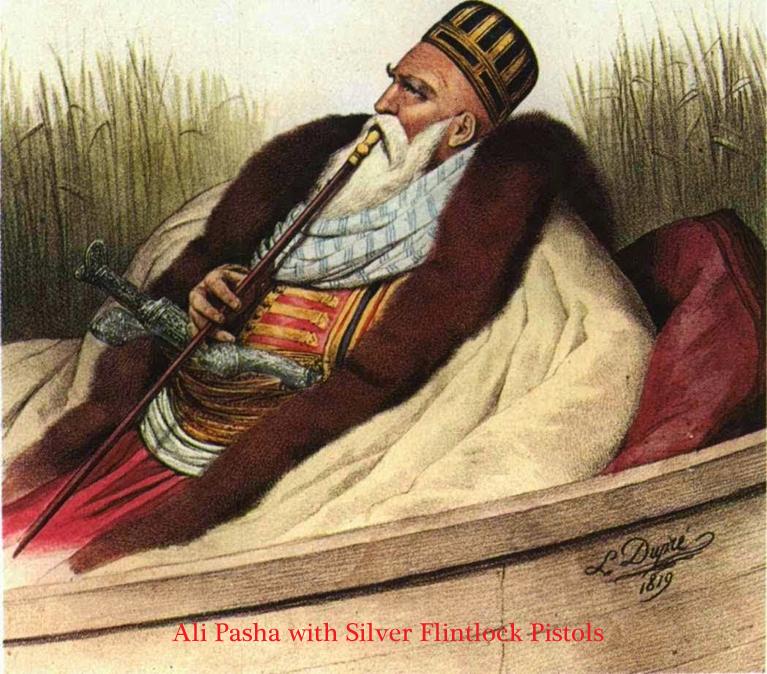
Muhammad 'Ali Pasha, also known as 'the Father of Egypt' and the 'Lion of Alexandria', held a significant role in shaping modern Egypt. After a long period of foreign occupation in Egypt, his ascendancy in 1806 marked a pivotal point as he established control over Egypt and Sudan, a domination that endured until the Egyptian revolution of 1952.
Born in Kavalla, Macedonia in the late 1760s, Muhammad 'Ali gained prominence as a commander in the Albanian military, collaborating with British and Ottoman forces to expel Napoleon Bonaparte's army from Egypt in 1802. After the allied forces withdrew, Muhammad 'Ali remained in power, eventually declaring himself Egypt's de facto ruler in 1806. He skillfully navigated the geo-political complexities of his time, securing recognition from the Ottomans as governor or pasha, and thereby successfully reinstating an autonomous and hereditary dynasty at a time when the Ottoman Empire was exerting growing control over other Arab regions.
Fabulous arms were the great pieces of choice in order to be presented from Kings, Emperors and Generals, to their foreign counterparts {other Kings, Emperors, and Generals} in order to sway their decisions of state, for alliances and influence, essential in times of great war.
This very type of magnificent silver inlaid long gun were renown as the presentation pieces of choice for Emperors, Kings, Pashas and Presidents. President Thomas Jefferson was presented another near identical example just like ours, in November 1805, by the Bey of Tunis, it is now part of the Smithsonian Collection of great arms, in America.
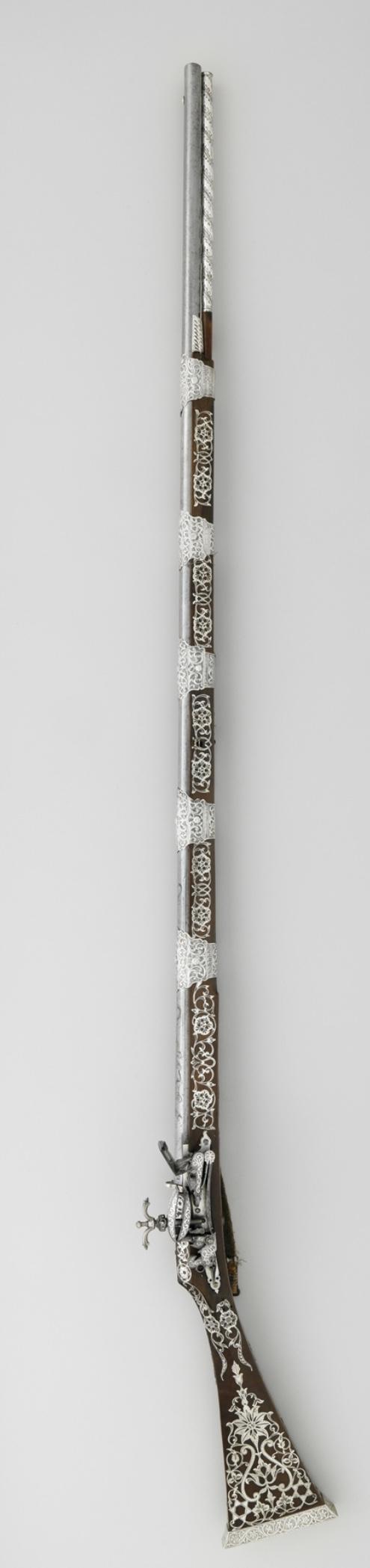
Photo 10 though is Ali Pasha’s other identical example, now in the Metropolitan Museum in New York. Clearly these magnificent silver long guns were the personal favourites of the great Pasha, likely one kept in each of his royal palaces, in his empire.
Ali Pasha of Tepelena had several residences and strongholds, with his primary palace located in Ioannina (modern-day Greece), where he ruled as the Ottoman governor. Additionally, he maintained significant fortresses/residences at Porto Palermo and in his hometown of Tepelenë (both in modern Albania).
Ioannina Palace: His main administrative centre and audience chamber were in Ioannina, which became a cosmopolitan hub under his rule.
Porto Palermo Castle: A well-known coastal fortress on a small peninsula near Himara, often associated with a romantic legend.
Tepelena Castle: A large, 4-hectare castle in Tepelenë served as a vital residence and stronghold.
Butrint Castle: He used a small, fortified, formerly Venetian, structure on an islet at the mouth of the Vivari Channel
Another singularly spectacular ‘statement piece’ for any collection of rare and fine arms or antiques. From the Napoleonic Wars era, made for the famous Ottoman ruler Ali Pasha.
**See photo 10 in the gallery for reference, and link below, to another almost identical example and another of Ali Pasha's miquelets now in the Metropolitan in New York
The great ruler of the Ottoman's, Ali Pasha was, at first, an admirer of Napoleon and formed a brief alliance with him during the Napoleonic wars, but, with changing winds he went against his previous ally to support the British. Napoleon thus sanctioned a planned rebellion against Ali, but the British arrived, as funds were being collected and rebels were being recruited.
Ali's rival, Ibrahim Pasha of Berat, turned to the French and gathered a coalition of Ali's enemies, including Mustafa Pasha of Delvinë, Pronio Aga of Paramythia, Hasan Çapari of Margariti, the Beys of Himara, the Aga of Konispoli and the Souliotes. This coalition began attacking Ali's realm with support from French artillery, and Ali responded by bribing Ibrahim's supporters with British support. Ali besieged Ibrahim Pasha in Berat with an 8,000-man army commanded by the Albanian captain Omer Bey Vrioni, and with the aid of British rockets, Berat finally fell after a year of skirmishing. Ibrahim retired to Vlorë, and Ali told the Porte that he had taken Berat in response to the revolts in upper Albania that were the result of Ibrahim's inability to rule
In 1809, Lord Byron together with John Cam Hobhouse visited Ali's court in Tepelena and Ioannina in 1809.
Byron recorded the encounter in his work Childe Harold. They traveled to Albania to see the country that was, until then, mostly unknown in Britain. Byron presented Albanians as a free people who lived in their state under their leader, Ali Pasha, described by Byron as a
"a man of first abilities, who governs the whole of Albania"
A near identical long gun of Ali Pasha, {the third of its kind} is in the Metropolitan museum, exhibited as the Miquelet Rifle of Ali Pasha. Being cognisant of the manipulations of great rulers of history, it is logical to assume the envoys of both King George for Wellington, and Napoleon were informed exactly how to impress the great Pasha, by presenting him with his favourite silver mounted miquelets, hand made by the rulers gunsmith in his empire. Thus with such magnificent pieces Ali Pasha would be swayed to agree to military alliances and mutual defensive pacts. It clearly worked, but likely both Wellington and Napoleon were unawhere just how ‘flexible’ he was in his allegiances.
His rule by Ali's definition, included central and southern Albania, and parts of mainland Greece; in particular, most of the district of Epirus and the western parts of Thessaly and Macedonia. He managed to stretch his control over the sanjaks of Yanina, Delvina, Vlora and Berat, Elbasan, Ohrid and Monastir, Görice, and Tirhala. Ali was granted the Sanjak of Tirhala in 1787, and he delegated its government in 1788 to his second-born Veli Pasha, who also became Pasha of the Morea Eyalet in 1807.
Ali's eldest son, Muhtar Pasha, was granted the Sanjak of Karli-Eli and the Sanjak of Eğriboz in 1792, stretching for the first time Ali's control down to Livadia and the Gulf of Corinth, except Attica. Muhtar Pasha also became governor of the Sanjak of Ohrid in 1796–7 and of the Sanjak of Vlora and Berat in 1810.
Similar finest examples may be viewed in the Topkapi Museum in Istanbul and the Hermitage in Russia. A most similar gun was presented to President Thomas Jefferson by the Bey of Tunis.
A simply superbly beautiful antique presentation long gun from the Early 19th century. A miquelet gun with a very high quality miquelet toe lock decorated with numerous chiseled and fretted silver panels and inlaid foliate arabesques.
The gun is richly inlaid with silver throughout and fitted with a chisseled bronze-brass butt plate, with matching silver barrel bands, and its original silver mounted ramrod. Figured hardwood three-quarter stock profusely inlaid over its full length with numerous silver plaques.
A most similar gun was a gift of the Russian Romanov Tsar to Augustus II King of Poland and Elector of Saxony on his coronation in Krakow.
That gun is published in the book Prunkwaffen: Waffen und Rustungen aus dem Historischen Museum Dresden by Johannes Schobel (Leipzig, 1973) p.249, pl. 178.
Guns of this style with miquelet actions, were popular throughout the whole of Central, Eastern Europe, Russia, the Caucasus and The Ottoman Empire. However this magnificent piece is a much, much higher quality example, made solely for presentation to potentates, rulers and the like, than is more often seen, and certainly sets it well apart from the usual plain miquelet musket of its type.
After the conquest of Istanbul by Mehmed the Conqueror at 1453, construction of the Topkapi Palace was started at the year 1460 and completed at 1478 .The Palace was built upon an Eastern Roman Acropolis located at the Istanbul Peninsula between Sea of Marmara, Bosphorus and the Golden Horn. Topkapi Palace, was the administrative, educational and art center of the Empire for nearly four hundred years since Mehmed the Conqueror until Sultan Abdulmecid who is the thirty-first Sultan. Although Palace was abandoned by the Ottoman Dynasty by moving to the Dolmabahce Palace at middle 19th century, the Topkapi Palace latterly became a world class museum containing some of the worlds finest antique arms and armour.
The year of Catherine II’s acquisition of the Gotzkowsky collection is the Hermitage museum’s birth date. In 1764 Empress Catherine II acquired the collection formed by Johann Gotzkowski for King Frederick II of Prussia. A rich Berlin merchant and founder of silk and porcelain factories in Berlin, Johann Gotzkowski was one of Frederick's agents, in charge of the purchase of works of art for the royal collection. Frederick II (the Great), owner of a wonderful collection of contemporary French paintings, ordered Gotzkowski to purchase paintings by old masters. The merchant was a zealous agent and it took him only a few years to put together a large collection, but by this time Frederick had lost large sums of money in the Seven Years War and he refused to make the purchase.
The enterprising merchant was forced to look around for alternative buyers and he offered the collection to Russia. Catherine II was pleased to take the opportunity of hurting Frederick's self-esteem and of proving that the Russian State Treasury, despite losses which were no less than those of Prussia, could still afford to make such an expensive acquisition. From this purchase onwards the Hermitage has become one of the foremost museums in the world, alongside the British Museum, The Metropolitan, The Louvre and The Prado.
This miquelet is 71 inches long, {our previous near pair example was 55.5 inches long overall}. This gun was likely made purposely longer in order to greately impress the Pasha that its presenter had greater respect for the Great Pasha. This of course, is, reasonable supposition, we have no way of knowing if it is correct.
As with all our antique guns no license is required as they are all unrestricted antique collectables.
For reference, the rifle of Ali Pasha
https://www.metmuseum.org/art/collection/search/28998
See photo 10 in the gallery of the Metropolitan Museums Miquelet Rifle of Ali Pasha
lock and stock, Algerian; barrel, European
lock and stock, dated A.H. 1224/1809–10 CE; barrel, 18th century
Every single item from The Lanes Armoury is accompanied by our unique Certificate of Authenticity. Part of our continued dedication to maintain the standards forged by us over the past 100 years of our family’s trading, as Britain’s oldest established, and favourite, armoury and gallery
Another magnificent and extremely similar Miquelet, undoubtedly by the same gunsmith of Ali Pasha, was the silver inlaid gun presented to President Thomas Jefferson presented by the Bey of Tunis in 1805 is a 7-foot-long, Miquelet-lock Jezail (musket). It was presented as a gift intended to strengthen diplomatic relations following the end of the Tripolitan War. It now resides by loan in the Smithsonian affiliated museum, the Buffalo Bill Museum of the West in Cody Wyoming
The musket was presented on November 30, 1805, at the Washington Navy Yard by Sidi Soliman Mellimelli, the ambassador of the Bey of Tunis.
Link;
https://americanhistory.si.edu/explore/stories/journeying-west-distinctive-firearms-travel-buffalo-bill-center-west
Lock locates with a single side nail instead of three. Small panel of inlay lacking at the cheek side butt.
Code: 26221
9995.00 GBP