
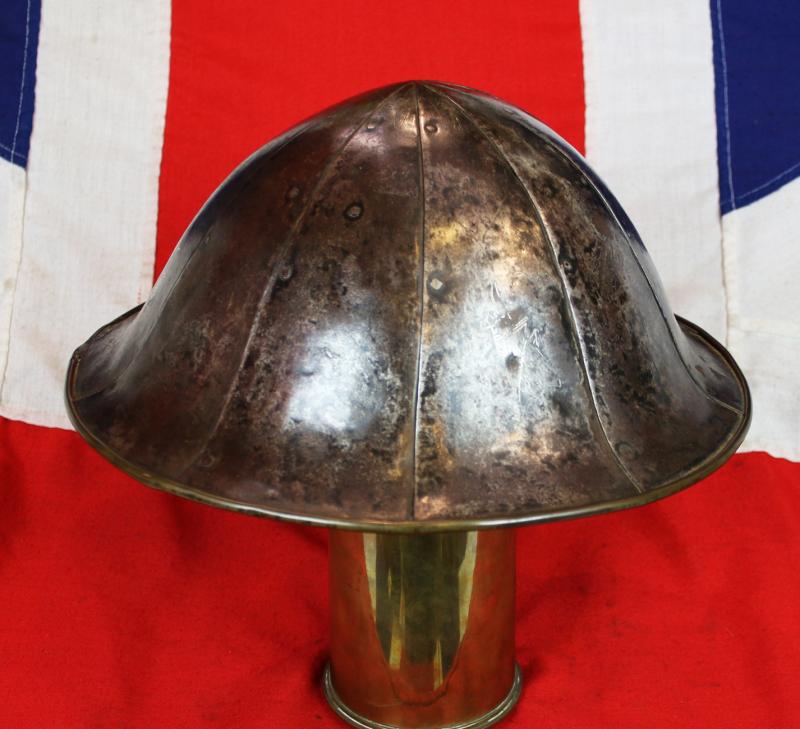
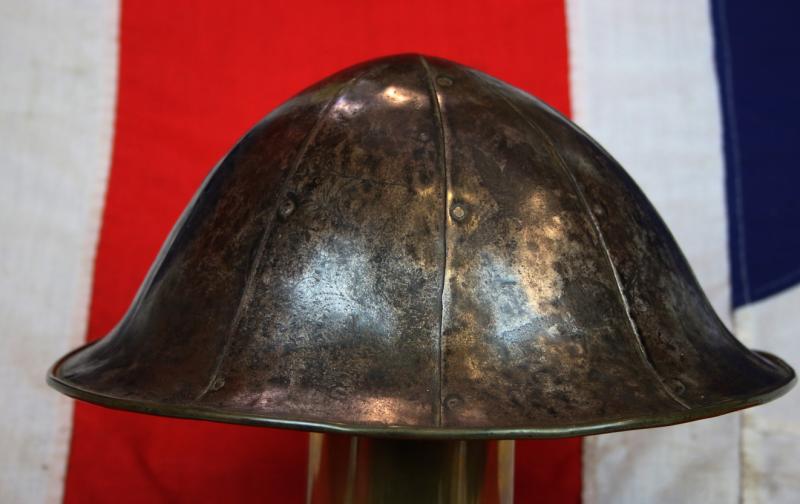
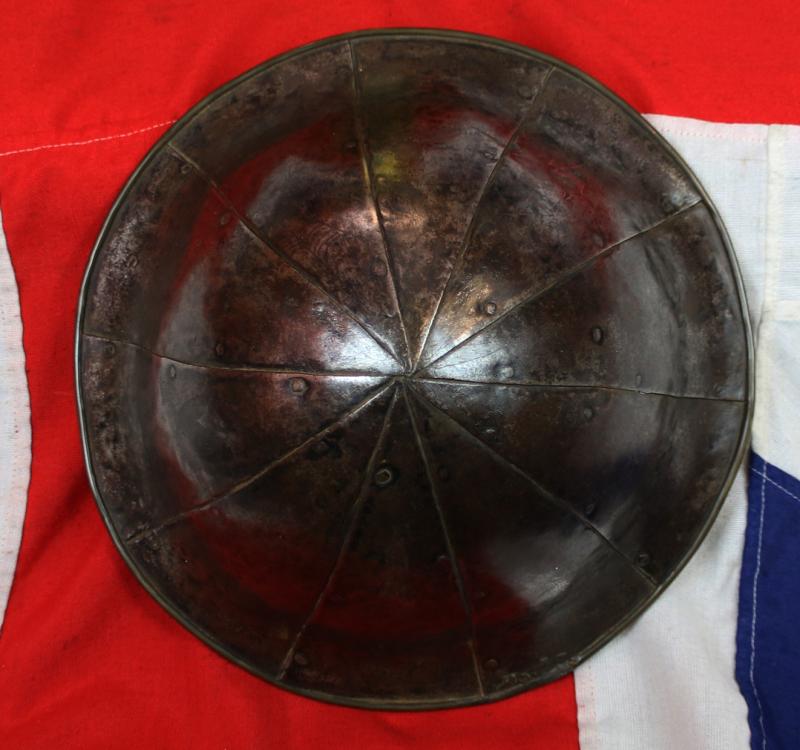
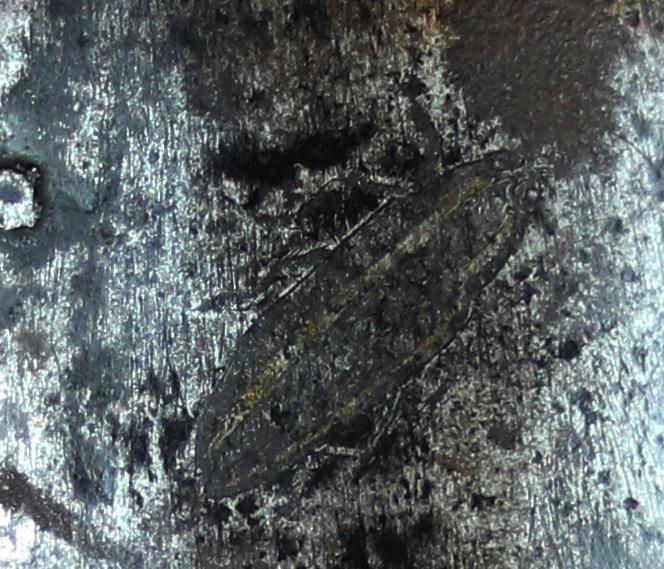
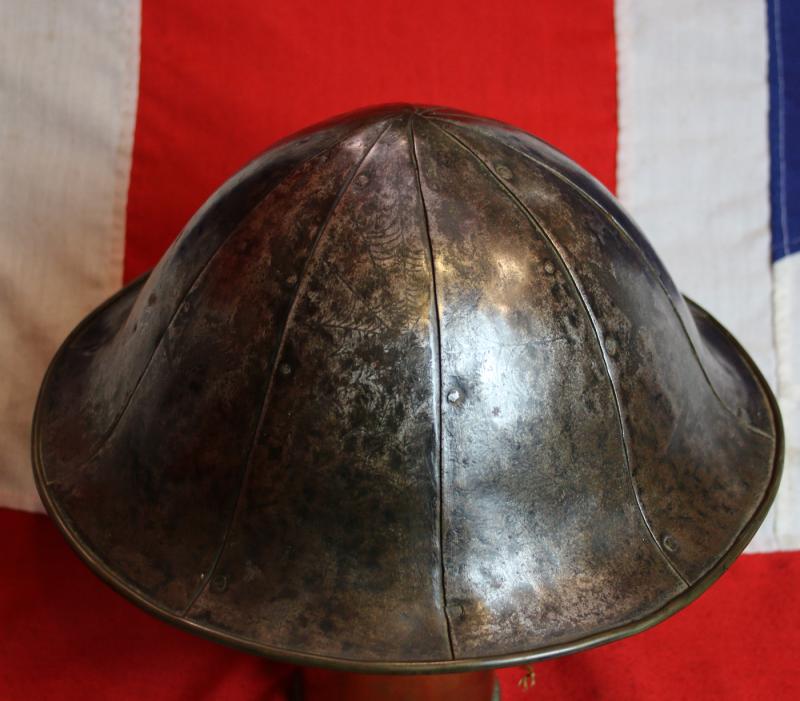

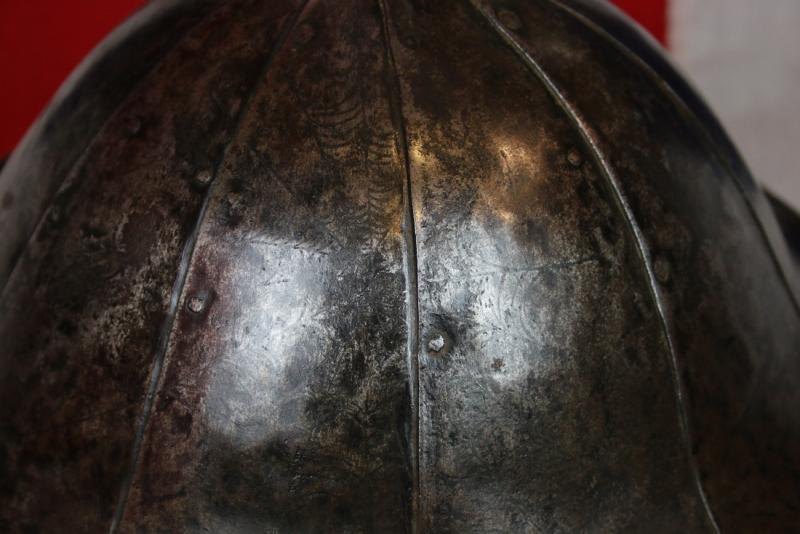
Superb & Rare 10 Plate Tetsu Steel Jingasa Samurai Battle Hat Helmet of The 1700's Traces Of Silver Inlay of Insects Such As Crickets, Catydids & A Spider Web From The Collection of Likely The World's Greatest Authority, Author On Japanese Polearms
From The Collection of Likely The World's Greatest Authority and Author On Japanese Polearms & Their Use
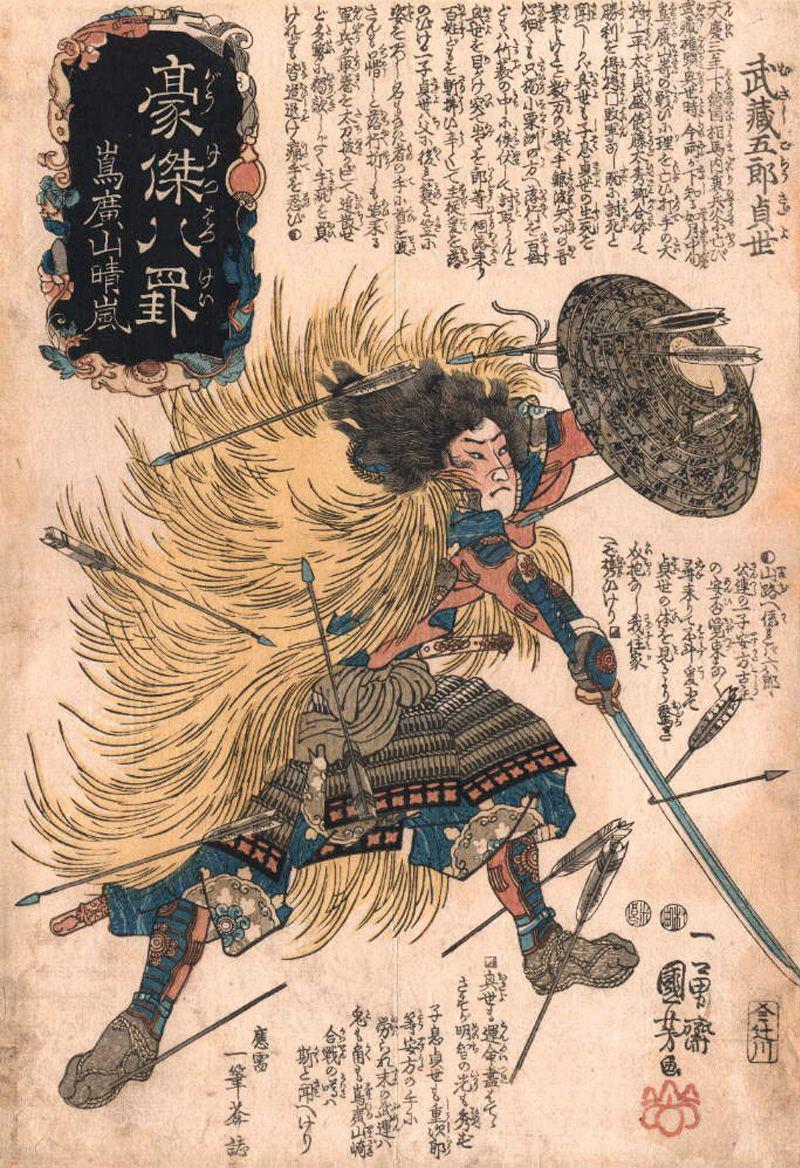
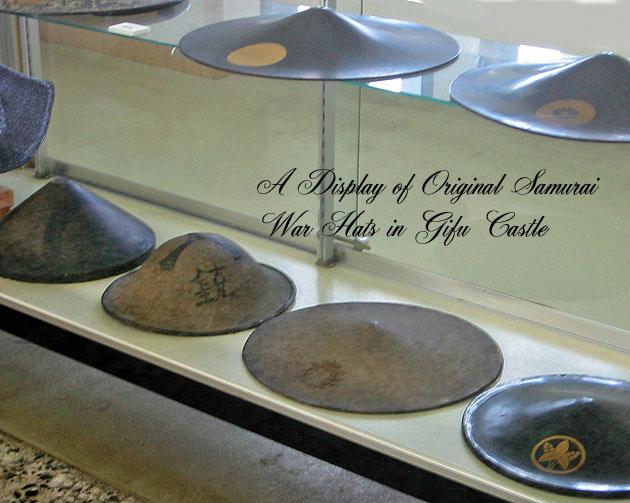
The tetsu jingasa (iron or steel battle hat) was a common form of head protection used in combat in feudal Japan, particularly by foot soldiers (ashigaru) during the Sengoku period (1467–1615) and by both soldiers and samurai during the Edo period (1603–1868). Unlike the elaborate kabuto helmets, the jingasa was lightweight, and shaped like a cone or shallow bowl, often with a wide brim to protect against overhead cuts and rain.
It was mainly worn by ashigaru as part of their okashi gusoku (loaned armour) to protect against overhead strikes, arrows, and musketry. Howeve, being of much higher quality and inlaid with silver decoration this beautiful example was clearly the war hat of a high rank samurai
While offering less protection than a kabuto (traditional helmet), it was highly favored for its light weight and mobility, which were crucial during long, intense battles.
The steel hats were typically lacquered and bore the mon (family crest) of the lord, which allowed identification of allies and enemies in the chaos of battle.
Weapon Usage (Improvised): Some martial arts schools, such as the Yagyu Shingan-ryu, taught that the steel jingasa could be removed and used as a makeshift shield or a striking weapon (similar to a buckler) when in close combat, though this was generally an emergency tactic.
What an incredible, early Edo, original samurai iron jingasa helmet this is. Only a very small percentage of jingasa war hats are made of plate steel but this one is rarer still in that is was inlaid with representation decor of silver insects, some of which are still viewable. including a cricket, a catydid and a superb spiders web.
Insects in general have been celebrated in Japanese culture for centuries. The Lady Who Loved Insects is a classic story of a caterpillar-collecting lady of the 12th century court; the Tamamushi, or Jewel Beetle Shrine, is a seventh century miniature temple, once shingled with 9,000 iridescent beetle forewings. In old Japanese literature, poems upon insects are to be found by thousands, Daisaburo Okumoto is director of the Fabre Insect Museum. An avid insect collector and a scholar of French literature, he has translated many of Fabre's works. He ascribes the popularity of insects in Japan to national character. It seems like Japanese eyes are like macro lenses and Western eyes are wide-angle, he says. A garden in Versailles, it's very wide and symmetrical. But Japanese gardens are continuous from the room and also very small. We feel calm when we look at small things. The medieval Japanese monk Yoshida Kenko put it this way: “If man were never to fade away like the dews of Adashino, never to vanish like the smoke over Toribeyama, how things would lose their power to move us”
A similar metal example, dated to the 19th century, was included in the 2010 exhibition Kyoto-Tokyo: Des Samourais aux Mangas at the Grimaldi Forum in Monaco in 2010.
Code: 26206
1560.00 GBP