
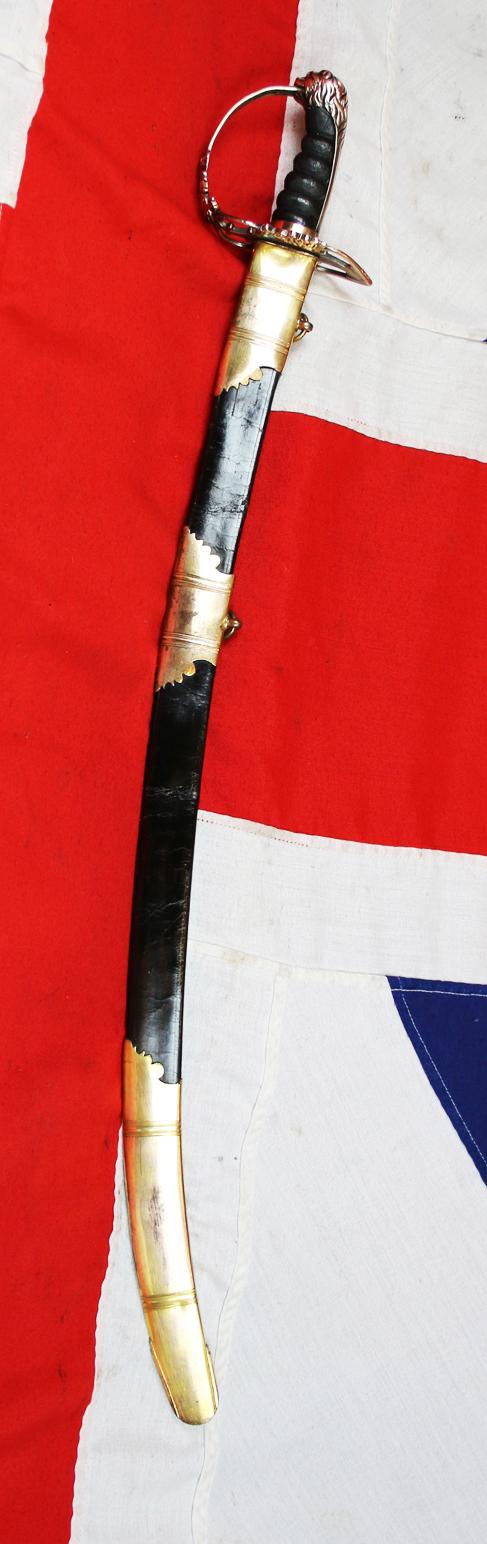
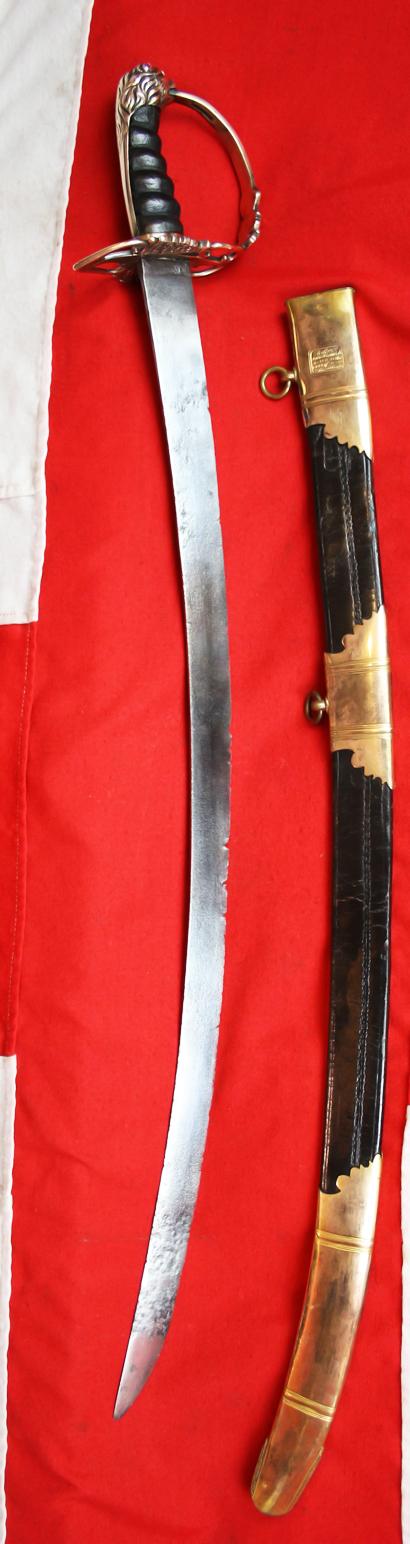

A Very Rare, And Incredibly Beautiful, Regimental British Sword Museum Piece, From The Napoleonic Wars. A 1st Regiment Of Foot Sabre With Battle Honour Crest Of The Sphinx. For The Egyptian Campaign {For the Battles of Aboukir 1801 & Alexandria 1801}
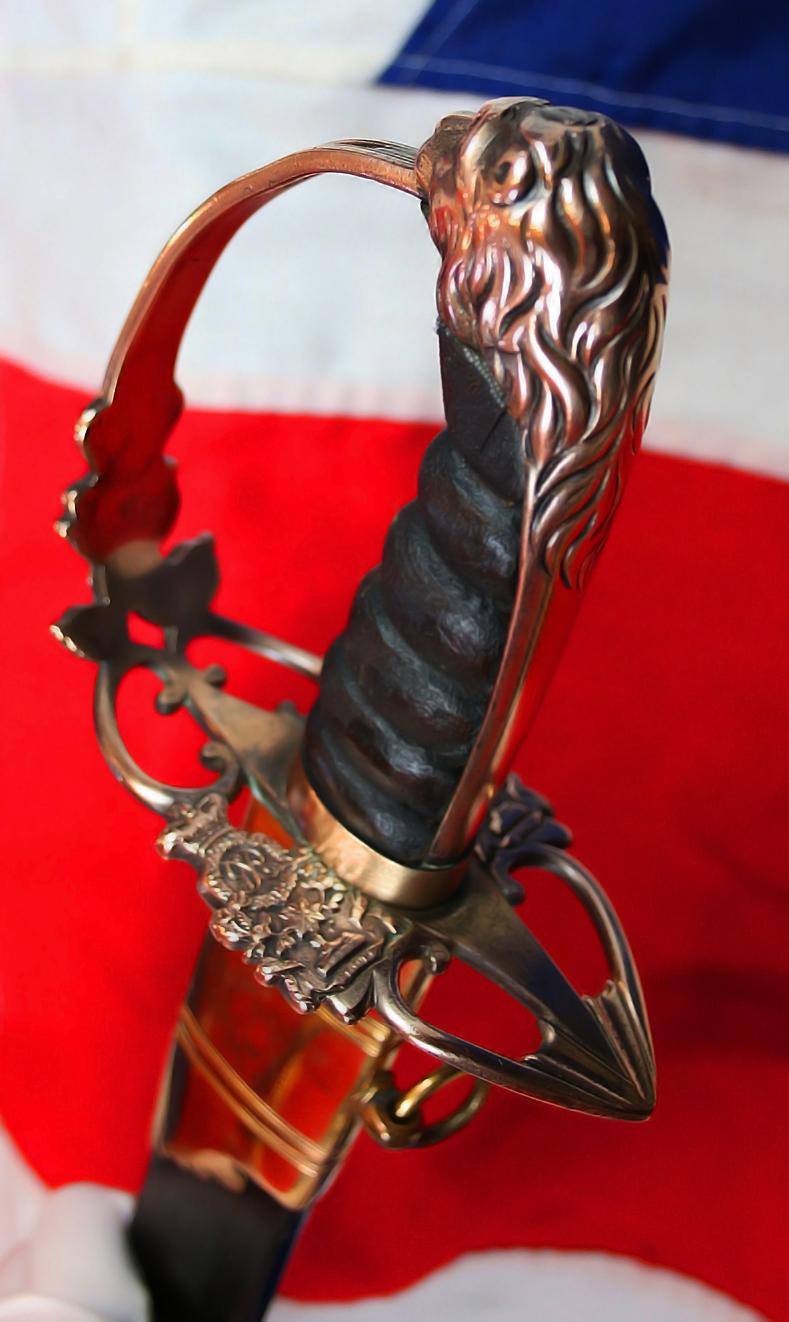
A Beautiful 1803 pattern British combat infantry regimental sword for the Royal Scots, the 1st Regiment of Foot. A glorious museum piece for its combination of beauty and incredible combat history
This wonderous sabre looks as good as anything you will see on display in the Tower of London Armoury museum. This beauty could be the prize 'star' piece of any collection of rare Napoleonic swords
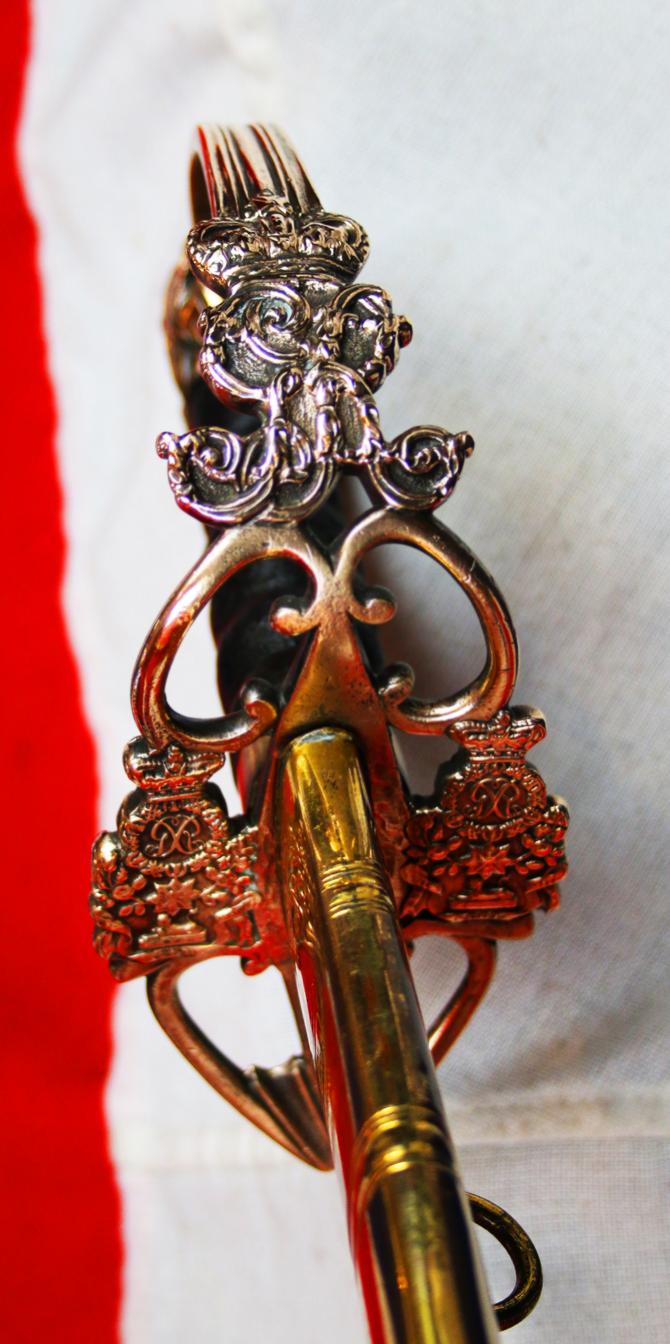
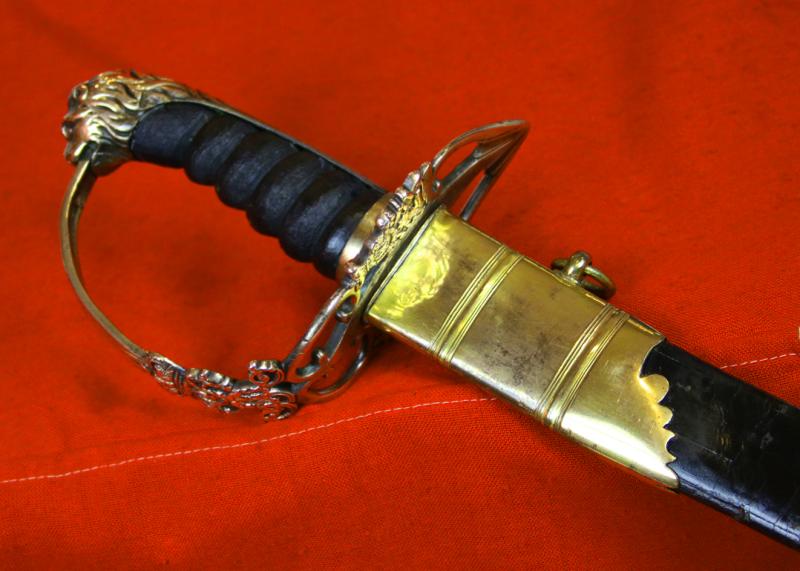
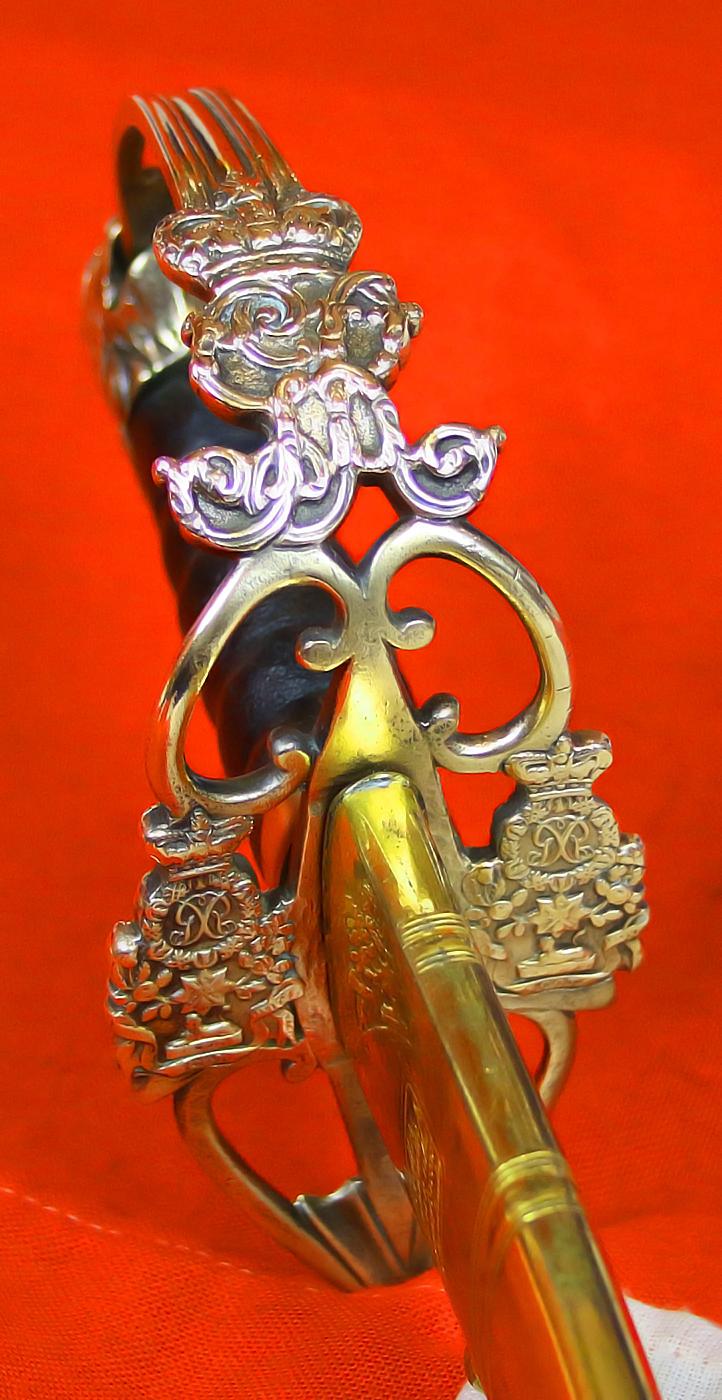
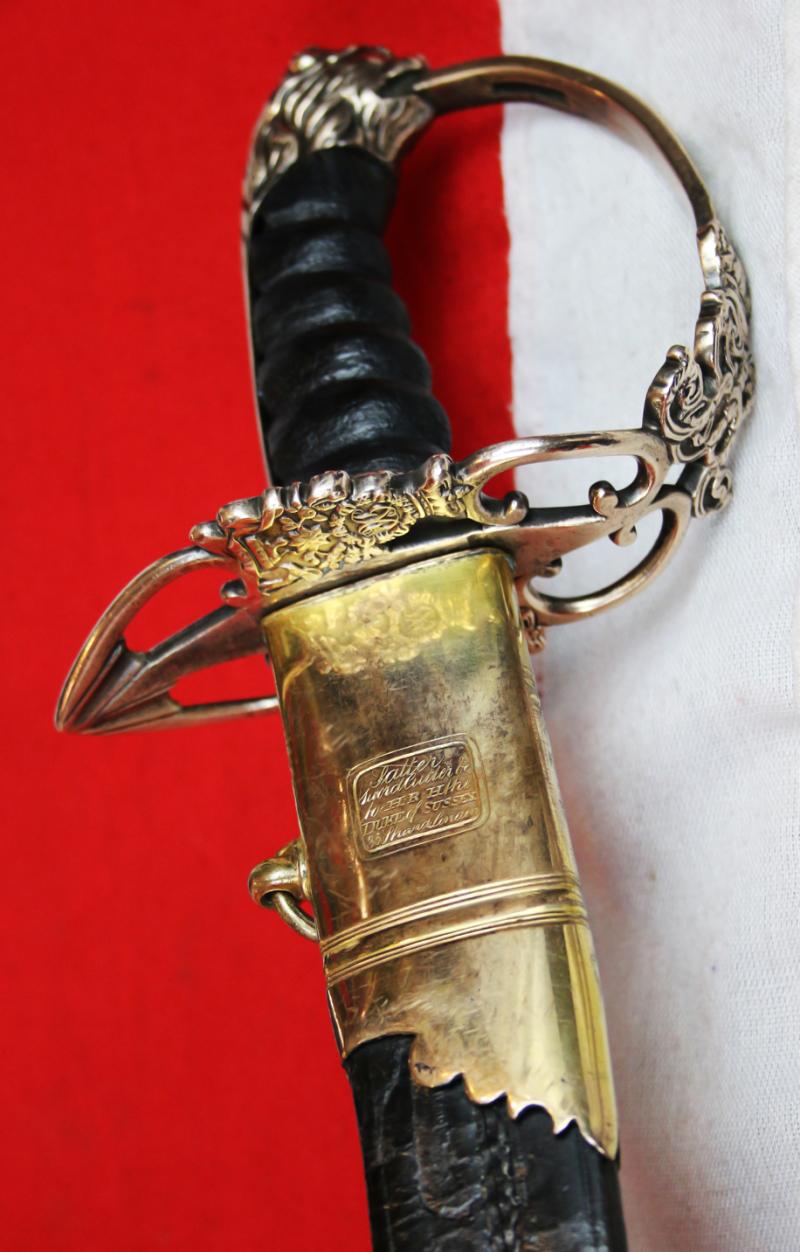
Copper gilt 1803 pattern slotted hilt with lion's head pommel royal crest GR knuckle bow, slotted hilt with four regimental badges of the 1st Regiment of Foot The Royal Scots, with figure of the Sphinx battle honour. Wooden ribbed grip and original copper gilt mounted scabbard with maker engraving of John Salter of 35 the Strand, London. Maker to the Duke of Sussex, and a famed maker of swords for Admiral Lord Nelson, and Lloyds Patriotic Fund.
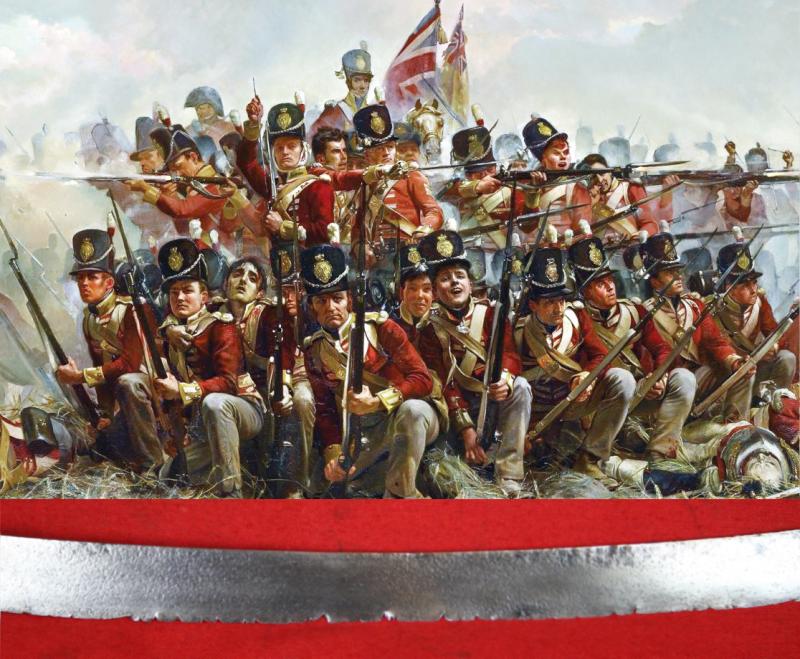
The overall condition of the sword is very good indeed, yet it has clearly been used, in impressive hand to hand combat, as the sword blade’s cutting edge has numerous attacking and defensive edge-to-edge sword cuts. Very likely acquired during its last combat service use at Quatre Bras and Waterloo, as the cuts would have been removed by the regimental armourer in order to restore a smooth cutting edge ready for the next battle, that never occured of course, thanks to the Duke of Wellington's magnificent victory over Napoleon.
A remarkable regiment of incredible combat history. They fought, with honours awarded, in the Egyptian Campaign against Napoleon, serving in the Mediterranean. This included Toulon (1793), Corsica (1794), Aboukir (1801) and Alexandria (1801). In 1799, the battalion also took part in the unsuccessful Anglo-Russian invasion of Holland. In the Peninsular war, they fought at Corunna (1809), before being evacuated and sent on the Walcheren Expedition. It returned to Iberia, taking part in many engagements, including Fuentes de Onoro (1811), Salamanca (1812), Vitoria (1813) and the Battle of Nive (1813), before advancing into France in 1814. It later fought magnificently at Quatre Bras and Waterloo (1815).
The 1st Regiment of Foot (Royal Scots), 3rd Battalion, played a key role at Waterloo in Kempt’s Brigade (1st Division), positioned along the Ohain Road. They withstood heavy artillery, held their position during intense infantry attacks, and advanced in the late afternoon. They previously fought at Quatre Bras, forming a successful square with the 28th Foot.
Positioned on the left of the allied line, they were heavily involved in defending against French advances.
They held their position, forming lines and squares to combat French infantry and cavalry charges. During lulls, they withdrew to the reverse slope to avoid artillery fire.
Fighting at Quatre Bras on June 16, forming a combined square with the 28th Foot to repel cavalry.
During Waterloo, the regiment was involved in close-quarters fighting against initial French attacks, later supported by the Union Brigade cavalry.
Major Campbell was wounded, with command falling to Captain Robert Macdonald.
The regiment advanced towards the ridge after the fall of La Haye Sainte around 5:00 PM.
The 3rd Battalion was part of Major General Sir James Kempt's 8th British Brigade.
The Royal Scots (1st Regiment of Foot) was the oldest and most senior infantry regiment of the line in the British Army, raised in 1633 and serving until 2006. Known as "Pontius Pilate's Bodyguard," it was formed by Sir John Hepburn for service in France before joining the British establishment in 1678. The regiment was amalgamated into the Royal Regiment of Scotland.
Originally raised in 1633 by King Charles I as a Scottish regiment for French service during the Thirty Years War, later known as the Regiment de Douglas or Regiment de Dumbarton.
Precedence: It was recognized as the 1st Regiment of Foot in 1751.
Major Campaigns: Served in the War of Spanish Succession (Blenheim, Ramillies, Oudenarde, Malplaquet), 7 Years War, Napoleonic Wars (including Waterloo).
The Napoleonic Wars: During the Napoleonic Wars, they were heavily involved in the Peninsular War and at Waterloo in 1815
The development of the Pattern 1803 Flank Officer's sword originates with formation of grenadier and light companies in the late 18th century. These were considered the elite of both the Foot Guards and line infantry, and could be detached and deployed separately. The grenadier company was the senior company of any infantry battalion and would typically lead an assault. The light company fulfilled the skirmishing role for the battalion. When a battalion was deployed in line, the grenadier and light companies were deployed on the right and left flanks respectively, and both companies could be could be called upon to operate in looser formations and semi-independently. The added element of risk associated with detached skirmishing in looser formations meant that the officers of these companies needed a more robust fighting sword than the straight 1796 pattern.
Code: 26176