
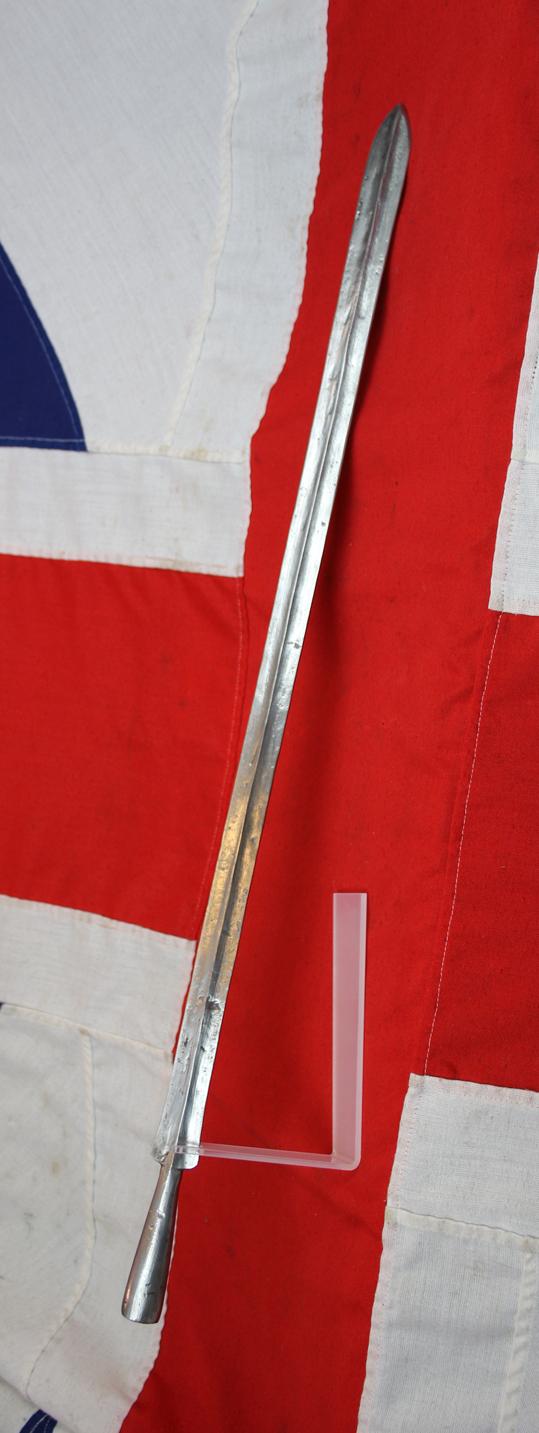
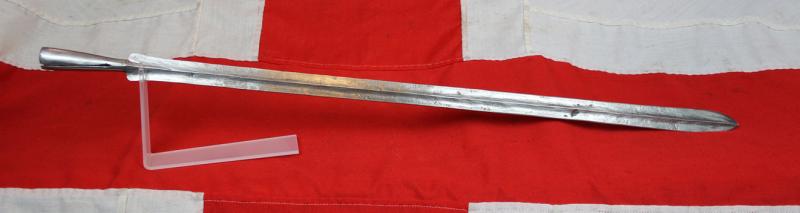
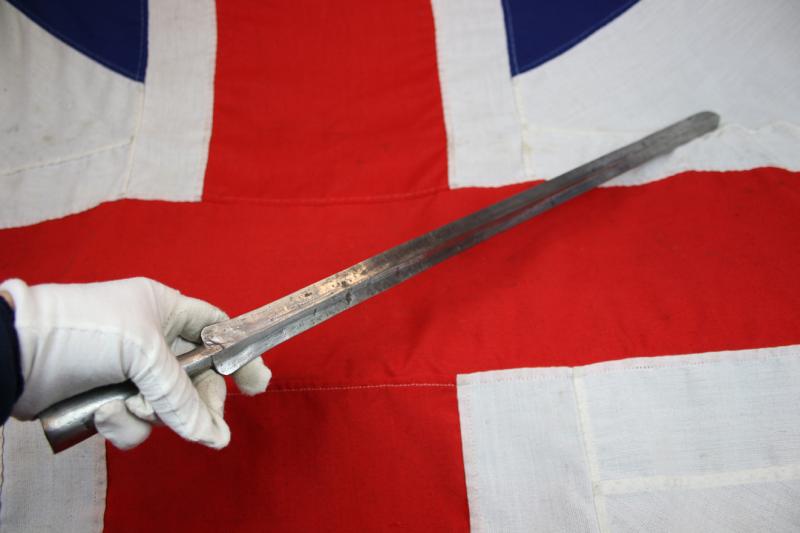
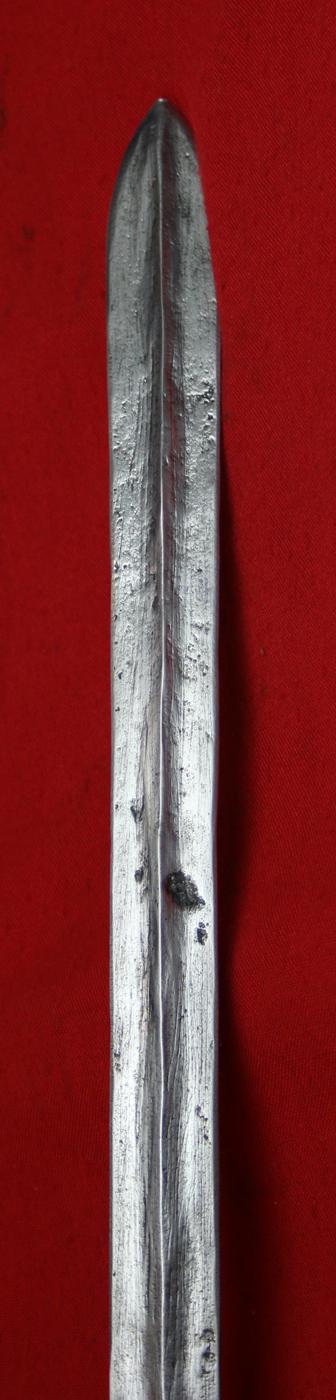
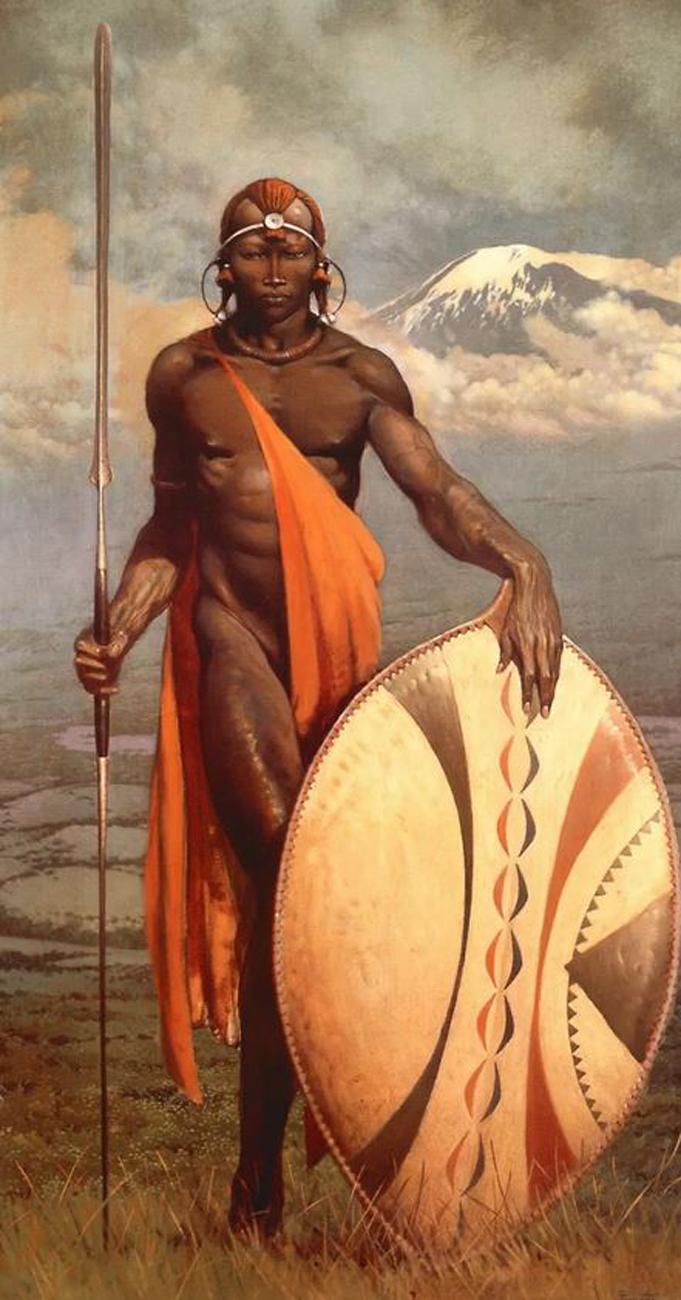
A Superb, Original, Antique Maasai Lion Hunter's Enkuma 'Lion Spear' . From the Maasai Mara of The Great Rift Valley of Kenya. Of the Best, 'Original Maasai Cultural Artifact' Examples We Have Seen in Over 40 years
Around 200 years old. Beautifully hand polished. From a pair we acquired from a late retired Maasai Mara game wardens collection, that he collected between WW1 and WW2. Presented to him, as a revered tribal artifact {over 100 years old then} by a tribal senior elder in the 1920's.
A fabulous piece of Maasai tribal hand crafted 'worked steel'
Heavy African spear, used by the Masai of Kenya.
Termed a lion spear called an enkuma, these were traditionally used by young men in a rites of passage to kill a lion to attain adulthood. The long iron spearhead is very robust to avoid being bent, it would fit upon a small central wooden handle section, beneath which would be a very long steel spike.
There was nothing gratuitous about killings such as these. Maasai lion hunts were a battle to the death between two worthy adversaries. This was not trophy hunting, which, too often, involves sports hunters waiting in a safely concealed position for a lion to come to a bait, then shooting it with a high-powered weapon. Killing a lion with a spear, in hand-to-hand combat, requires great skill, strength, and immense courage. Maasai lion hunts were also relatively rare, and these rite-of-passage killings had little impact upon overall lion numbers.
These spears were carried by the tribe’s young men when they are charged with protecting the cattle that the Masai depended upon from the predation of lions. Reputedly, the technique was to firmly ground the tail spike of the spear and direct the spearpoint at a lion who was then enticed to charge. If all went well, the leaping beast would be impaled on the spear. Every Maasai youth needed to kill a lion in this way to be recognised as a warrior, but the smallest mistake on the young man’s part would likely not end well.
The Maasai are nomadic pastoralists of East Africa who range along the Great Rift Valley of Kenya and Tanzania, the Samburu of Kenya, and the semi-pastoral Arusha and Baraguyu (or Kwafi) of Tanzania. Maasai subsist almost entirely on the meat, blood, and milk of their herds. Their kraal, consisting of a large circular thornbush fence around a ring of mud-dung houses, holds four to eight families and their herds.
The Maasai maintain a number of patriarchal clans grouped into two classes, or “moieties”. Within the classes members are integrated in a system of age-sets that sees groups of the same age initiated into adult life together. The age-class thus formed is a permanent social grouping that lasts the lifetime of its members. They move up through a hierarchy of grades, each lasting approximately 15 years, including those of junior warriors, senior warriors, and junior elders, until they become senior elders authorized to make decisions for the tribe. Between the ages of about 14 and 30, young men are traditionally known as “morans”. During this period they live in isolation in the bush, learning tribal customs and developing the strength, courage, and endurance for which Maasai warriors are noted throughout the world.
Important!! Not to be confused with the common tourist examples that are frequently seen and described mistakenly as lion spears
Code: 26160
350.00 GBP