
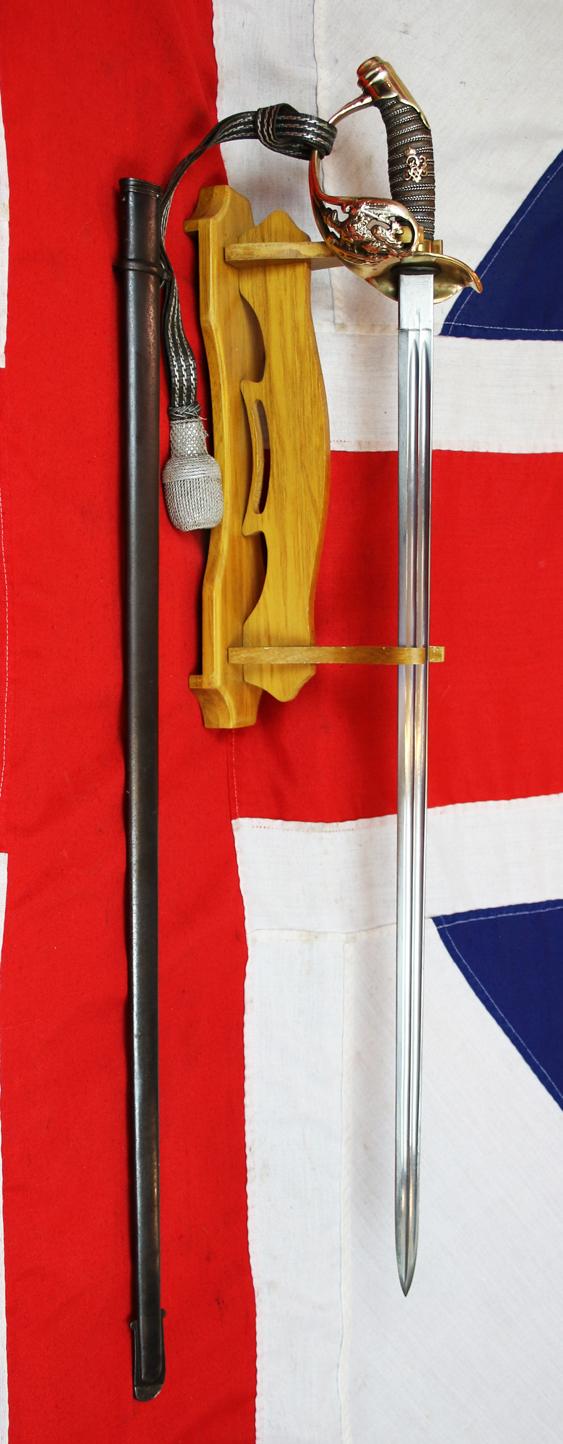
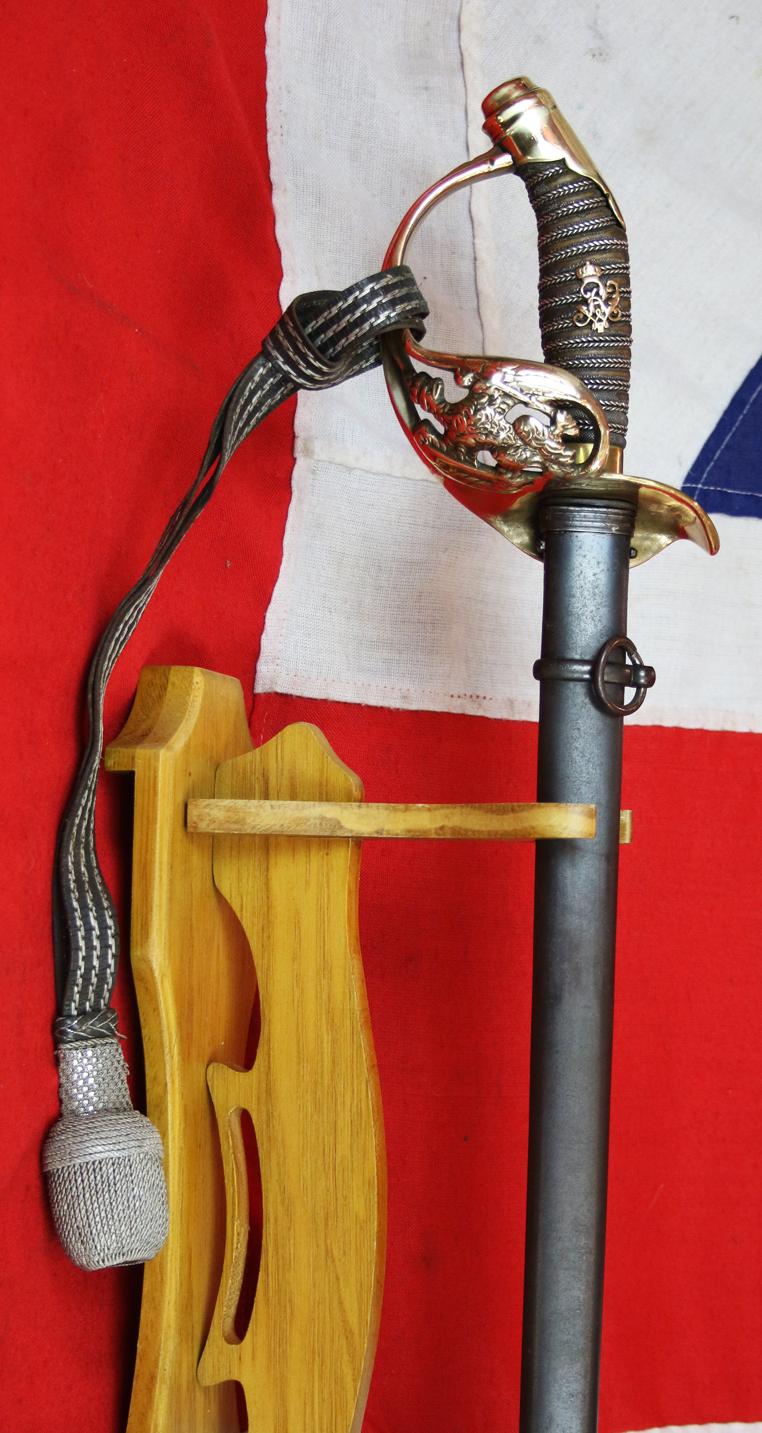
Very Fine 1889 Pattern Regimental Officer's Sword WW1 Imperial Prussian Eagle Guard With Crest of Kaiser Willhelm IInd. Surrendered on the 4th of May 1945. A Few Hours Before The Official Instrument Of Surrender Was Signed at 18.30 Hours
Surrendered by a veteran staff officer of Generalmajor Hans Kienast, at the surrender to Field Marshal Montgomery of the German armed forces in 1945.
However, most regrettably, there was no written record kept of the name of the colonel that surrendered it. If this had been recorded, this sword could have been priced at ten times its current value, or even higher. But, it does mean, as such, it is incredibly affordable. This surrender was a precursor to the final unconditional surrender of all German forces (V-E Day) on May 8, 1945.
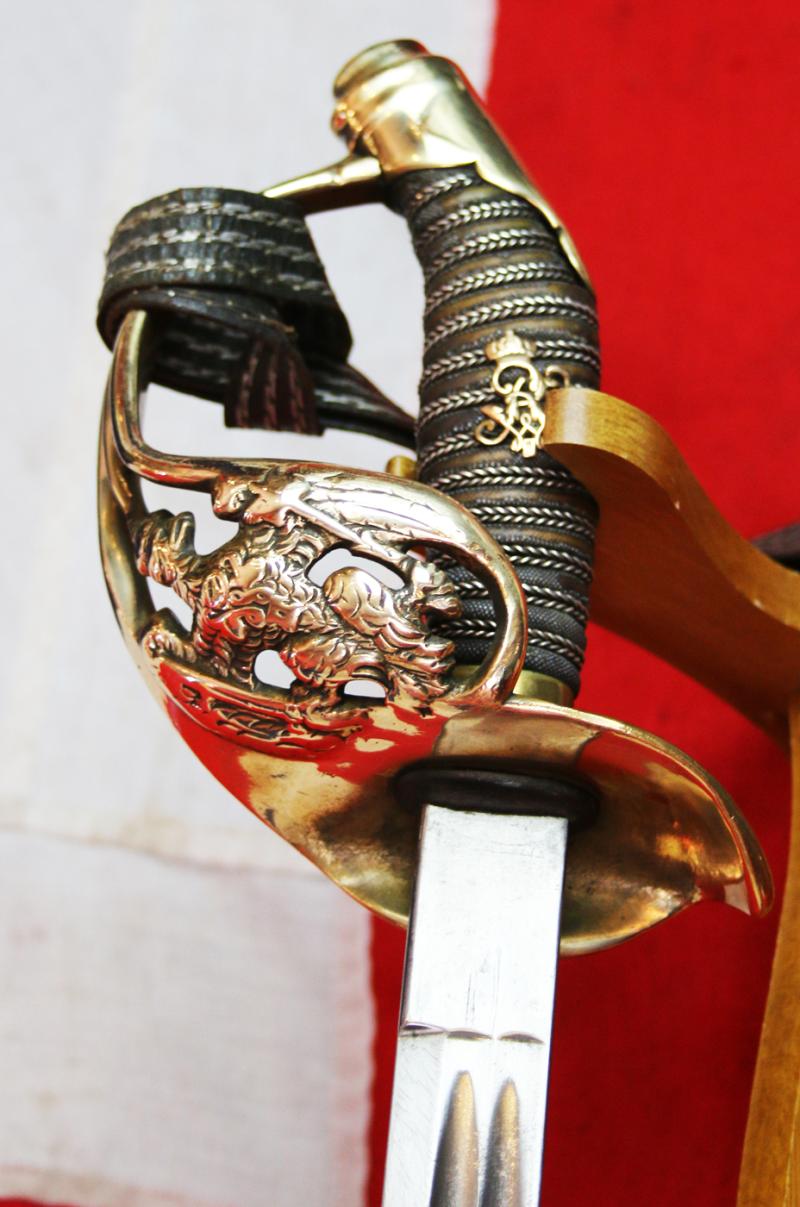
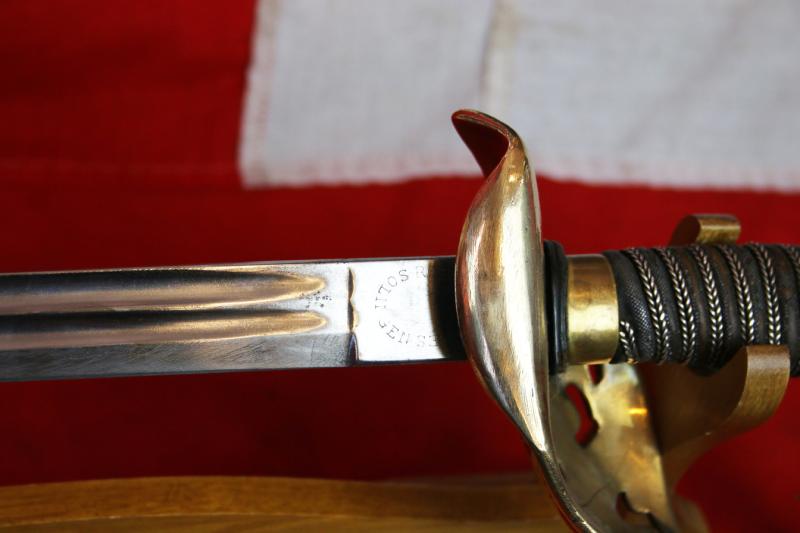
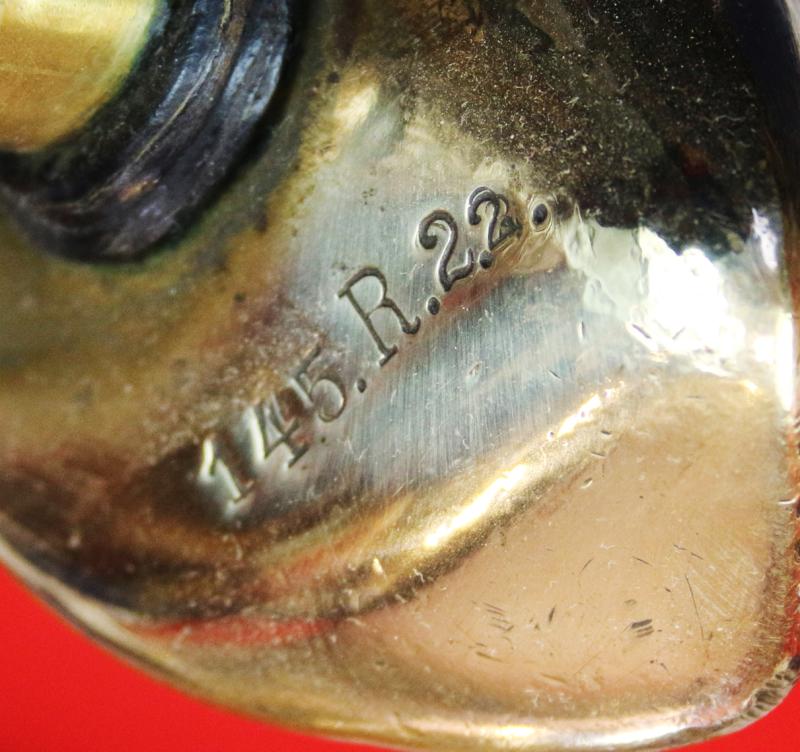
Overall the sword is in excellent condition, with its original multi wire bound sharkskin grip fully original and intact. Bronze guard, with the personal monogram of the Kaiser upon the grip, and guard depicting the Imperial Prussian Eagle, pieced and in relief. Double fullered blade and it’s original all steel combat scabbard. The blade bears the Kaiser Wilhelmi W Crown proof inspection mark.
1889 Pattern Prussian Officers sword with cast Eagle guard, multi wire bound sharkskin grip, excellent condition double fullered blade and black lacquered steel combat scabbard. Kaiser Willhelm Crest to grip.
Many of these swords were also used in the 3rd Reich by veteran officers serving in WW2 after their service in WW1, as was this great example.
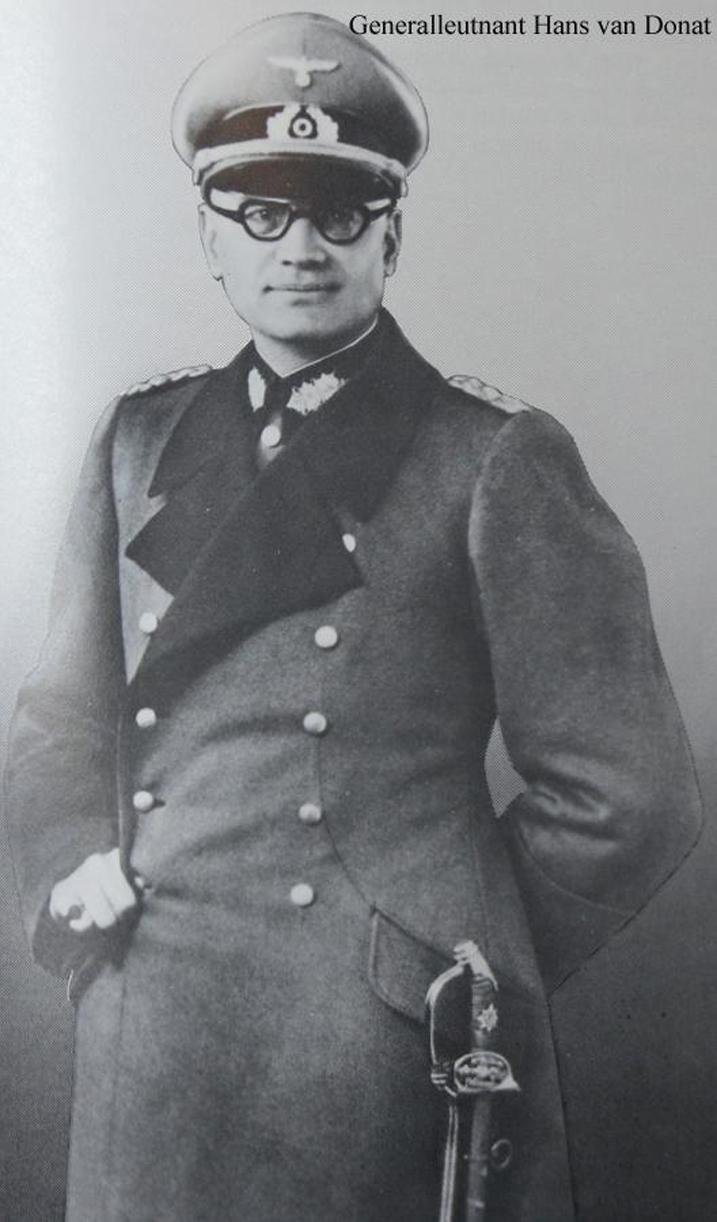
Numerous Vintage photographs of WW2 German Officers show them wearing this pattern of sword, including one in the gallery of Generalleutnant Hans von Donat with his identical sword.
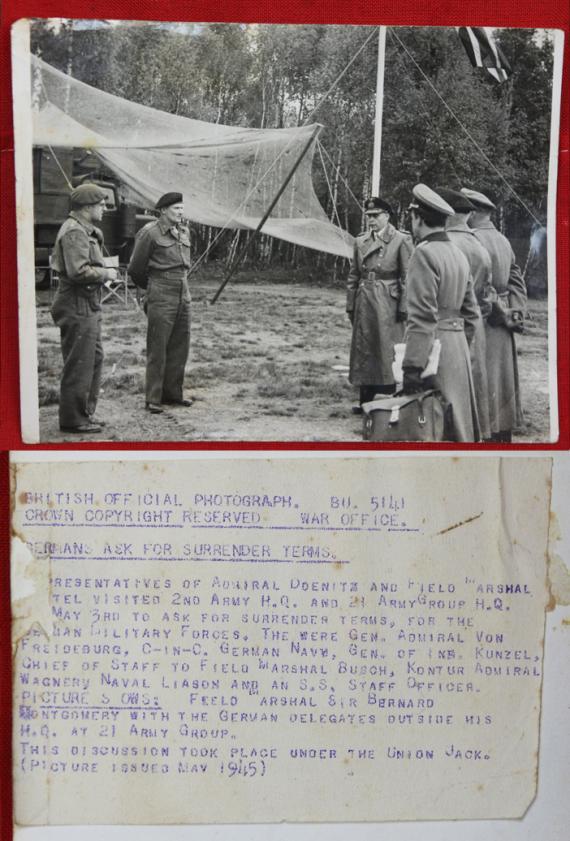
This sword was taken at the official event of the German high command requesting surrender terms to Montgomery at 2nd army HQ on May 3rd, all of the participants were disarmed, unfortunately it is not known from whom this sword was taken.
See our original official photograph from this special and monumentally important historical event, taken on the 3rd of May 1945. It is of Field Marshal Montgomery, Admiral von Friedeburg, General Kinzel and Rear Admiral Wagner plus aides .The unconditional surrender was not ‘officially signed until a few days later as Stalin insisted his generals must be present. Overall this sword is in excellent condition.
Field Marshal Montgomery greeted for the surrender the German delegation (Admiral von Friedeburg, General Kinzel and Rear Admiral Wagner).
The images were taken by the British Army Film and Photographic Unit.
Field Marshal Montgomery signed the terms of the surrender watched by Rear Admiral Wagner and Admiral von Friedeburg.
On 4 May 1945, at 18:30 British Double Summer Time, at Lüneburg Heath, south of Hamburg, Field Marshal Sir Bernard Law Montgomery accepted the unconditional surrender of the German forces in the Netherlands, northwest Germany including all islands, in Denmark and all naval ships in those areas. The surrender preceded the end of World War II in Europe and was signed in a carpeted tent at Montgomery's headquarters on the Timeloberg hill at Wendisch Evern. Lüneburg had been captured by the British forces on 18 April 1945 with Montgomery establishing his headquarters at a villa in the village of Häcklingen. A German delegation arrived at his tactical headquarters on the Timeloberg hill by car on 3 May, having been sent by Großadmiral Karl Dönitz who had been nominated President and Supreme Commander of the German armed forces by Adolf Hitler in his last will and testament on 29 April. Dönitz was aware of the allied occupation zones intended for Germany from a plan that had fallen into German hands. He therefore hoped that protracted partial and local surrender negotiations might buy time for troops and refugees in the east to seek refuge from the Red Army, whilst holding open a pocket to provide sanctuary on the west bank of the River Elbe.
Dönitz did not think it appropriate to negotiate personally with a field marshal as he had become the head of state following the death of Adolf Hitler. He therefore sent the delegation headed by the new Commander-in-Chief of the German navy Admiral Hans-Georg von Friedeburg. Montgomery refused an initial offer to surrender Army Group Vistula which was being cut off to the east by the Red Army and demanded the unconditional surrender of all forces on his northern and western flanks. The Germans stated that they did not have the authority to accept Montgomery's terms. However they agreed to return to their headquarters to obtain permission from Dönitz.
The German officers returned the next day at 18:00 with an additional delegate, (Colonel Fritz Poleck) representing the Oberkommando der Wehrmacht, (the German armed forces high command). Von Friedeburg was ushered into Montgomery's command caravan for confirmation that they were ready to sign. For the surrender ceremony Montgomery sat at the head of a table with an army blanket draped over it and two BBC microphones in front of him; he called on each delegate in turn to sign the instrument of surrender document at 18.30. The surrender ceremony was filmed by the British Pathé News and recorded for broadcast on radio by the BBC with a commentary by the Australian war correspondent Chester Wilmot. The intimate detail of document translation and conversation interpretation was supervised by one of Montgomery's senior intelligence officers Colonel James Oliver Ewart.
We acquired it from the same family of the WW2 photographer, that had another German sword, surrendered at the same surrender signing, four years ago.
Photo shown in the gallery, that we once had, taken at time of the surrender of this sword, with Field Marshal Montgomery in May 1945
Code: 26139
850.00 GBP