
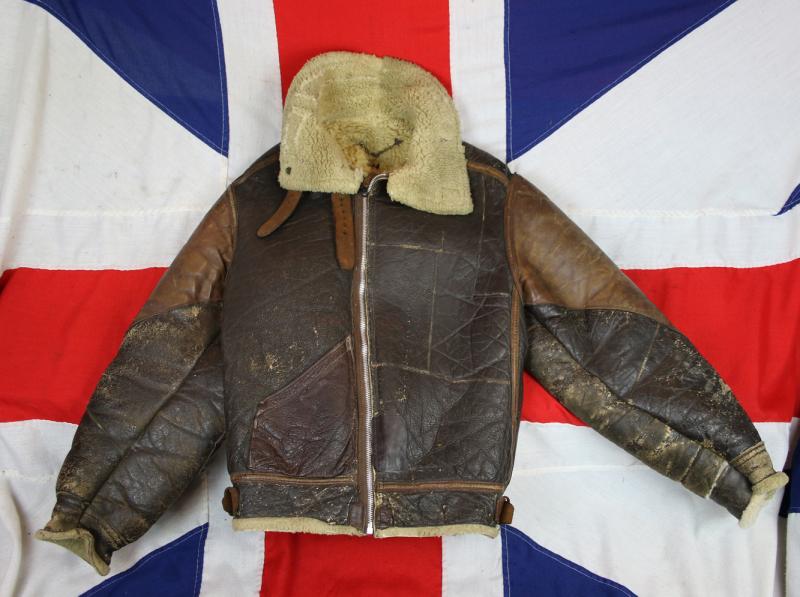
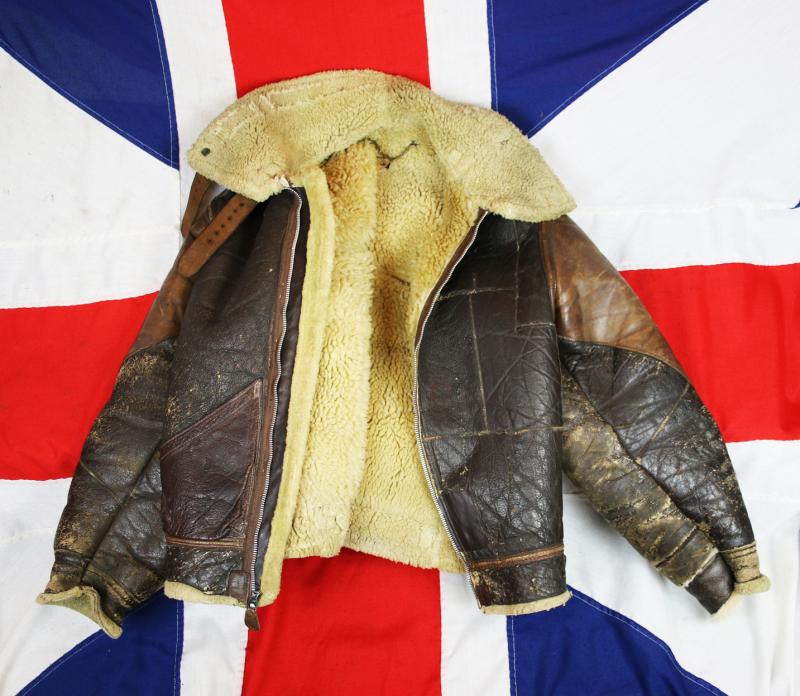
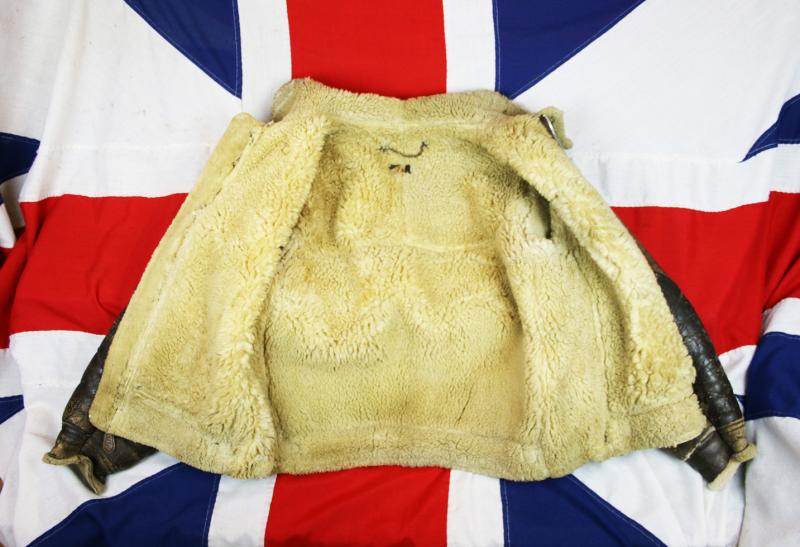
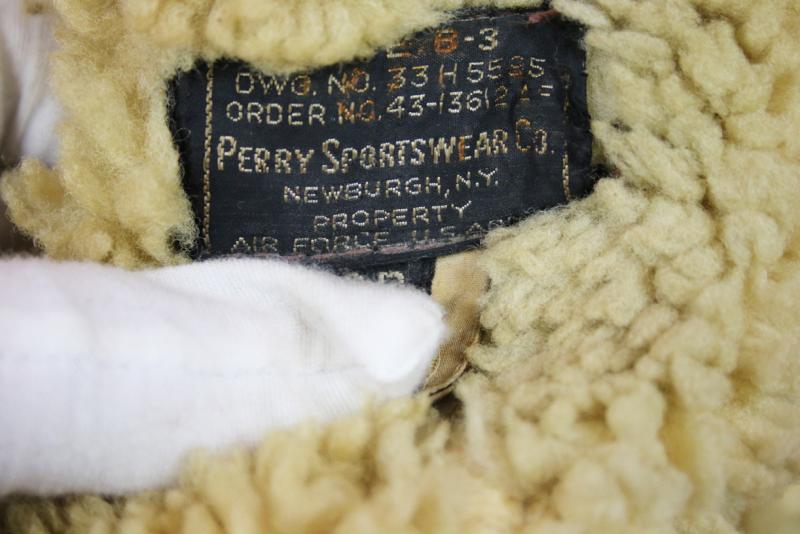
A Superb Piece Of WW2 Anglo American Aeronautical History, and An Absolute Beauty. An Original, 1940's B3 WW2 USAAF Pilots Sheerling Jacket. Perry Sportswear Co of Newburgh New York Contract. In Super, Wearable Condition
In superbly fully conserved condition, perfectly wearable today.
Good size 40 inch chest
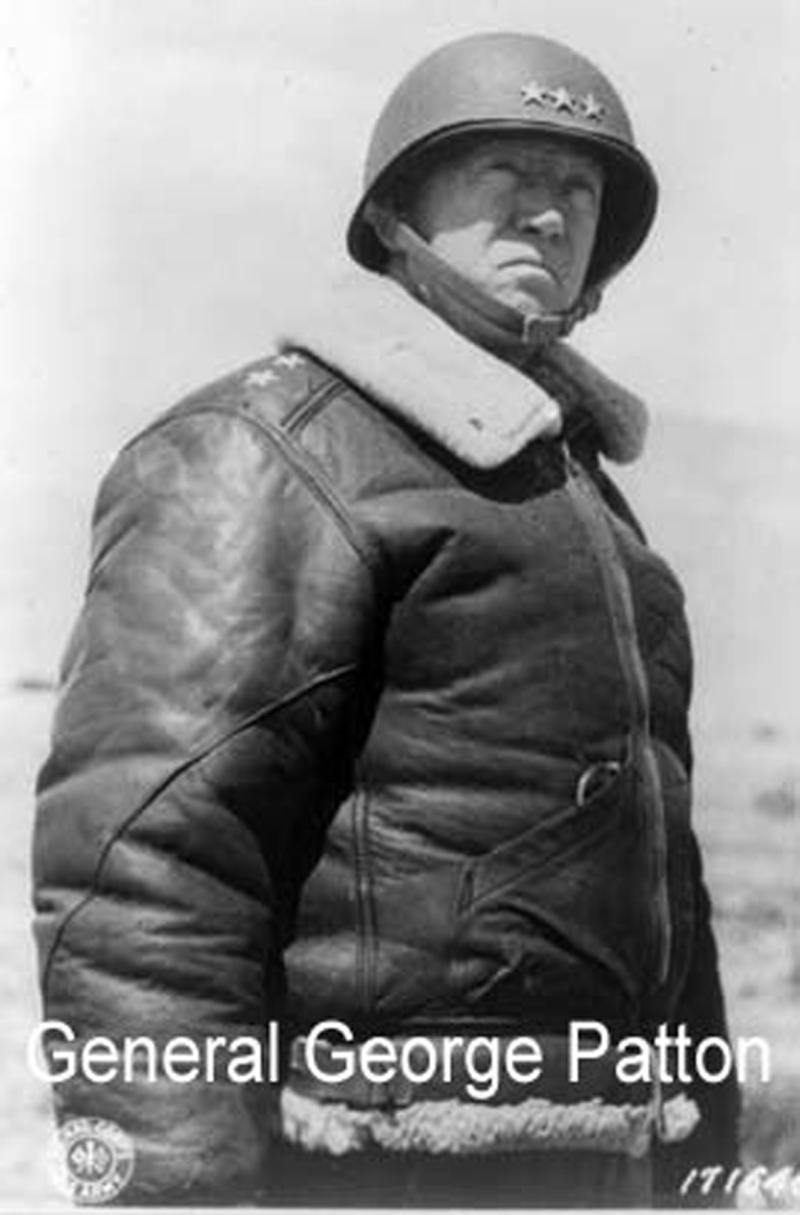
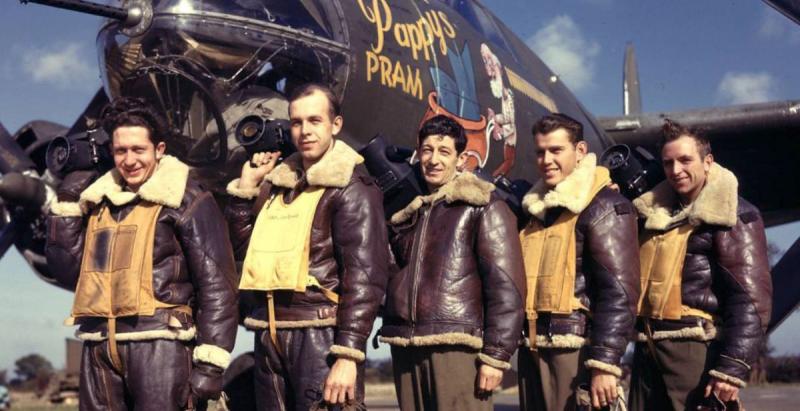
Exactly As Used in WW2 By General George Patton, and the WW2 US Aircrew. pilots, navigators, gunners etc. Type B-3 early American WW2 Contract; No. 33-H-5595 , 43-13612-AF Manufactured by Perry Sportswear Co. Newburgh, New York.
There is no doubt that jacket has seen incredible times, and true historical collectors will absolutely love it with all its amazing character and signs of age. Our last example was certainly not mint, in fact pretty worn, but this example is certainly in very good conserved condition indeed. Perfectly wearable
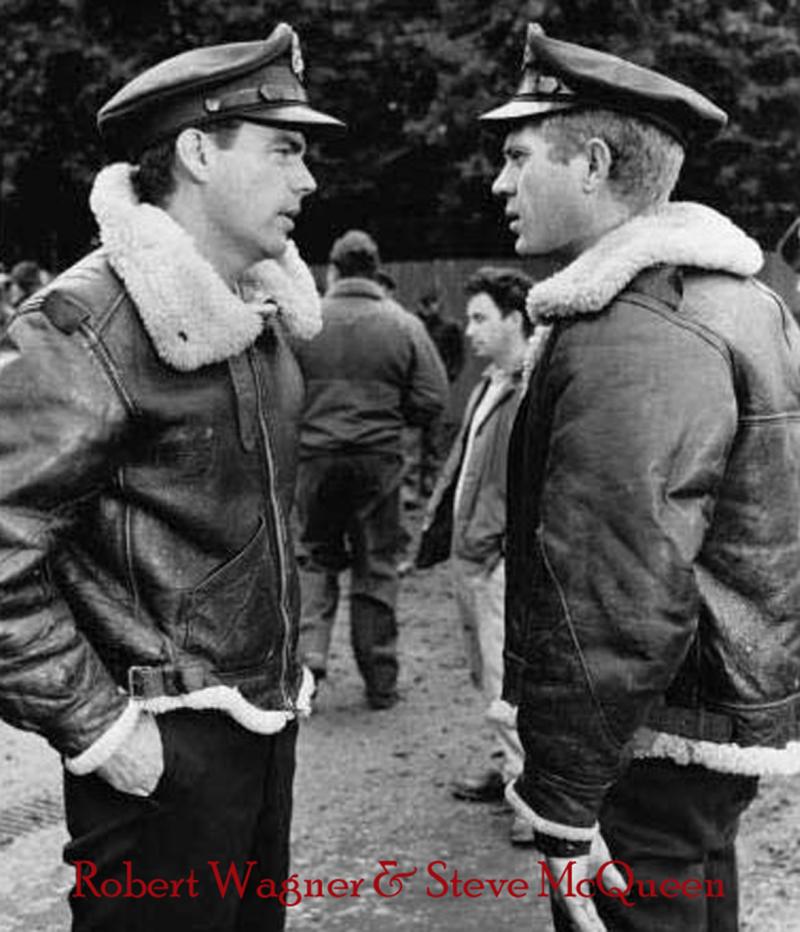
It we had had it when Steve McQueen visited us in the 60’s, we could likely have named our price. He would simply not have left our shop without it!
Made and issued for the Army Air Forces, from 1933 till 1943. Original examples of these super WW2 Aeronautical gems are so very scarce indeed, and the beauty of them is, they are still superbly wearable, in fact the more aged the better!.
US legend General George Patton wore his favourite B3 during the entire Battle of Bulge campaign {and we show a photo of him wearing it,}. Plus we show a movie still of the legendary Steve McQueen and Bob Wagner in their B3's that they both wore in their iconic WW2 movie during 1962, 'The War Lover'. It was while he was filming in Cambridge that he came down to see us in Brighton to view a vintage car we had for sale.
It was a year later in 1963, he starred in one of the greatest war movies of all time 'the Great Escape', as Captain Virgil Hilts 'The Cooler King'.
A faithful modern very fine quality reproduction copy today can cost more than $4,400, {such as by Mc Coys Manufacturing Co.,new made in Japan} so how much more can you value an early, wartime superb condition original.
Over two million American servicemen passed through Britain during the Second World War. In 1944, at the height of activity, up to half a million were based here with the United States Army Air Forces (USAAF).
The job of the half million British based USAAF officers and servicemen was to man and maintain the vast fleets of aircraft needed to attack German cities & and industry.
Working alongside the Royal Air Force (RAF), their aim was to severely weaken Germany's ability to fight. This was a central part of the Allied strategy for winning the war. American women also served, working for the American Red Cross or as members of the Women's Army Corps.
Over 200 airfields were occupied or newly-built by the USAAF. Each one would house around 2,500 American men many times the population of the nearest village. Thousands more were based at smaller sites. Halls and country houses became headquarters for commanders and planners. Some were converted to hospitals or rest-homes for combat-weary fliers. Barns and outbuildings would house teams of truck drivers and their vehicles. Even specialist bakery units were dotted around the UK, providing fresh bread for the airmen.
No wonder, then, that the Americans' arrival was known as the 'friendly invasion' their impact on British life was huge and they profoundly changed the places they inhabited.
The majority of the Americans left Britain in 1945. They left an enduring legacy and are fondly remembered by those they met. Including, all our six aunts! our mother’s sisters. Hundreds of volunteers across East Anglia still help preserve these memories. They look after memorials in village squares, on corners of former airfields, or at crash sites. They manage museums in former control towers, or preserve precious collections in pubs or farm buildings.
Brighton was home to thousands of US and Canadian servicemen in 1944, billeted at all the hotels on Brighton seafront. Despite much of Brighton being off limits to civilian visitors due to it coastal location. With barbed wire fenced off beaches and the mined sea. And our piers were cut in half so they couldn’t be used as Jerry landing jetty’s.
The B-3 flight jacket, introduced by the U.S. Army Air Corps in 1934, was the standard-issue "heavy zone" garment for WWII bomber crews, designed to withstand temperatures down to
at high altitudes. Made of sheepskin with a thick shearling lining, leather exterior, and large collar, it was essential for survival in unpressurized planes.
Developed for crew members flying in open or unpressurized, high-altitude bombers (up to 25,000 feet) during WWII.
Design & Material: It featured sheepskin with fur (shearling) on the inside and a leather exterior. Unlike the lighter A-2 jacket, it did not have knit cuffs or waistbands, which could freeze; instead, it used leather straps for cinching to retain heat.
Features: A large collar with dual buckled straps enabled it to be secured against the face for maximum protection.
Standardized in 1934, it was inspired by the British Irvin flying jacket. While initially, they were crafted with unfinished white sheepskin, designs evolved, and by 1943, they were frequently made in brown, hand-dyed finishes with horsehide reinforcing stress points.
Usage: It was considered the "ultimate" Cold War-era sheepskin jacket, famously worn by figures like General George Patton. It remained in service until May 1943 before being replaced by newer models.
The B-3 is now a legendary, iconic piece of military history often associated with the"tough-as-nails", image of WWII aviators.
Later zip.
Code: 26138
1250.00 GBP