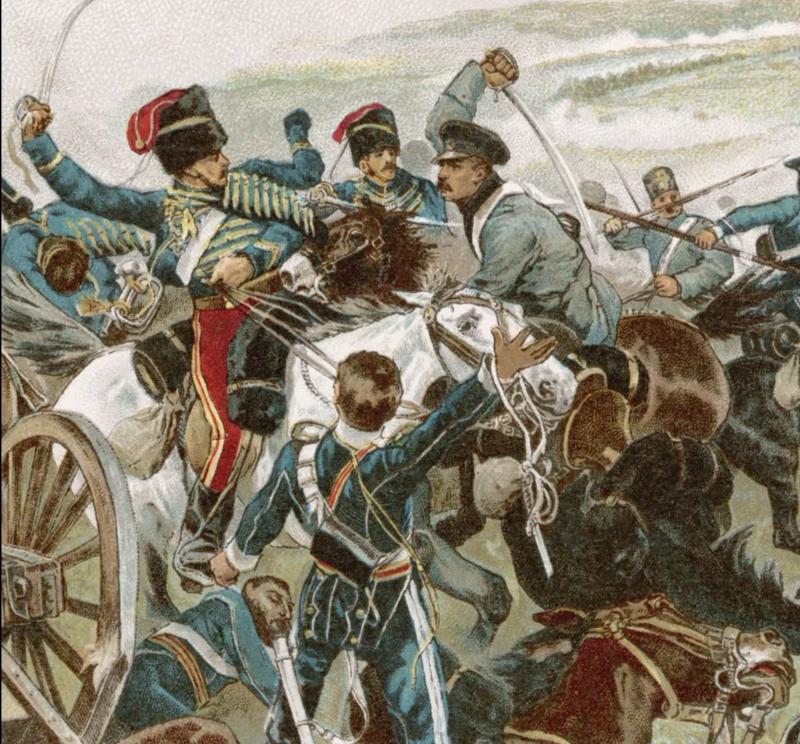
A 'Superb Plus' Original, Antique, Victorian, Charge of the Light Brigade Era, 1821 Pattern, Hussar's or Lancer's Officer’s Sword In Simply Amazing Condition.
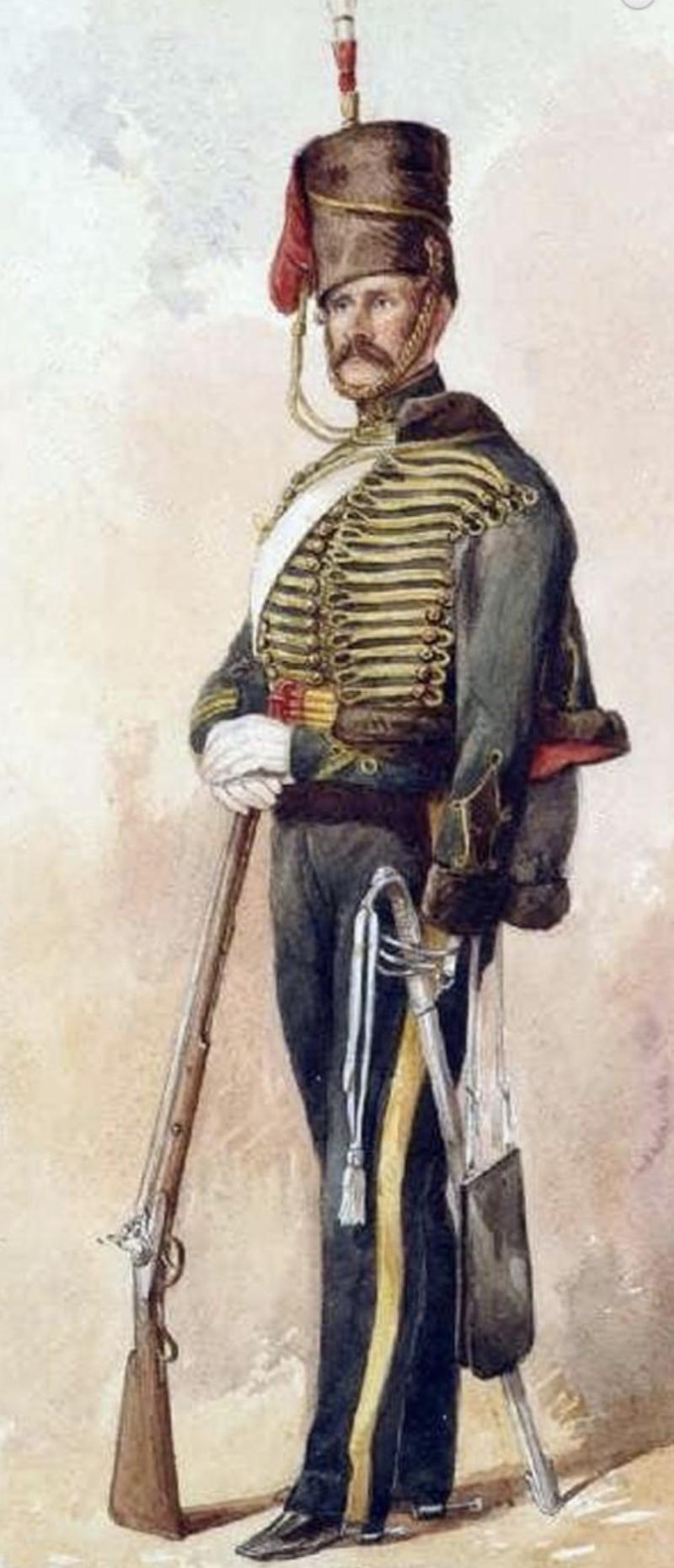
Used by an officer that served in the charge in such as the; 4th Light Dragoons: A light cavalry regiment known for speed.
Photos to add tomorrow,
The officers of these regiments ( see below) would have carried such a sword, however few would have had this heavy grade combat weight example around 50% heavier, large size grade, steel blade, made by Prosser of Charing Cross with a superb King William IVth cypher blade with royal crest
There is barely a sword in the National Army Museum exhibition that compares to the size and quality of this one.
8th (The King's Royal Irish) Hussars: Light cavalry, also known as the "Cherry Pickers".
11th (Prince Albert's Own) Hussars: Light cavalry, distinguished by their distinctive uniforms.
13th (Light Dragoons) Regiment of Light Dragoons: A light cavalry regiment.
17th (Duke of Cambridge's Own) Lancers: Known for their lances, they were positioned on the flank
Regulation three bar hilt with wire bound grip, royal crest etched blade, maker marked by Prosser, and steel scabbard..
The scabbard is completely dent free the multiwire binding is excellent as is the grip and all the steel, and hilt, is pristine.
From our collection of the 'best available original British regimental swords' acquired to create a collection of the finest examples to be found. Each one is a 5 star condition example, every one worthy of any one of the best museum collections in Europe.
There is no way to know which specific regiment of hussars or lancers that the officer served in during the Crimean War.
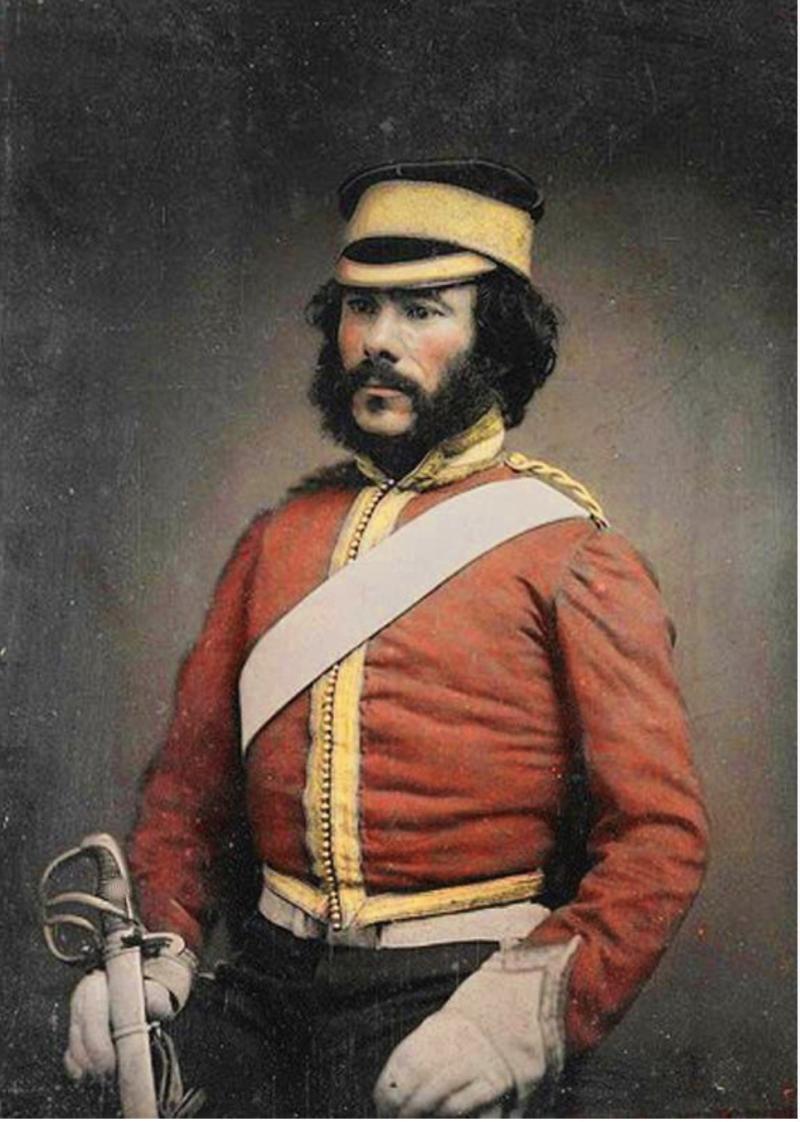
As used in the Crimean War such as the infamous and renown 'Charge of the Light Brigade' by officers of several regiments. A most impressive sabre, and very good indeed. The very type of Hussar's and Lancer's sabre used by British Cavalry officers in the ill fated charge in the Crimean War against Russia.
Absolutely used at the time and used by all the serving cavalry still issued with the 1821 pattern sabre, in the famous 'Charge'. In the Crimean War (1854-56), the Light Dragoons were in the forefront of the famous Charge of the Light Brigade, immortalized by Tennyson's poem of that name ("Into the valley of death rode the six hundred").
The regiments adopted the title hussars at this time, and the uniform became very stylish, aping the hussars of the Austro-Hungarian army. But soon the blues and yellows and golds gave way to khaki as the British army found itself in skirmishes throughout the far-flung Empire, in India and South Africa especially.
In 1854 the regiment received its orders from the War Office to prepare for service overseas. Five transport ships - Harbinger, Negotiator, Calliope, Cullodon, and the Mary Anne – embarking between the 8 May and 12 May, carried 20 officers, 292 other ranks and 298 horses. After a troubled voyage, the regiment arrived at Varna, Bulgaria on the 2 June. On the 28 August the entire Light Brigade (consisting of the 4th Light Dragoons and 13th Light Dragoons, 17th Lancers, the 8th Hussars and 11th Hussars, under the command of Major General the Earl of Cardigan were inspected by Lord Lucan; five men of the 13th had already succumbed to cholera.
On the 1 September the regiment embarked for the Crimea - a further three men dying en-route.
On the 20 September the regiment, as part the Light Brigade, took part in the first major engagement of the Crimean War, the Battle of the Alma. The Light Brigade covered the left flank, although the regiment’s role in the battle was minimal. With the Russians in full retreat by
late afternoon, Lord Lucan ordered the Light Brigade to pursue the fleeing enemy. However, the brigade was recalled by Lord Raglan as the Russians had kept some 3,000 uncommitted cavalry in reserve.
During the 25 October the regiments, the Light Brigade, took part in the Battle of Balaclava and the famous Charge of the Light Brigade.
The 13th Light Dragoons formed the right of the front line. The 13th and 17th moved forward; after 100 yards the 11th Hussars, in the second line, also moved off followed by the 4th and 8th. It was not long before the brigade came under heavy Russian fire. Lord Cardigan, at the front of his
men, charged into the Russian guns receiving a slight wound. He was soon followed by the 13th and 17th. The two squadrons of the 13th and the right squadron of the 17th were soon cutting down the artillerymen that had remained at their posts. Once the Russian guns had been passed, they engaged in a hand-to-hand fighting with the enemy that was endeavouring to surround them by closing in on either flank.
However, the Light Brigade having insufficient forces and suffering heavy casualties, were soon forced to retire. Capt. Louis Edward Nolan (January 4 1818-October 25 1854), who was a British Army officer of the Victorian era, an authority on cavalry tactics, and best known for his controversial role in launching the disastrous Charge of the Light Brigade during the Battle of Balaclava. He was the first casualty of that engagement.
We pride ourselves, for over the past 100 years, of attempting {and hopefully succeeding} in acquiring every single day, fabulous, and original, historical pieces, that arenot only collectors items, but incredibly decorative for display and wonderfully evocative of great moments in history.
For example, almost three decades ago we were delighted to buy Captain Nolan's actual undress pattern sabretache that was used by him to carry the order to Charge for the Light Brigade, and it was recovered from beneath his, and his horses bodies after the battle. It spent most of its life after the charge in two museums, one at the rebuilt and re-sited Crystal Palace in London. We were privileged to buy direct it from the original family owners with the personal assistance of the late Gordon Gardner, Militaria Expert of Sotheby's from 1979.
Another identical version of this sword appears in 'Crimean Memories. Artifacts of the Crimean War' by Will Hutchison, Michael Vice, and B J Small. Featuring a group of original artifacts used in combat the Crimean War, that presently reside in numerous museums, regimental messes, and notable private collections
Code: 26084
Price
on
Request