
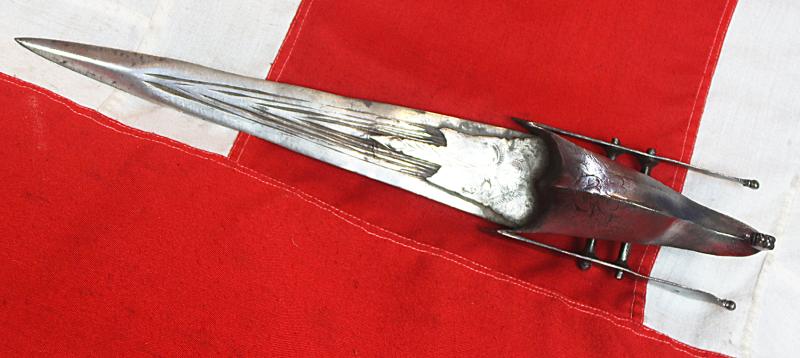
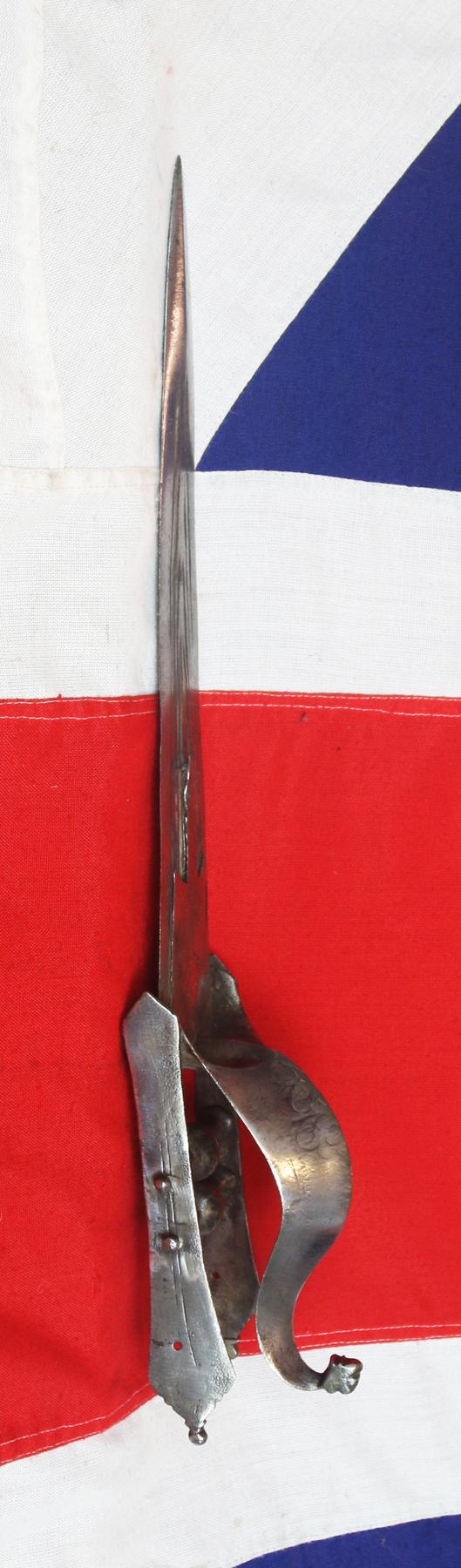
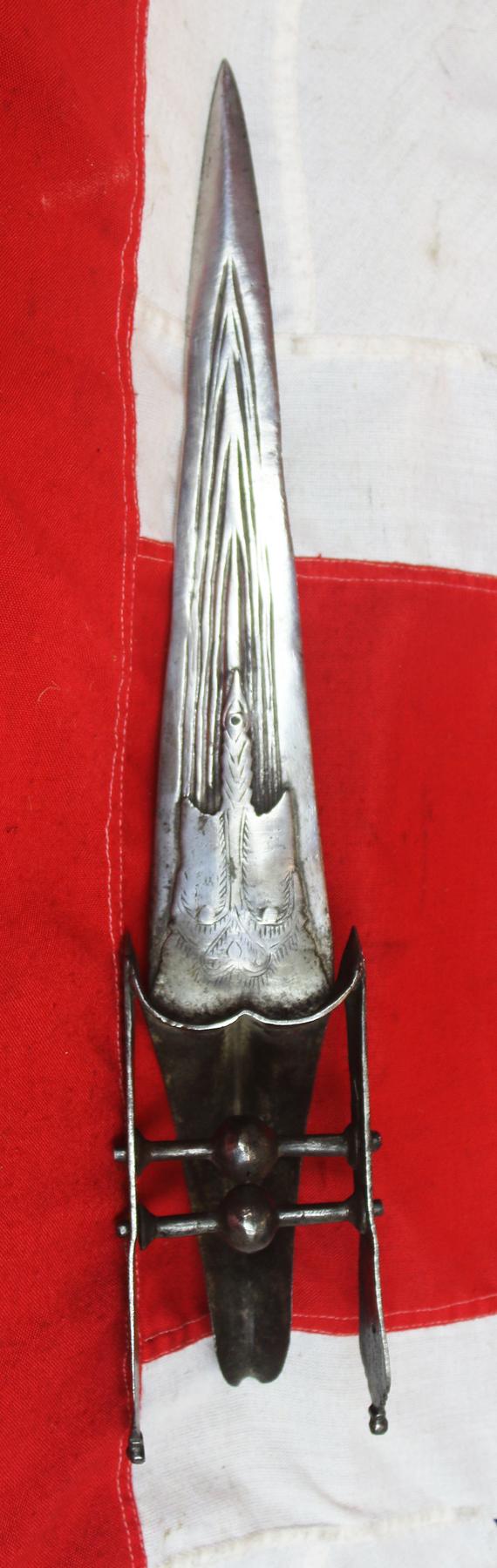
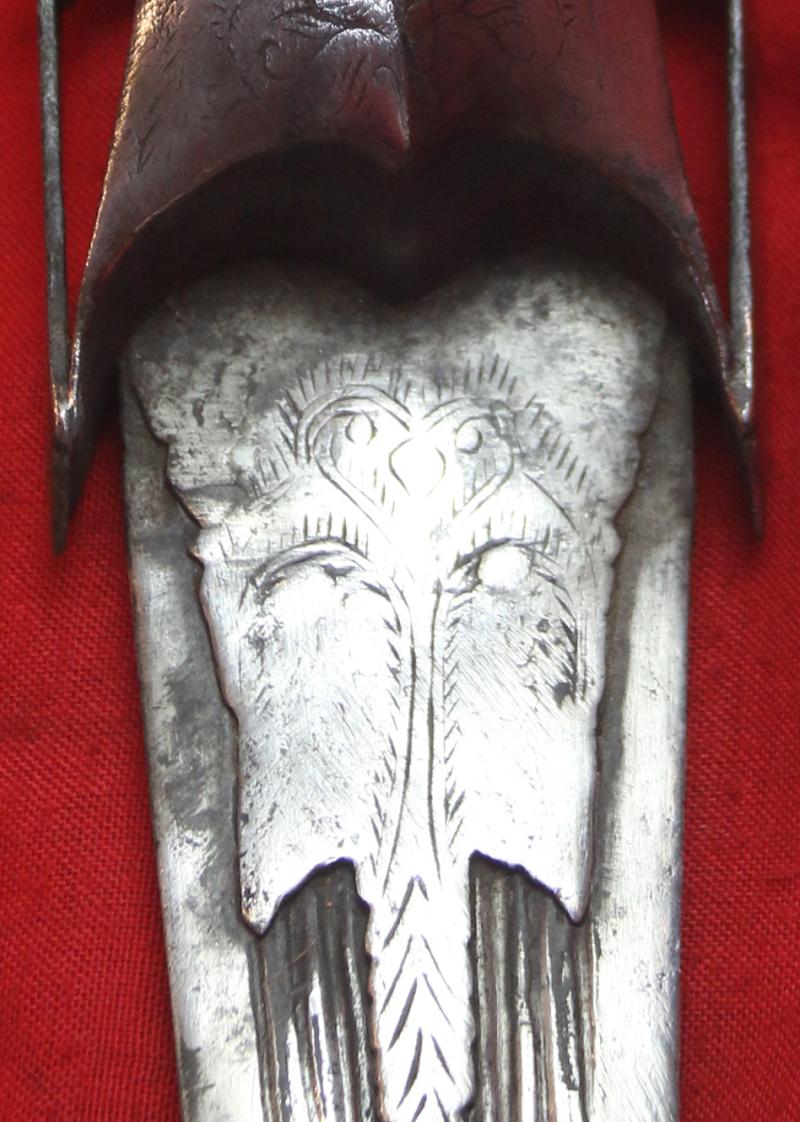
An Extremely Rare Example of an Incredibly Impressive Vijayanagara Hooded Katar From South India,16th To Early 17th century. Engraved at the Grip With Two Facing Yali or Leogryph (a Part Lion and Part Griffin), With Some Bird-Like Features.
Graduating triangular blade, engraved at the grip with two facing yali or leogryph (a part lion and part griffin), with some bird-like features. This mythological creature could be added to fine hooded katars by engraving to the hooded Katars as a means of spiritual protection in the battlefield. The Yali is a mythical creature seen in many South Indian temples, often sculpted onto the pillars. It may be portrayed as part lion, part elephant and part horse. The Vijayanagara Empire originated in the South of India through small Hindu Kingdoms as a resistance to the Muslim invasions from the North. These types of Hooded Katars are seen in the statues at Seshagiri Rayar Mandapam and were the staple of the Empire. As the Vijayanagara Empire slowly declined in the 17th century, this style of Katar declined and Katars without the hood became prominent.
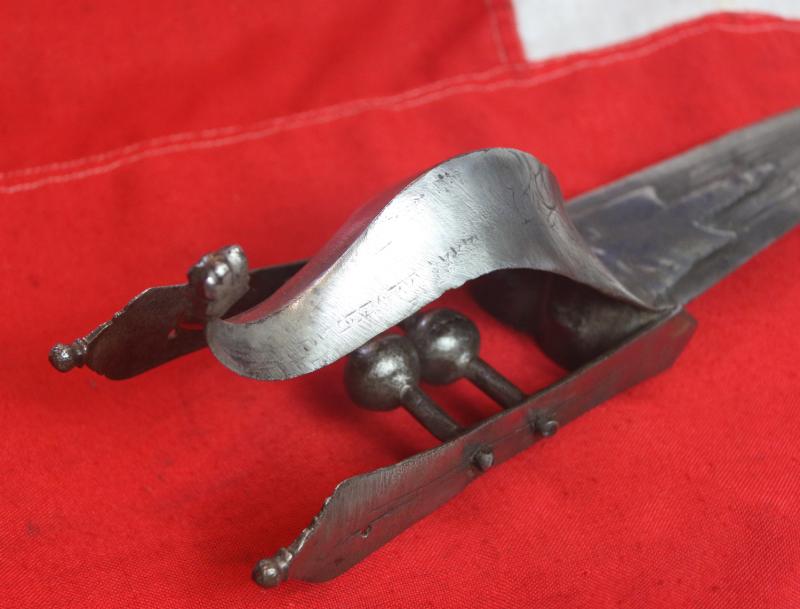
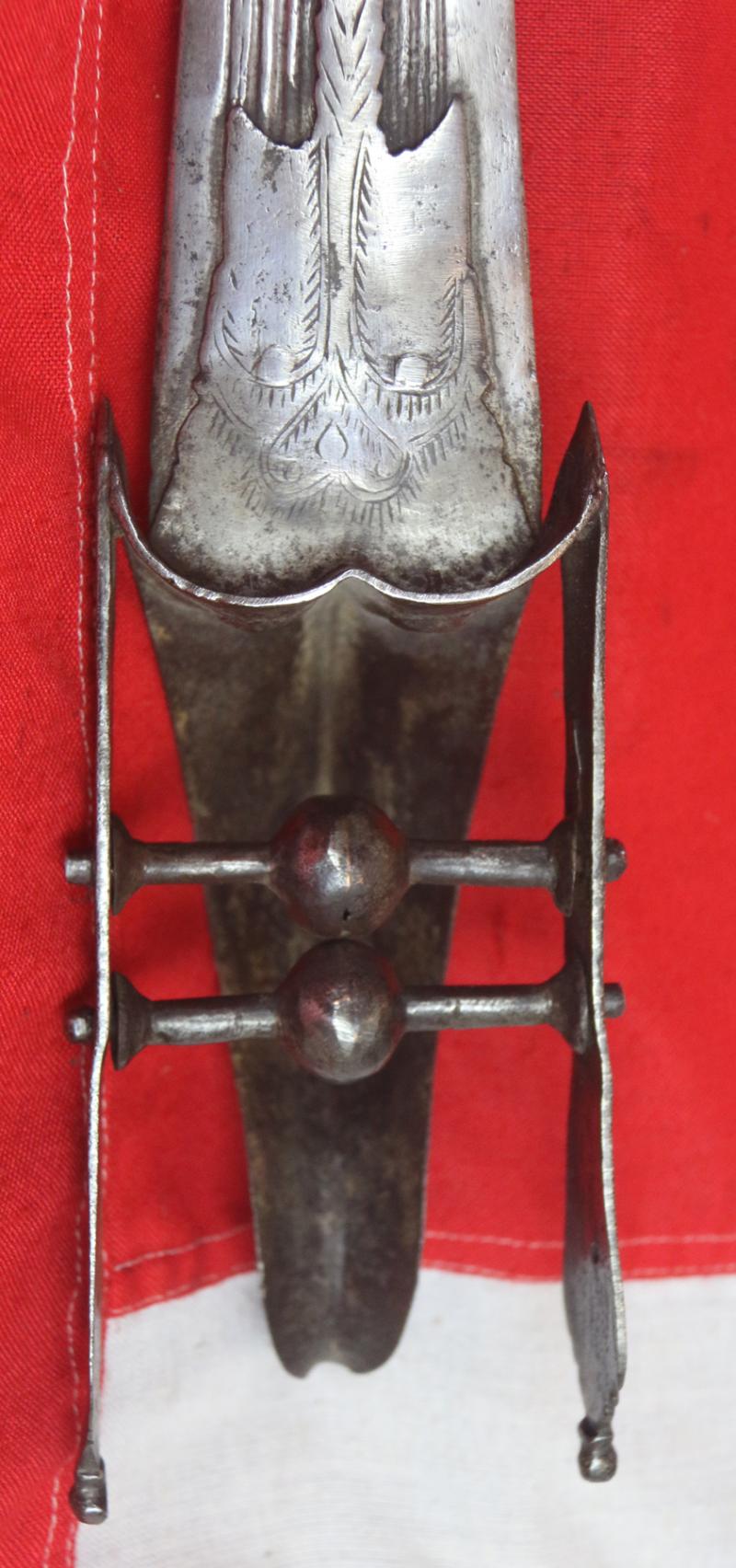
This most rare Vijaynagara Katar exhibits the classical and traditional design, staying true to its roots. The blade is long, strongly tapering, with multiple grooves and fullers. The blade is also very sturdy and tight. Also if you notice the examples provided by Elgood, some of the katars do feature this type of blade. The grooves are deep and precisely cut and hold a consistent spacing and design, which adds to its aesthetic appeal. The blade is longer than the usual hooded Katars, which points towards this being an original blade, rather than a cut down european blade that is found on most other hooded katars on the market. The shield (hood) is a thick solid steel with a clean finish, engraved with floral designs and a yali. The Yali is a mythical creature seen in many South Indian temples, often sculpted onto the pillars. It may be portrayed as part lion, part elephant and part horse, and in similar shapes. Also, it has been sometimes described as a leogryph (part lion and part griffin), with some bird-like features. This mythological creature was added to the hooded Katars as a means of spiritual protection in the battlefield.
The handle bars are wide and larger than the typical Katar to match the aesthetic and size of the Vijaynagara Katar. The width of the handle bars provide an excellent protective layer for the user, but also creates an imposing presence when held due to the sheer size of the Katar. The grips features balls which give the user a good grip.
The world of antique sword and dagger collecting is a fascinating journey into the past, offering a unique lens through which to view history and culture. More than mere weapons, these artifacts serve as tangible connections to the societies and ancient times where they originated. Each blade tells a story, not just of the battles it may have seen but of the craftsmanship, artistic trends, and technological advancement of its time.
The hilt and guard can be equally telling. Engravings and decorative elements may enhance the sword’s beauty and hint at its historical context.
Collecting antique swords, arms and armour is not merely an acquisition of objects; it’s an engagement with the historical and cultural significance that these pieces embody. As collectors, we become custodians of history, preserving these heritage symbols for future generations to study and appreciate.
We are now, likely the oldest, and still thriving, arms armour and militaria stores in the UK, Europe and probably the rest of the world too. We know of no other store of our kind that is still operating under the control its fourth successive generation of family traders.
For more information and comparable examples of this type of Katar and other Arms and Amour, see Elgood, Hindu arms and Ritual, Eburon Publishers, Delft. There is a comparable Vijaynagara hooded katar in the Metropolitan Museum in New York, accession number 36.25.905
Code: 25353
1625.00 GBP