
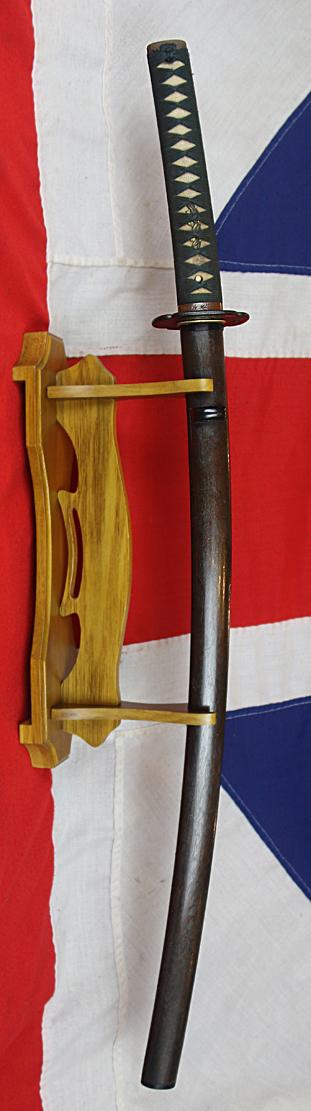


A Beautiful Ancient Samurai Long Sword, A Koto Period Katana Around 500 Years Old Sengoku Period With All Original Edo Period Mounts & Fittings
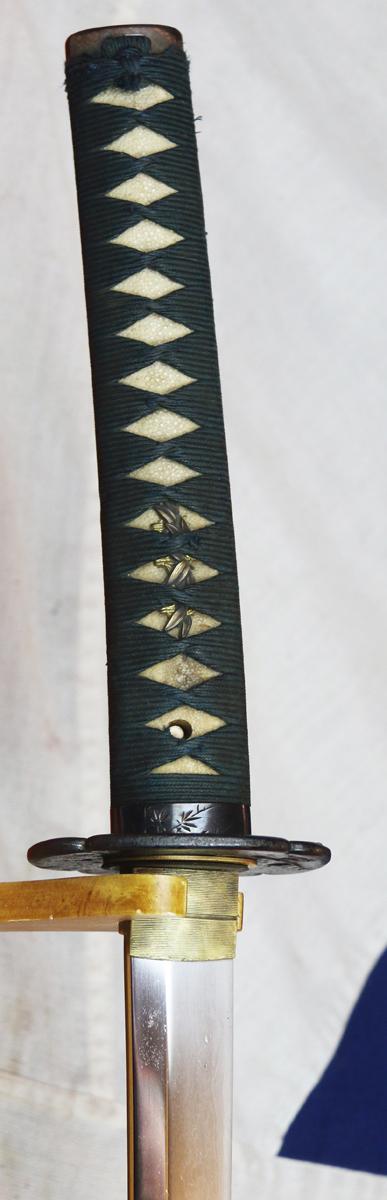
A most impressive and beautiful sword, a fine statement piece of any collection of oriental art. A sword mounted in wonderful original Edo period koshirae, all decorated on the theme of bamboo.
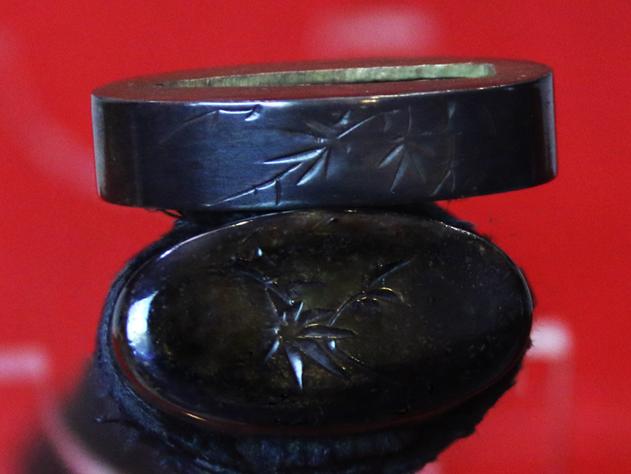
A superb pair of shakudo fuchigashira carved with bamboo leaves, shakudo is a billon of gold and copper (typically 4-10% gold, 96-90% copper) which can be treated to form an indigo/black patina resembling lacquer. Unpatinated shakudo Visually resembles bronze; the dark colour is induced by applying and heating rokusho, a special patination formula. Shakudo was historically used in Japan to construct or decorate katana fittings such as tsuba, menuki, and kozuka; as well as other small ornaments. When it was introduced to the West in the mid-19th century, it was thought to be previously unknown outside Asia, but recent studies have suggested close similarities to certain decorative alloys used in ancient Egypt, Greece, and Rome.
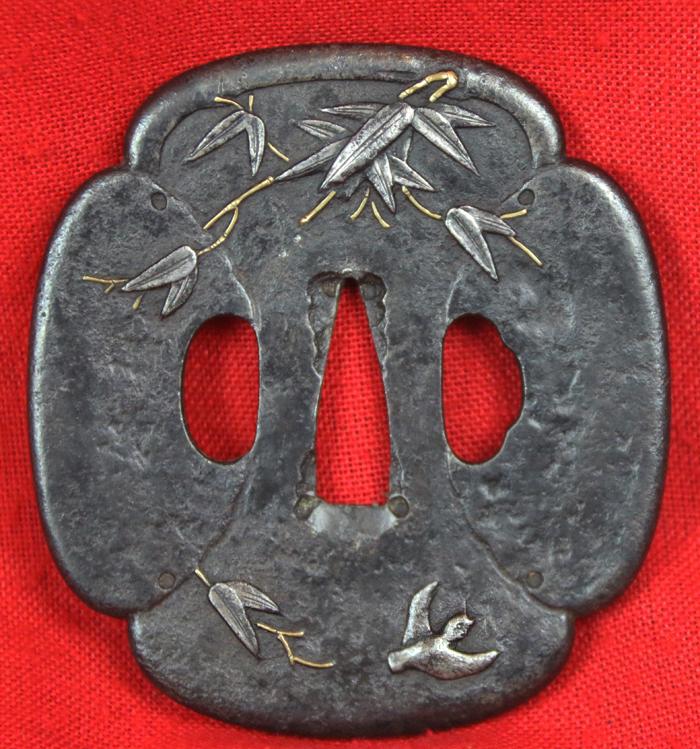
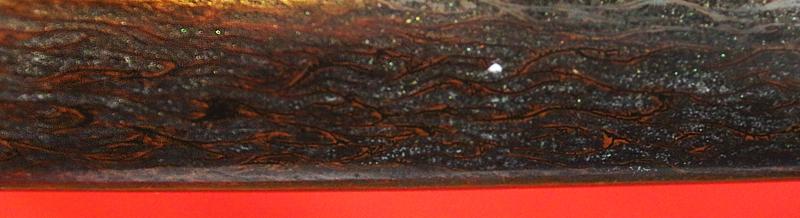
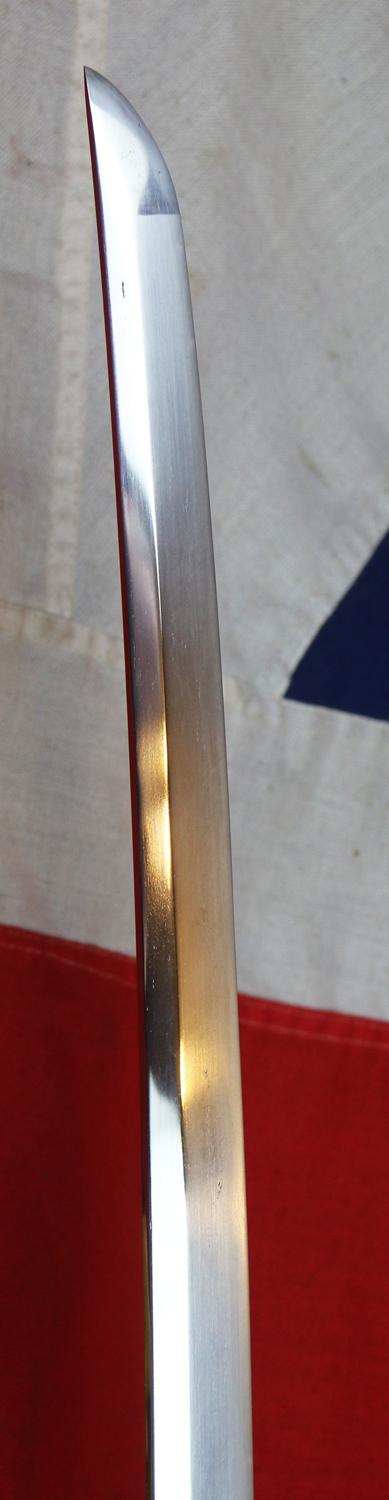
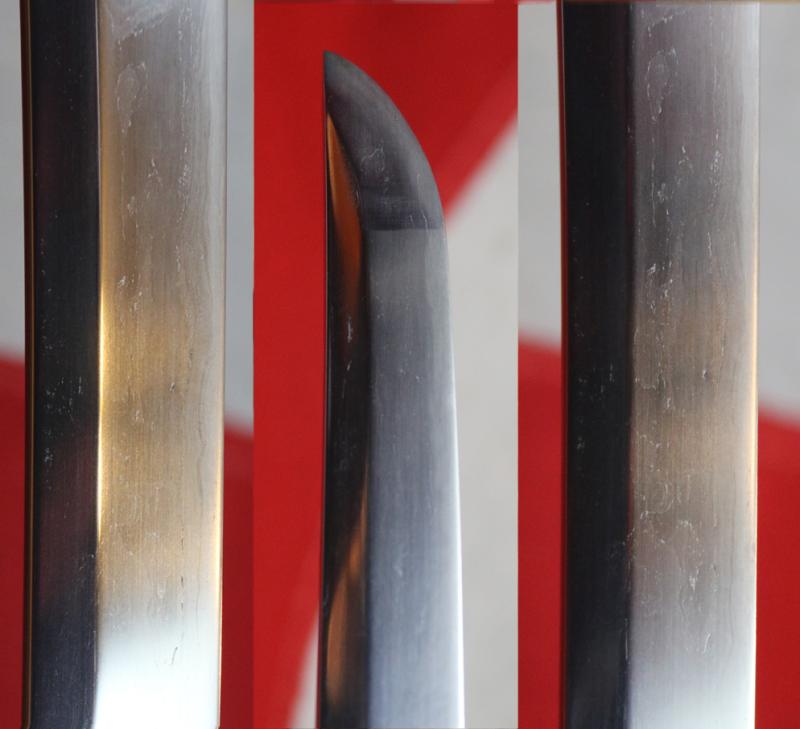
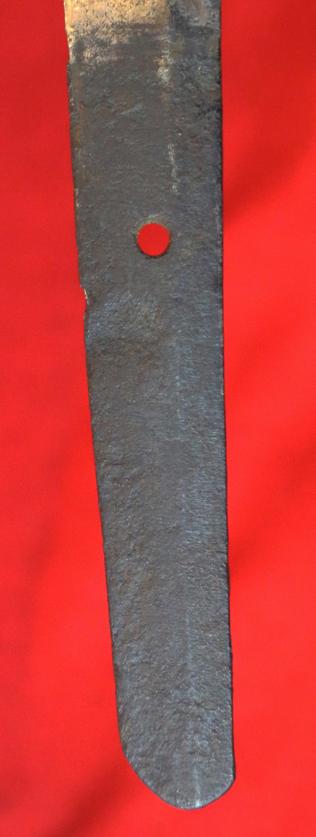
Large iron plate tsuba with bamboo and birds, and bamboo form menuki under the green/blue silk wrap over giant rayskin. The original Edo saya is subtly decorated with incredible skill and detail with wonderful, dark, scrolling and crushed Abilene shell. Long powerful blade, with beautiful polish. The activity of the grain in the hada {blade mid section} is now visible since renovation, and it looks absolutely beautiful, especially bearing in mind it is around 500 years old.
For centuries, if not millennia, bamboo has permeated everyday Japanese life, figured in some of the country’s best-known literature and become a staple of its art, as both motif and material. Its propensity to bend yet endure makes it a cultural symbol. In both Japan and China, an ink painting of a tiger in a grove of bamboo signifies social harmony and, it would seem, political savvy, as this wily animal is among the few able to navigate the dense bamboo forest. Bamboo contains multitudes. Perhaps nowhere more than in Japan, home to over 600 species of this amazing plant, officially a subfamily of grasses but blessed with a woody stem and the ability to lift well above its weight. Japan’s ubiquitous bamboo is unsurprisingly storied. Woven artifacts evidence from the later Jomon Period (10,000-200 B.C.). The ancient nation- and culture-building texts, the “Kojiki” (Records of Ancient Matters) and “Nihon Shoki” (“The Chronicles of Japan”), record bamboo knives and combs with magical powers. The oldest surviving baskets are 8th-century offering trays kept in the Shosoin treasure house in Nara. Bamboo was obviously crucial to the 10th-century prose narrative “Taketori Monogatari” (“Tale of the Bamboo Cutter”). Tea masters of the 15th century revered seemingly artless utensils in their burgeoning spiritual practice. Emperors were gifted the choicest of bamboo wares. The Sengoku period Sengoku Jidai, "Warring States period") is a period in Japanese history of near-constant civil war, social upheaval, and intrigue from 1467 to 1615.
The Sengoku period was initiated by the Ōnin War in 1467 which collapsed the feudal system of Japan under the Ashikaga Shogunate. Various samurai warlords and clans fought for control over Japan in the power vacuum, while the Ikkō-ikki emerged to fight against samurai rule. The arrival of Europeans in 1543 introduced the arquebus into Japanese warfare, and Japan ended its status as a tributary state of China in 1549. Oda Nobunaga dissolved the Ashikaga Shogunate in 1573 and launched a war of political unification by force, including the Ishiyama Hongan-ji War, until his death in the Honnō-ji Incident in 1582. Nobunaga's successor Toyotomi Hideyoshi completed his campaign to unify Japan and consolidated his rule with numerous influential reforms. Hideyoshi launched the Japanese invasions of Korea in 1592, but their eventual failure damaged his prestige before his death in 1598. Tokugawa Ieyasu displaced Hideyoshi's young son and successor Toyotomi Hideyori at the Battle of Sekigahara in 1600 and re-established the feudal system under the Tokugawa Shogunate. The Sengoku period ended when Toyotomi loyalists were defeated at the siege of Osaka in 1615.
It has been over one thousand years ago that the art of making swords appeared in Japan. The swordsmiths of the time may not have known it but they were creating a legendary sword. The Samurai sword has seen combat in many battlefields. From the early days of the Samurai warrior to the fierce battles in the South Pacific during WWII.
From the earliest days hand-made traditional the Samurai sword was unique because it was forged using the finest skills known to man. A tremendous amount of work was dedicated to creating these pieces. They were an instrument of war as much as a beautiful artifact to adorn any decor.
As once told to us by an esteemed regular visitor to us here in our gallery, Victor Harris {the most eminent sword expert in Europe, and sword curator of the British Museum} and his same words that are repeated in his book, see below;
“In these textures lies an extraordinary and unique feature of the sword - the steel itself possesses an intrinsic beauty. The Japanese sword has been appreciated as an art object since its perfection some time during the tenth century AD. Fine swords have been more highly prized than lands or riches, those of superior quality being handed down from generation to generation. In fact, many well-documented swords, whose blades are signed by their makers, survive from nearly a thousand years ago. Recognizable features of the blades of hundreds of schools of sword-making have been punctiliously recorded, and the study of the sword is a guide to the flow of Japanese history.”
Victor Harris
Curator, Assistant Keeper and then Keeper (1998-2003) of the Department of Japanese Antiquities at the British Museum. He studied from 1968-71 under Sato Kenzan, Tokyo National Museum and Society for the Preservation of Japanese Swords
For those that have interest in original Japanese swords, this is a perfect way to have a superbly made original hand made sword that it mounted in original Japanese fittings of the early samurai form of katana.
** Authentic, currently, modern hand-made nihonto (Japanese sword blades) from licensed swordsmiths in Japan today, typically start around $10,000–$25,000 for a katana, with prices often exceeding $60,000 for renowned top-tier sword masters or customized commissions.
These blades, forged from tamahagane steel, require 12+ months to create due to strict legal limits on production, with some high-end, custom pieces from master smiths such as Yoshindo Yoshihara exceeding $10,000 for smaller tanto blades.
A brand new, katana blade from a reputable but lower ranked smith usually starts around $7,500–$10,000.
Every single item from The Lanes Armoury is accompanied by our unique Certificate of Authenticity. Part of our continued dedication to maintain the standards forged by us over the past 100 years of our family’s trading, as Britain’s oldest established, and favourite, armoury and gallery
.
Overall in super condition, just tiny denting to the small kashira {as is often the case}, overall length in saya 37.5 inches long, when the sword is withdrawn from saya it is 35.25 inches long overall
Code: 24723
7450.00 GBP