
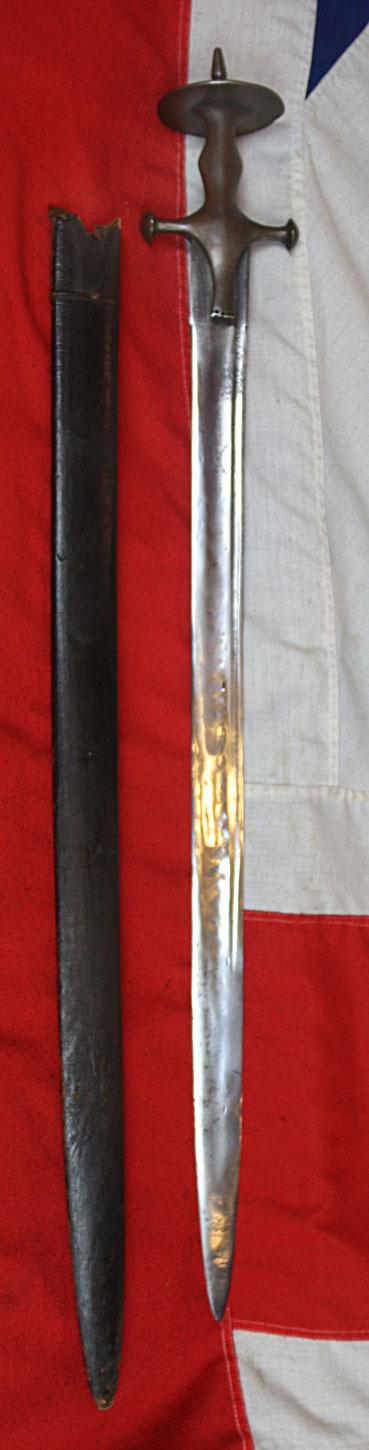
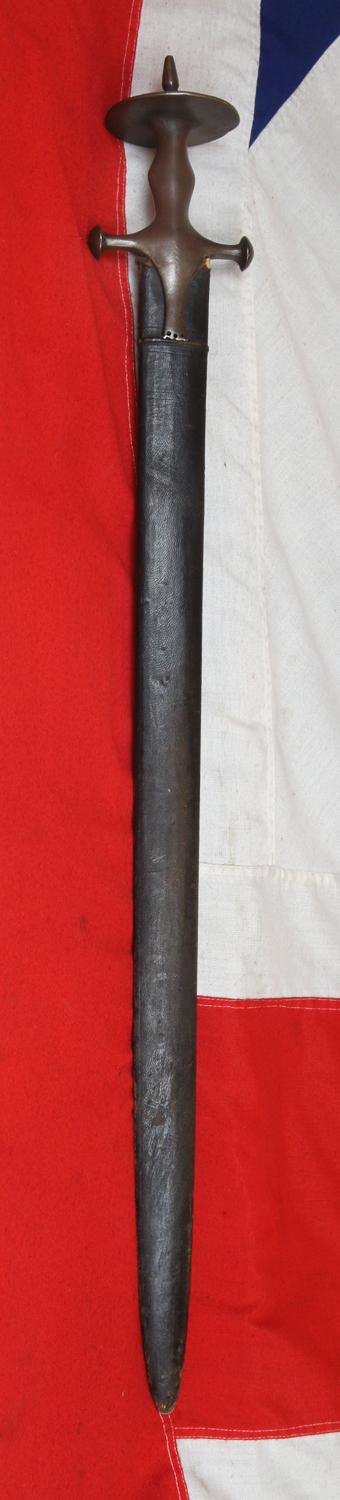
A Very Rare, Strong & Powerful 18th Century Indian Tulwar Hilted Firangi Sword.
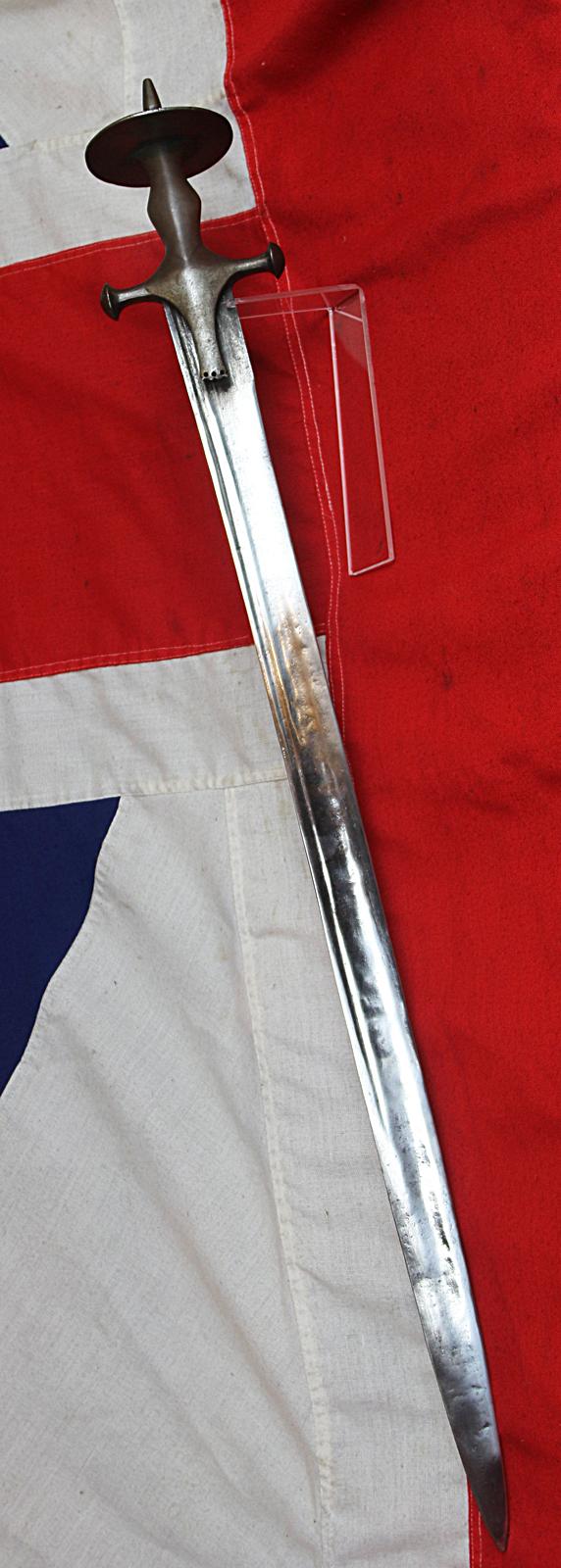
Overall in length this sword is 35.5 inches in the leather covered wooden scabbard with a blade length of 30 inches .
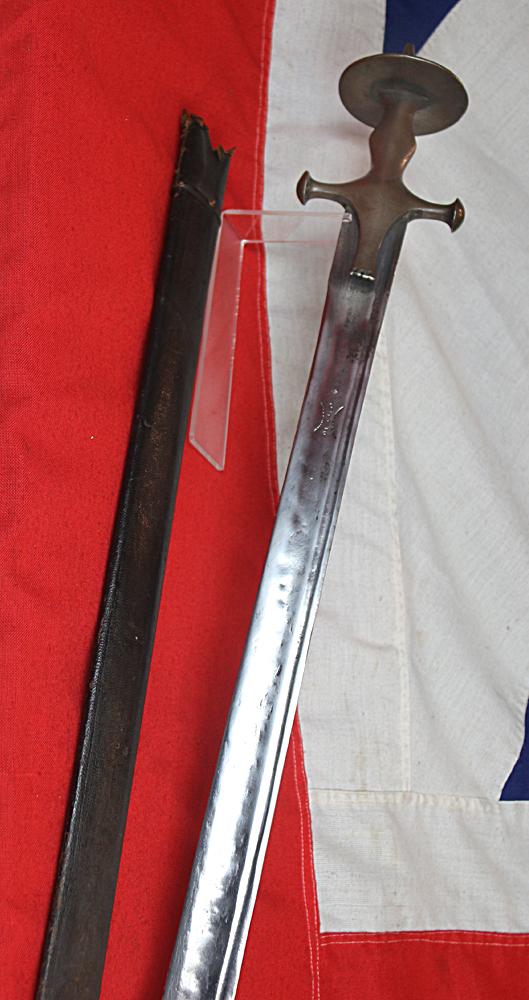
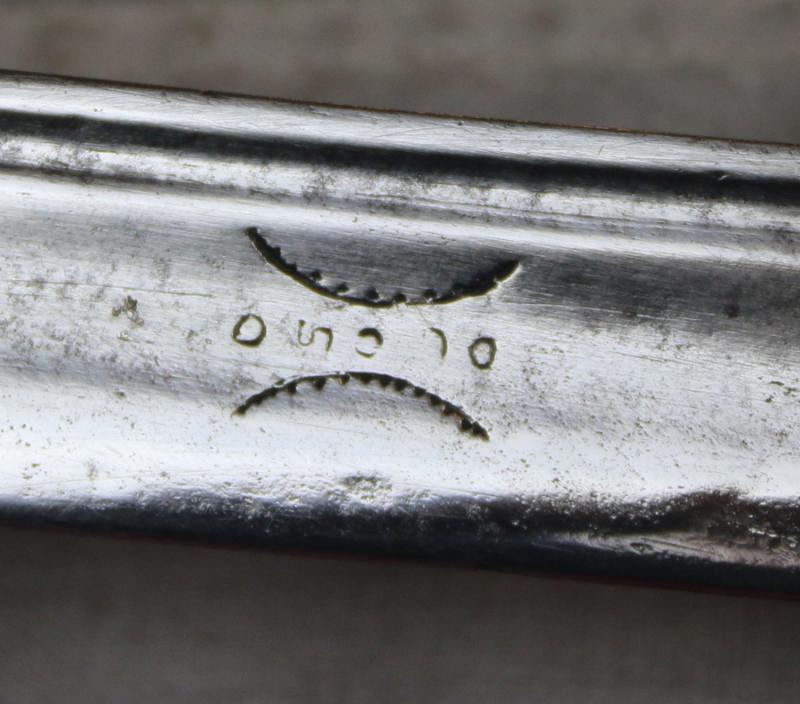
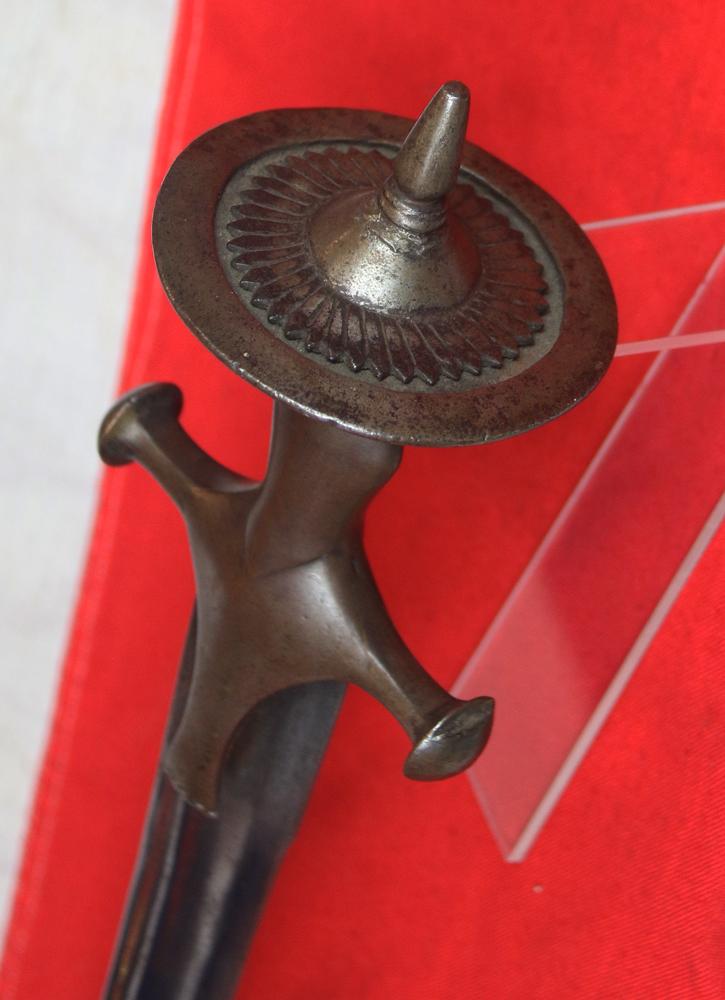
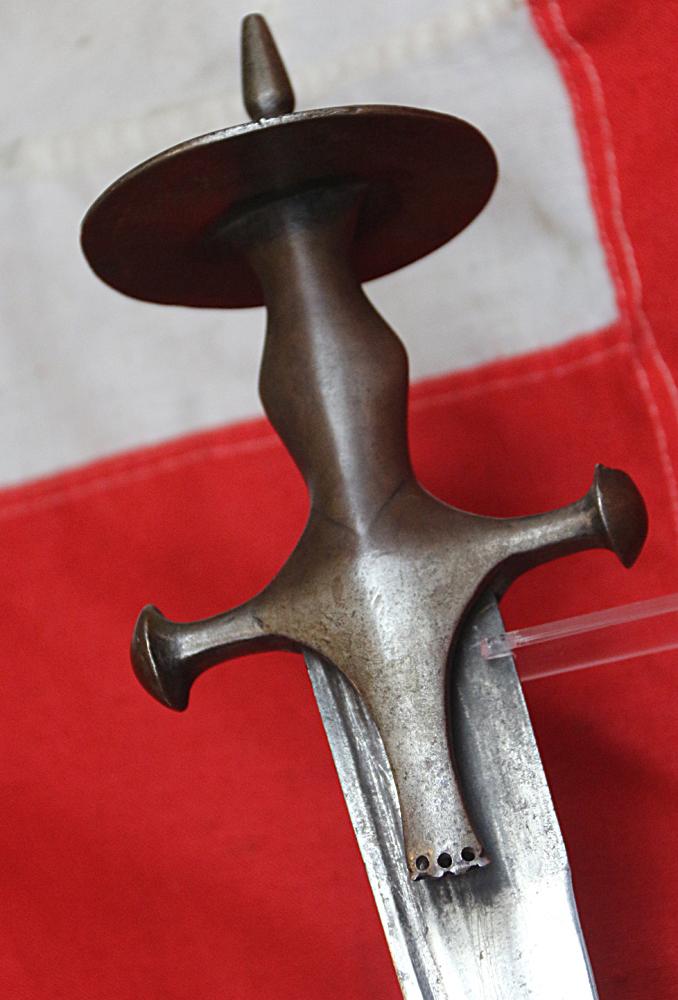
The Firangi blade meaning white foreigner in Indian is well marked with hammer forging marks to the wide central fuller and armourer's guild marks to one side, of a double eyelash with circle stamps between, something that is not often seen. The blade has a narrow fuller below the re-enforcing bar on the back edge, at the top of the blade, and a wide central fuller mid section, and the back edge is sharpened for around 10 inches from the tip. The hilt on this example is an unusually substancial and large Tulwar hilt with the pommel disc being 3.5 inches across.
This Firanghi has the good point of balance from the of the hilt and the strong supple blade plays in the hand extremely well. The hilt would fit a narrower 18th century hand than today.
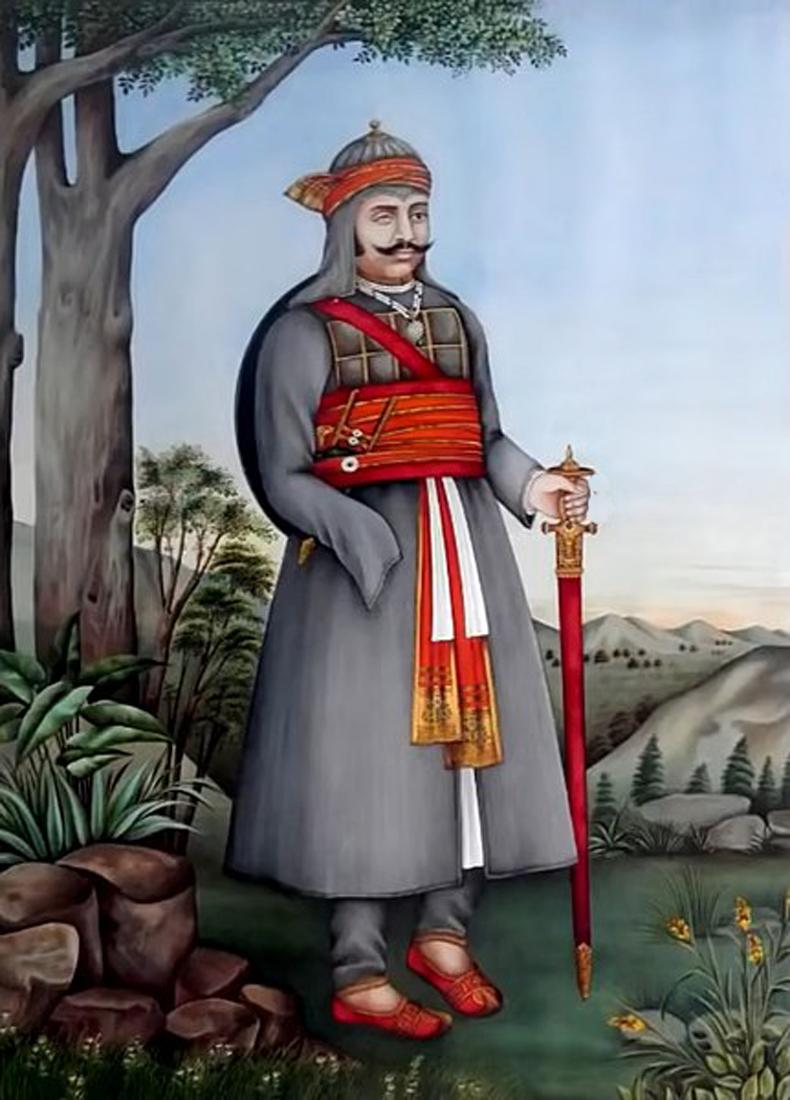
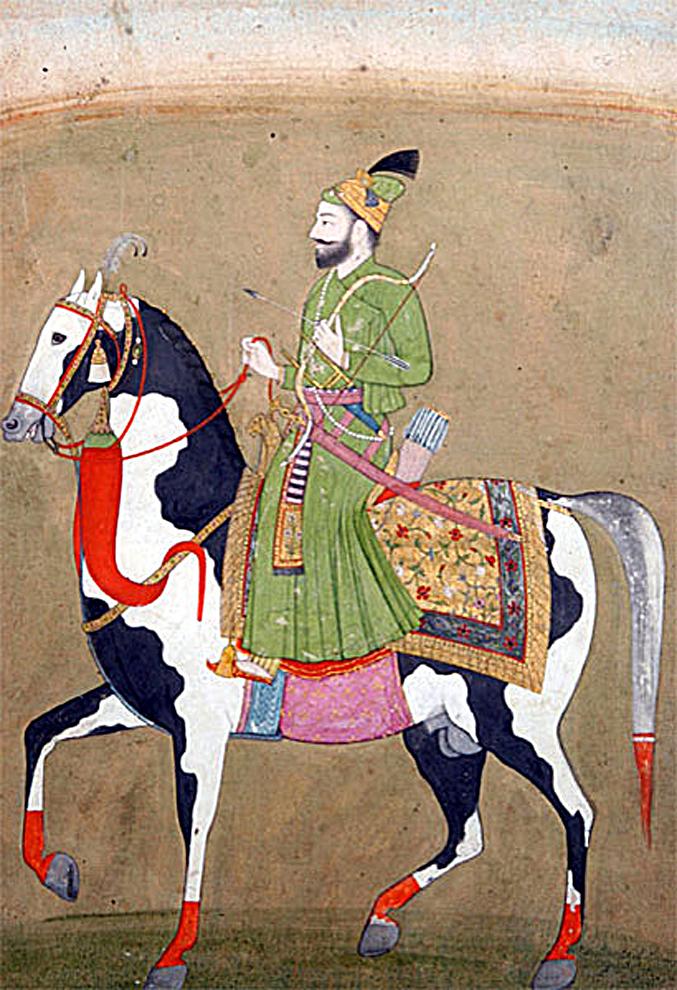
Like other contemporary Indian swords the hilt of the firangi was usually of iron and the tang of the blade was attached to the hilt using a very strong resin, additionally, the hilt to blade connection was reinforced by projections from the hilt onto either face of the forte of the blade which were riveted together though a hole passing through the blade. Because of its length the firangi is usually regarded as primarily a cavalry weapon. Illustrations suggest a 16th-century date for the development of the sword, though early examples appear to have had simpler cross-guard hilts, similar to those of the talwar. The sword has been especially associated with the Marathas, who were famed for their cavalry. However, the firangi was widely used by the Mughals and those peoples who came under their rule, including Sikhs and Rajputs. Images of Mughal potentates holding firangis, or accompanied by retainers carrying their masters' firangis, suggest that the sword became a symbol of martial virtue and power. Photographs of Indian officers of Hodson's Horse (an irregular cavalry unit raised by the British) show that the firangi was still in active use at the time of the Indian Mutiny in 1857-58 The sword can generally be a double-edge but can be a single edged straight sword. It is often featured in religious iconography, theatre and art depicting the ancient history of India. Some communities venerate the weapon as a symbol of Shiva. It is a common weapon in the martial arts in the Indian subcontinent.
A sword I would consider to have been used by a swordsman of great experience. Overall in good condition, small split at base of scabbard.
Code: 24650