
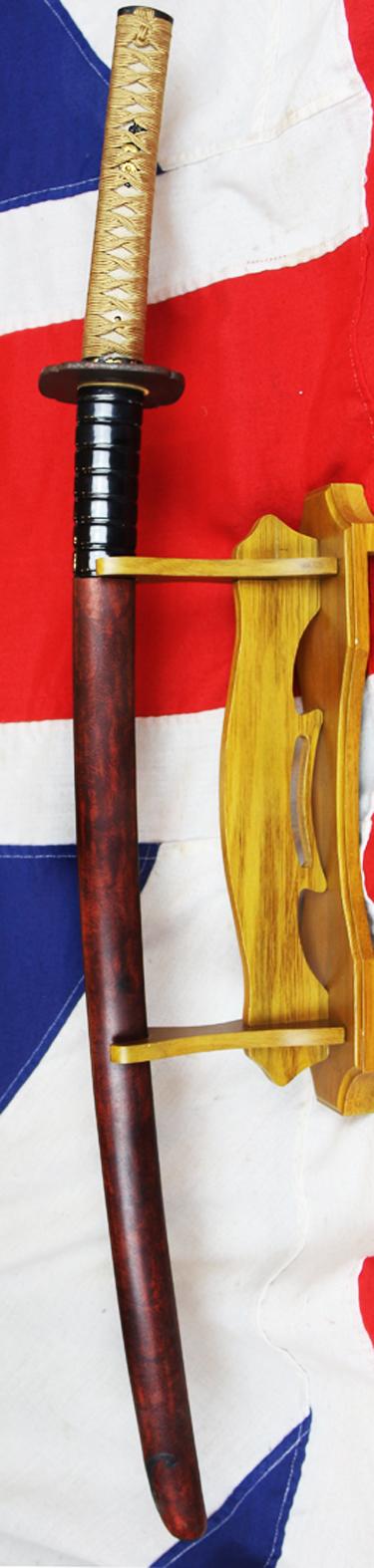
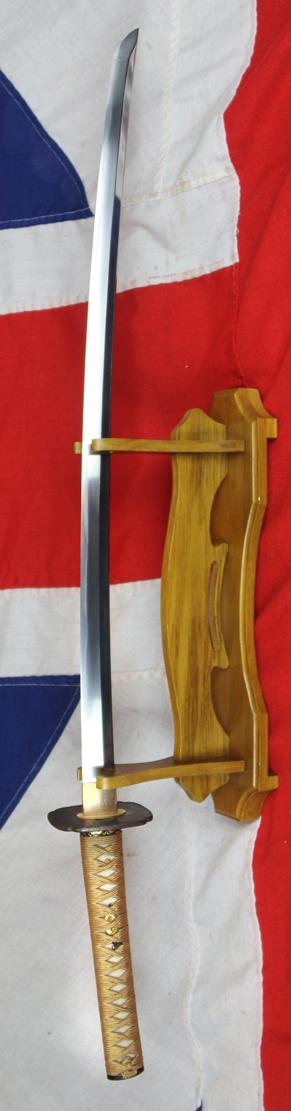
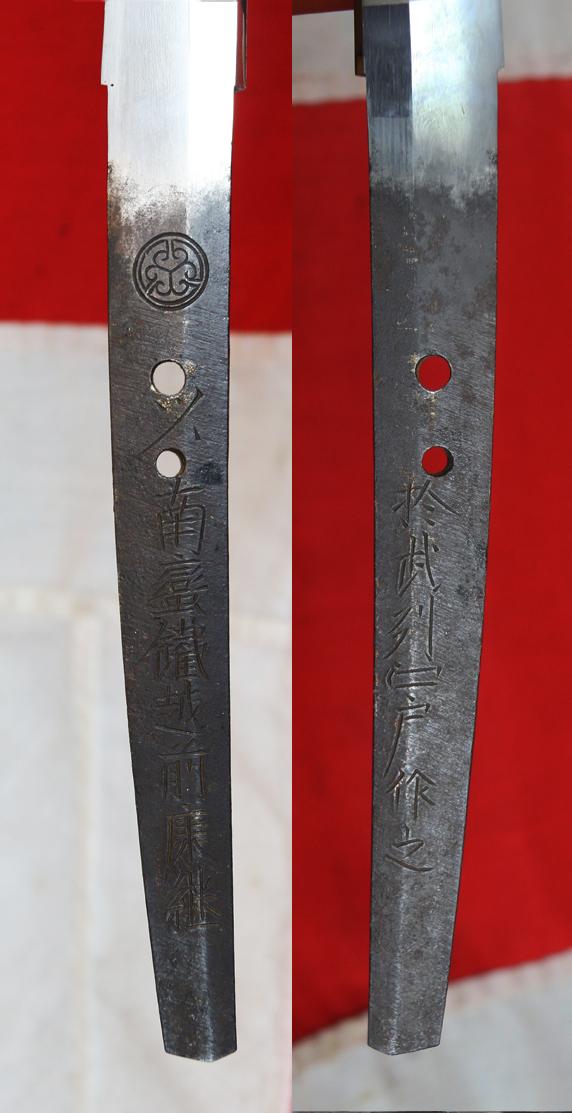
A Very Fine Yasutsugu School Katana, circa 1675-1684 Likely the 4th Generation, Signed, with Aoi Mon, Namban Tetsu Oite Bushu Edo Echizen Yasutsugu
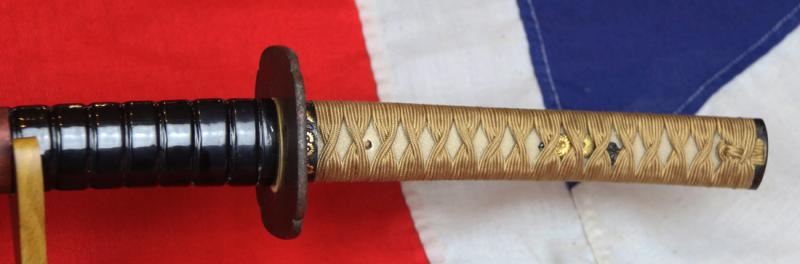
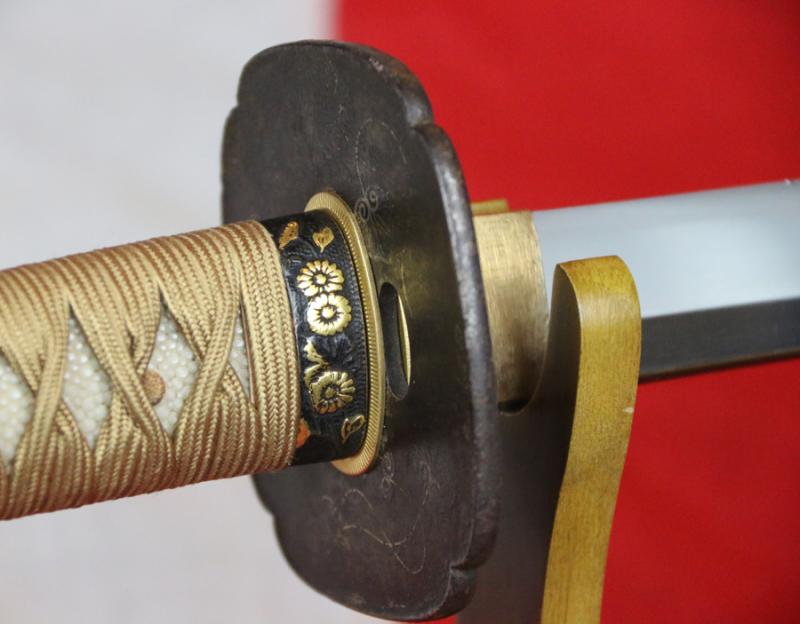
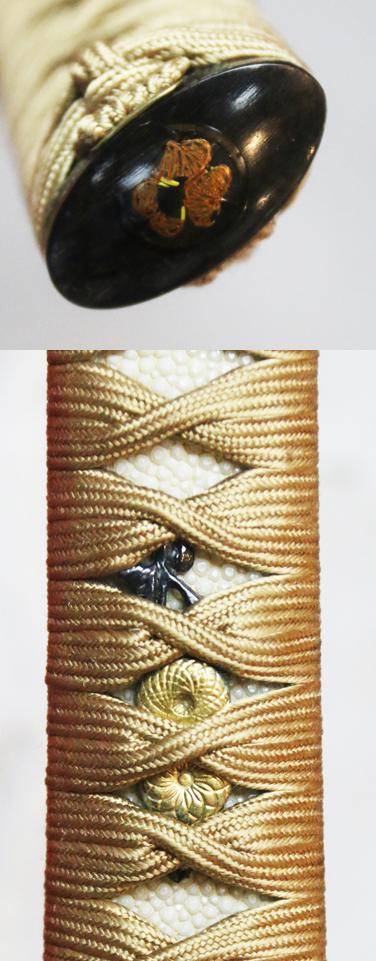
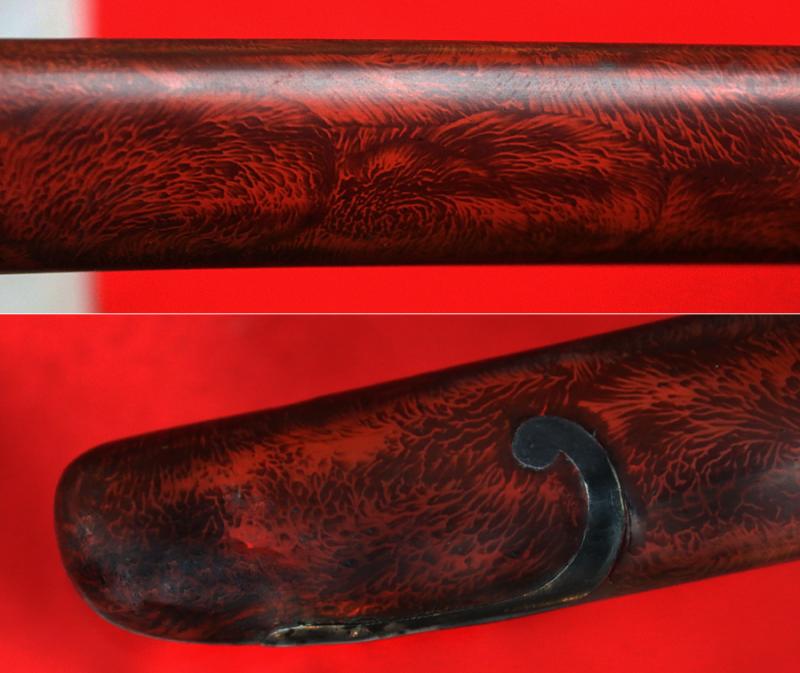
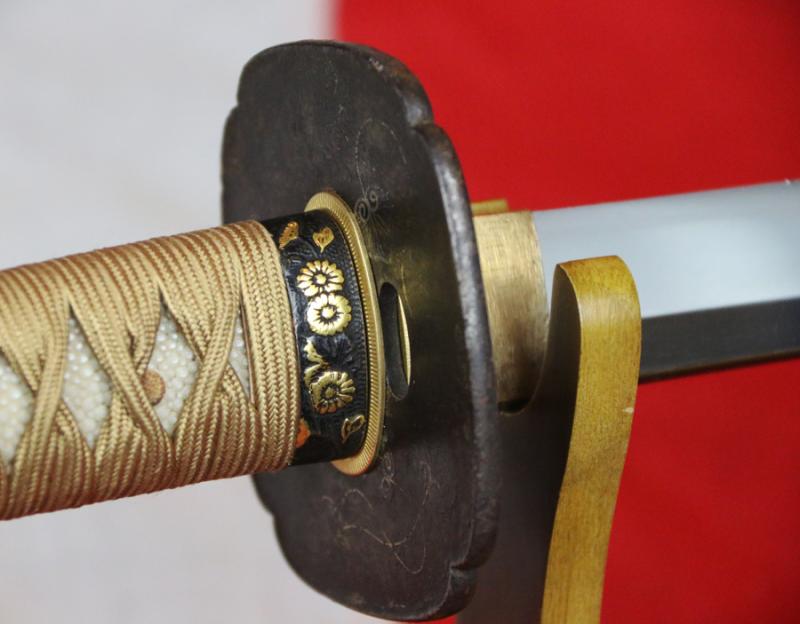
With a stunning bi coloured, black ribbed and cinnabar red lacquer saya, hand decorated with a wonderful light feathering and a scrolling silver saya jiri bottom mount. The mounts fuchi kashira and menuki are gold and shakudo decorated of the chrysanthemum. The story of the Yasutsugu lineage starts with the birth of the first generation, Ichizaemon, who is believed to have been born around the middle of the sixteenth century. His place of birth was in Shimosaka of Shiga-gun in the province of Omi. Omi is next to Mino and contains Lake Biwa. Yasutsugu was born into a sword making family headed by his father, Hironaga, reputed to be the last descendent of Yamato no Kuni Senjuin. Though his father was from Omi, he was trained in the Mino tradition. Around the 11th or 12th year of this same period of Keicho (1606-1607), Yasutsugu’s fame reached the point that he was called to Edo (Tokyo) to share his forging skills with Tokugawa Ieyasu. About this time Yasutsugu was given the privilege of using the character “Yasu” (康) from Tokugawa Ieyasu’s (徳川家康) name. Thus, from that point on, he changed his name to Yasutsugu. About the same time (some feel it was a few years later) he was given the additional privilege of carving the Hollyhock crest (Aoi mon) on his blades. These privileges were given in perpetuity to Yasutsugu and his descendants. Thus the Yasutsugu swordsmiths became the kaji of the Tokugawa Family.
Yasutsugu worked in Echizen and Edo as was the custom with the Tokugawa family in those days. It was much like the practice of Sankin Kodai (alternate year attendance) that was required of the Daimyo of the country. He died in seventh year of Genna (1621) probably in his 70’s.
Upon the death of the first generation Yasutsugu , the family mantle was taken up by his son, Ichinojô.
Nidai Yasutsugu made swords in the same style as the first generation. Some say that his ability was nearly the equal of his father’s. While all do not agree, there seems to be a consensus that he was without a doubt a close second
The two branches of the Yasutsugu school continued for many generations. The Edo school continued through eleven generations. It is generally agreed that the only two smiths of the last eight generations that were of note are the fourth our sword and the eleventh generations. The fourth generation had the advantage of being trained by the third generation, a quality smith. In addition, the fourth generation left several works in which he collaborated with the well-known smith, Izumi (no) Kami Kaneshige. The fourth generation’s working period was from 1675, the third year of Enpo to 1684, the first year of Teikyo era.
Interestingly, the steel used to produce this sword was in part sourced from Europe, likely from
Dutch traders. This steel was known as “Namban tetsu”, (lit. Southern Barbarian steel). It would
have been expensive and unique to produce swords with steel from faraway lands in the late
1600s. Thus the nakago (tang) is chiselled with the words Namban tetsu.
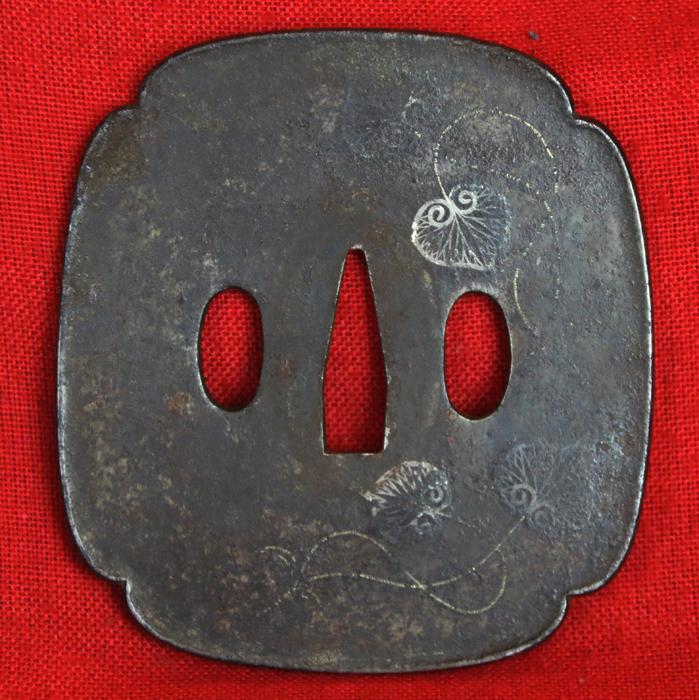
it is mounted with An Antique Edo Period Iron Large Tsuba Inlaid with Silver Aoi Leaves
The Tsuba can be solid, semi pierced of fully pierced, with an overall perforated design, but it always a central opening which narrows at its peak for the blade to fit within. It often can have openings for the kozuka and kogai to pass through, and these openings can also often be filled with metal to seal them closed. For the Samurai, it also functioned as an article of distinction, as his sole personal ornament. The tsukaito is beautifully traditionally rebound as is the black ribbing lacquer, on its original Edo lacquer saya.
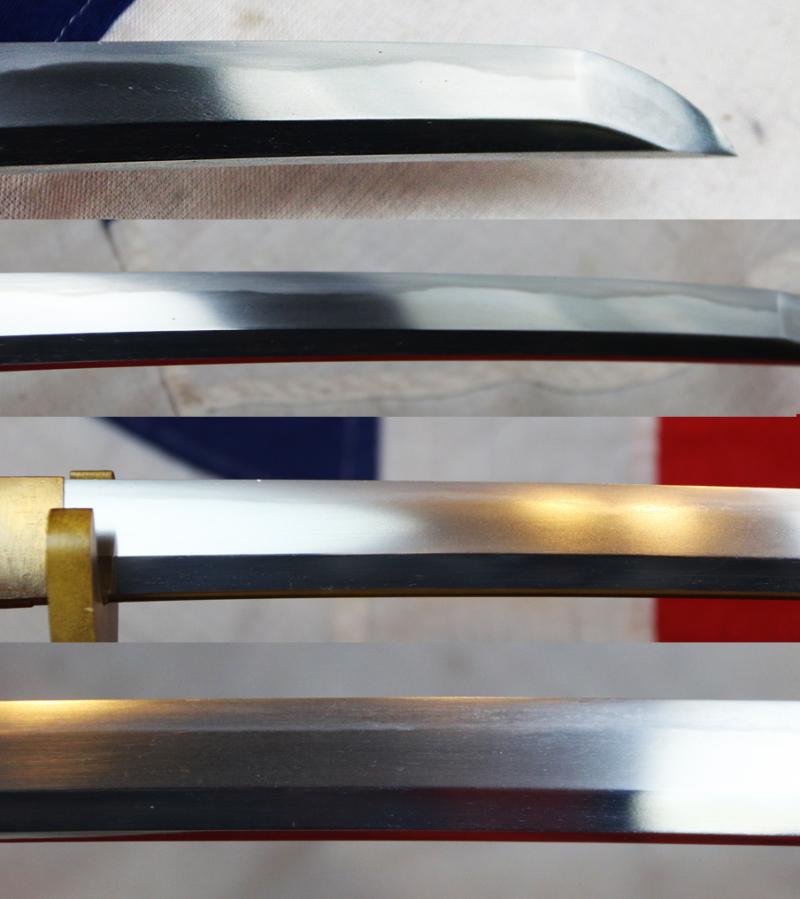
As can be seen it is likely in its last original Edo polish in stunning condition which is beautiful, with just the tiniest natural aged surface mark. The kashira is carved buffalo horn with an applied gold lacquer partially complete aoi mon
Overall length in saya 38 3/4, blade tsuba to tip 27 3/4 inches long
It has been over one thousand years ago that the art of making swords appeared in Japan. The swordsmiths of the time may not have known it but they were creating a legendary sword. The Samurai sword has seen combat in many battlefields. From the early days of the Samurai warrior to the fierce battles in the South Pacific during WWII.
From the earliest days hand-made traditional the Samurai sword was unique because it was forged using the finest skills known to man. A tremendous amount of work was dedicated to creating these pieces. They were an instrument of war as much as a beautiful artifact to adorn any decor.
As once told to us by an esteemed regular visitor to us here in our gallery, Victor Harris {the most eminent sword expert in Europe, and sword curator of the British Museum} and his same words that are repeated in his book, see below;
“In these textures lies an extraordinary and unique feature of the sword - the steel itself possesses an intrinsic beauty. The Japanese sword has been appreciated as an art object since its perfection some time during the tenth century AD. Fine swords have been more highly prized than lands or riches, those of superior quality being handed down from generation to generation. In fact, many well-documented swords, whose blades are signed by their makers, survive from nearly a thousand years ago. Recognizable features of the blades of hundreds of schools of sword-making have been punctiliously recorded, and the study of the sword is a guide to the flow of Japanese history.”
Victor Harris
Curator, Assistant Keeper and then Keeper (1998-2003) of the Department of Japanese Antiquities at the British Museum. He studied from 1968-71 under Sato Kenzan, Tokyo National Museum and Society for the Preservation of Japanese Swords
For those that have interest in original Japanese swords, this is a perfect way to have a superbly made original hand made sword that it mounted in original Japanese fittings of the early samurai form of katana.
** Authentic, currently, modern hand-made nihonto (Japanese sword blades) from licensed swordsmiths in Japan today, typically start around $10,000–$25,000 for a katana, with prices often exceeding $60,000 for renowned top-tier sword masters or customized commissions.
These blades, forged from tamahagane steel, require 12+ months to create due to strict legal limits on production, with some high-end, custom pieces from master smiths such as Yoshindo Yoshihara exceeding $10,000 for smaller tanto blades.
A brand new, katana blade from a reputable but lower ranked smith usually starts around $7,500–$10,000.
Every single item from The Lanes Armoury is accompanied by our unique Certificate of Authenticity. Part of our continued dedication to maintain the standards forged by us over the past 100 years of our family’s trading, as Britain’s oldest established, and favourite, armoury and gallery
Code: 24038
12950.00 GBP