
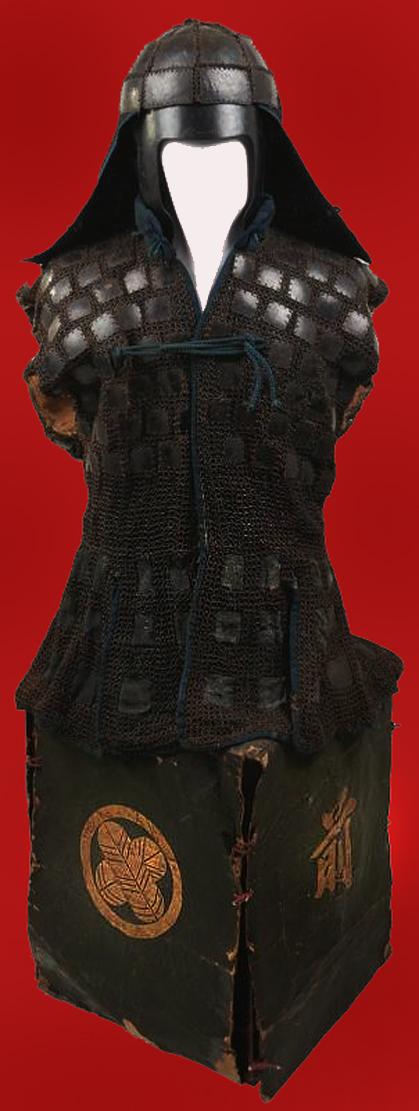
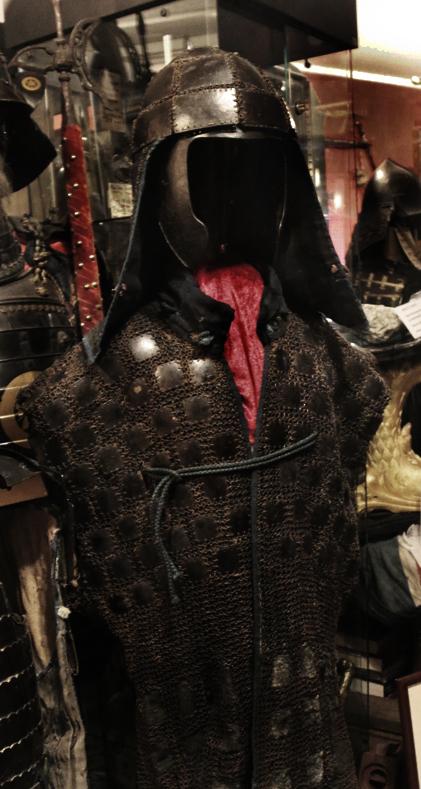
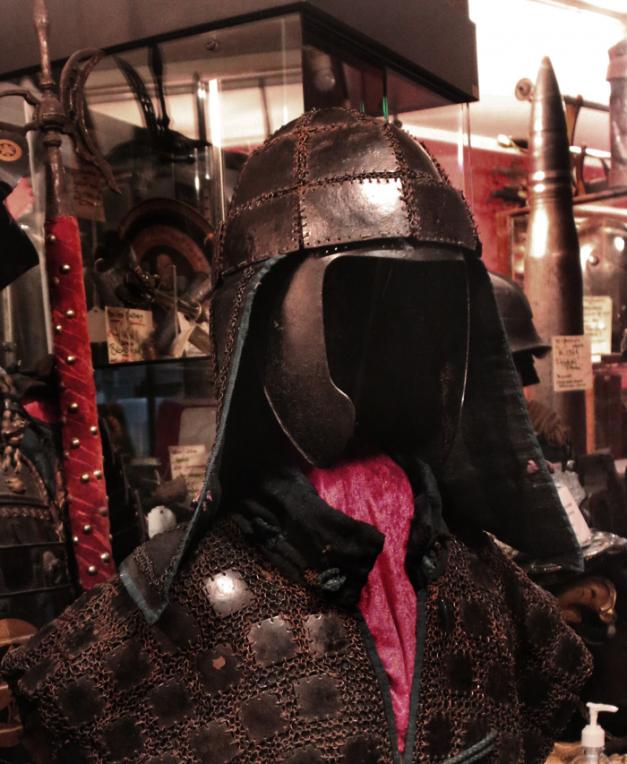
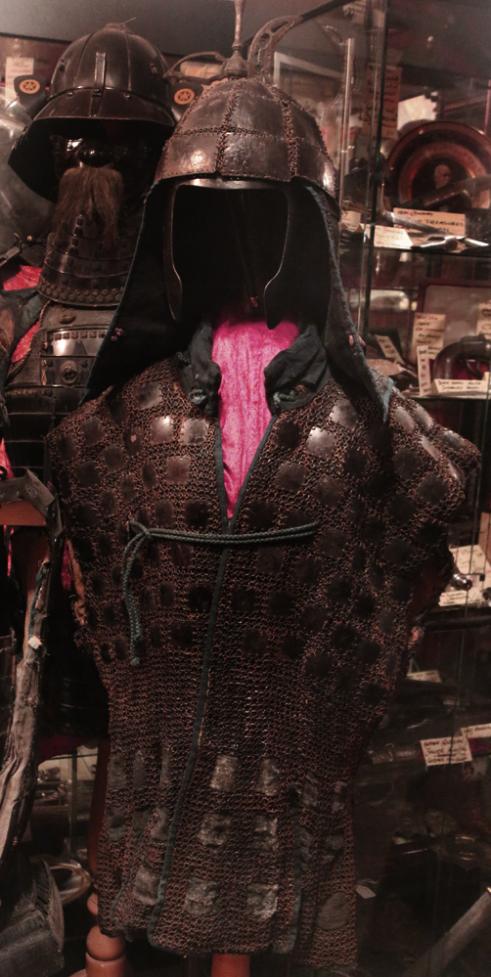
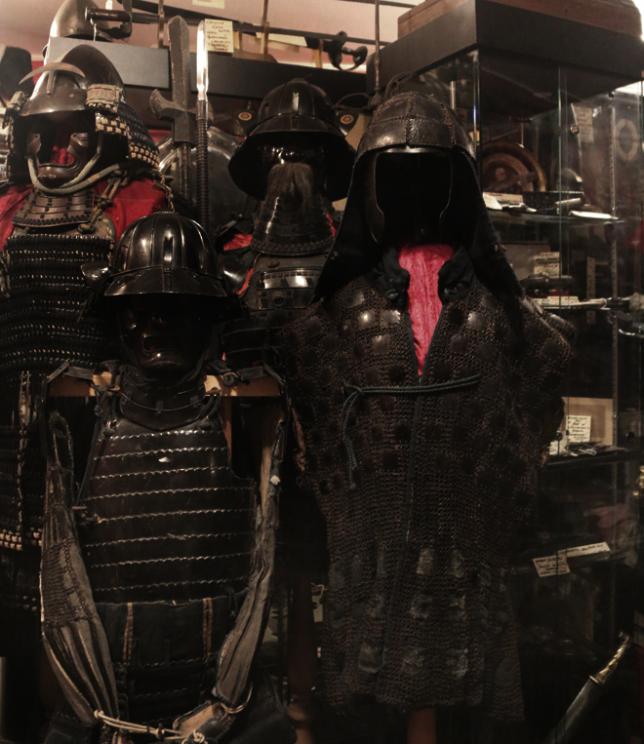
A Superb Suit of Original Antique Edo Period Tatami Kusari Samurai Armour Gusoku Mail and Plate Armour With Original Case. For a Samurai of the Asano Clan. Asano the Clan of the 47 Ronin
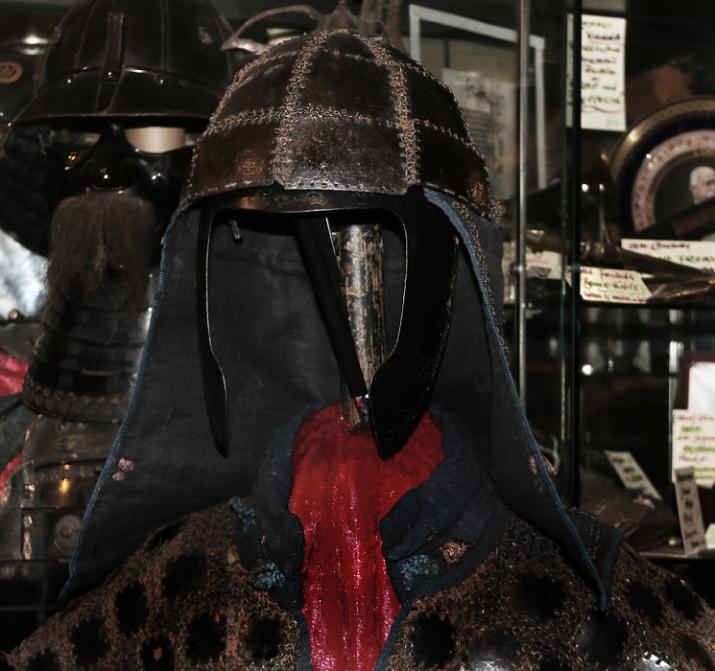
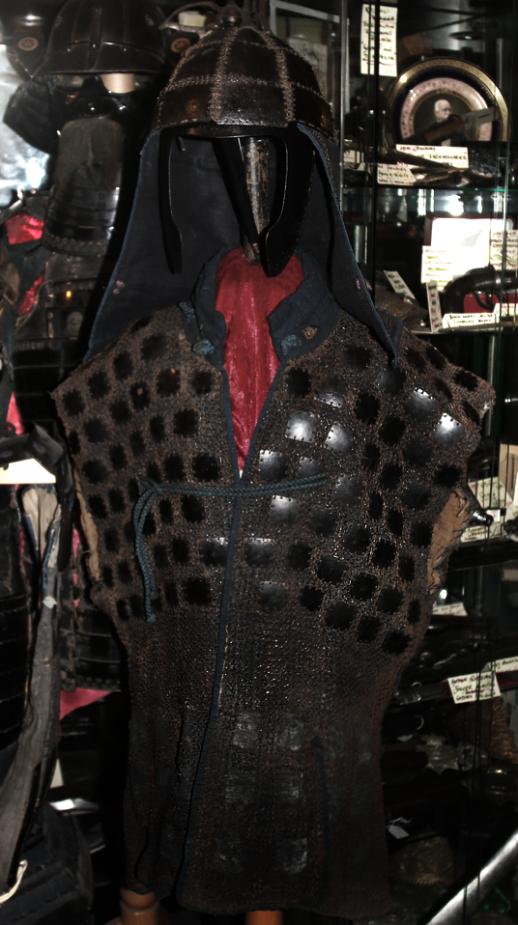
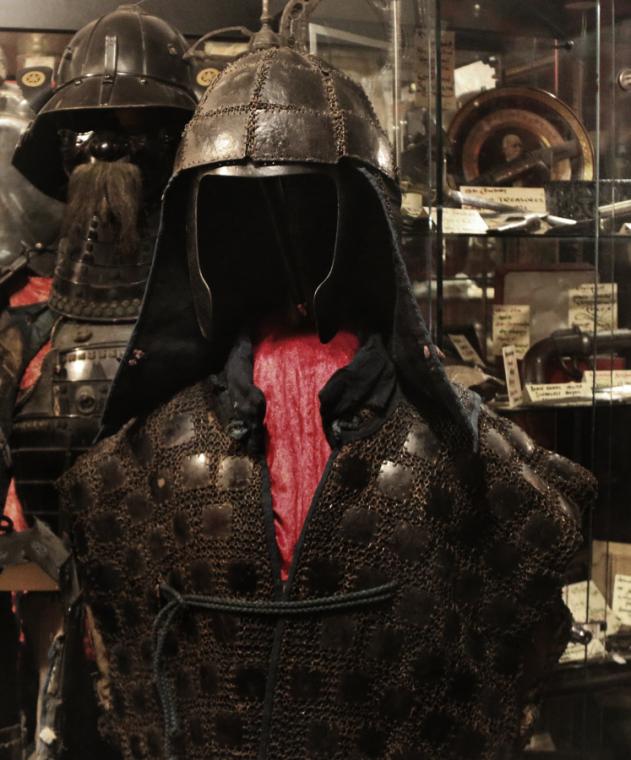
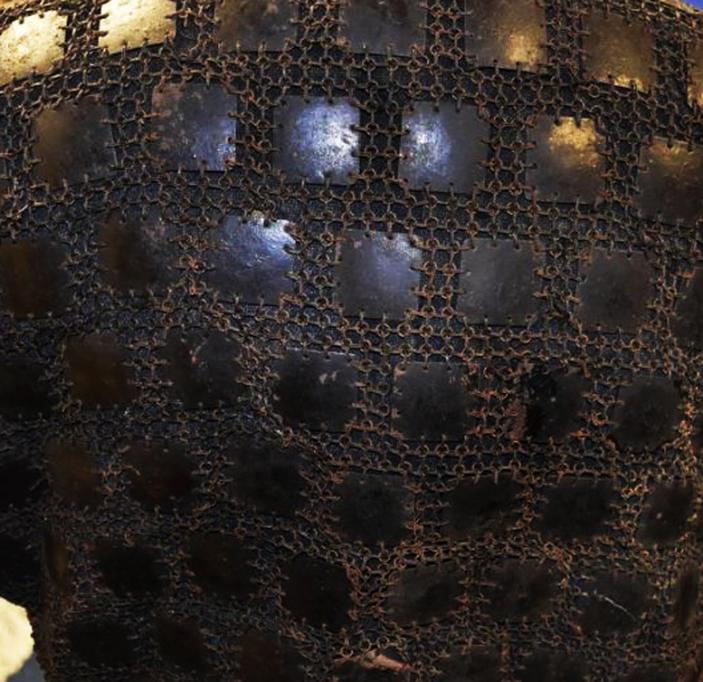
Typical characteristic mail shirt armour interspersed with square lacquered metal plates, blue cloth facings, trim and securing strap, complete with its
matching plate and tatami mail kabuto helmet karuta tatami dō and karuta zukin and hampuri face armour guard or mempo, all contained in its iron
mounted wooden storage and transit case with painted paper laid on canvas outer cover decorated with the Asano hawkfeather mon, and a character in gilt. The 'taka no ha' hawkfeather mon of Asano Naganori, who was the daimyo of the Ako Domain in Japan (1675 - 1701). His title was Takumi no Kami. He is known as the person who triggered a series of incidents retold in a story known as Chushingura, or the 47 Ronin, one of the favourite themes of kabuki, joruri, and Japanese books and films. Described by Japanese historians as a "National Legend", the revenge of the 47 Ronin took place in Japan and is the ultimate expression of the samurai code of honour, Bushido.
The story began on April 21st, 1701, when lord Asano Naganori, the Daimyo of the Ako Domain was forced to commit ritual suicide for attacking Kira Yoshinaka, a rude and arrogant Master of Ceremony under the Tokugawa Shogunate.
The loyal 47 Ronin took over a year to planned their raid on Kira's mansion. On a snowy December night, they strike on Kira's home, taking everyone by surprise.
After killing Kira, they went to their Master's Grave and turned themselves into the authorities. For committing such a vendetta, the 47 Ronin were requested by the Shogun to commit seppuku, ritual self-disembowelment, in honour of their lord, they willingly complied.
On the day of Asano Naganori's death, he had drawn his sword and attempted to kill Kira, in the Corridor of the Pines at Edo Castle in what is now Tokyo. He was wounded and failed to kill Kira. This resulted, on the same day, in the ultimate penalty, the fifth Tokugawa shogun, Tsunayoshi, sentenced him to commit seppuku, ritual suicide which he did after writing this death poem:
"kaze sasofu hana yori mo
naho ware ha mata
haru no nagori wo
ika ni yatosen."
"More than the cherry blossoms,
Inviting a wind to blow them away,
I am wondering what to do,
With the remaining springtime."
He was buried in the graveyard of Sengaku-ji.
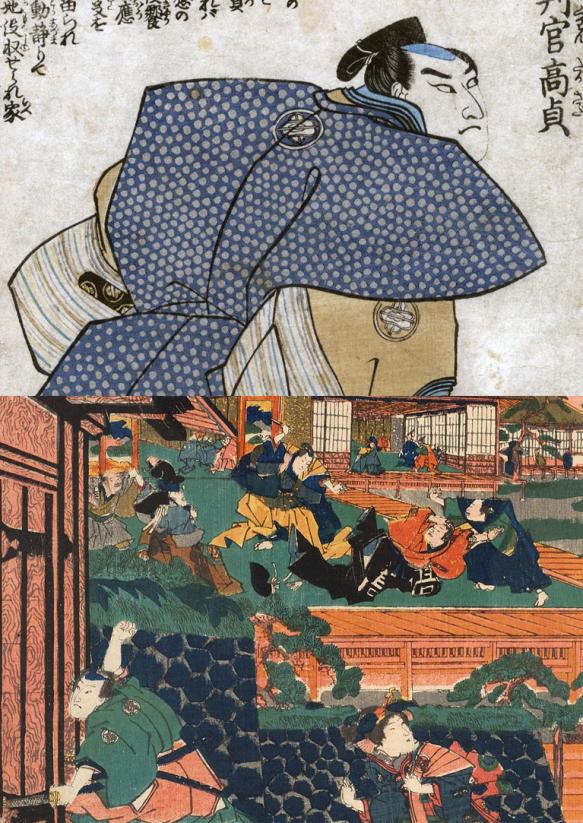
His retainers became ronin when the Shogunate confiscated his fief. Under the leadership of Oishi Kuranosuke, however, they avenged the death of their lord by killing Kira at his mansion in Edo on December 15, 1702. These former retainers became famous as the Forty-seven Ronin, and their vendetta ranks as one of the most renowned in Japan. Print in the gallery of Ukiyo-e depicting the assault of Asano Naganori on Kira Yoshinaka in the Matsu no Oroka of Edo Castle.
Tatami (畳具足), or tatami gusoku (from tatamu 畳む, "to fold") and gusoku (meaning full suit of armour), was a type of lightweight portable folding Japanese armour worn during the feudal era of Japan by the samurai class and their foot soldiers (ashigaru). The Tatami dō (a foldable cuirass) or the tatami katabira (an armoured jacket) were the main components of a full suit of tatami armour. I could recommend you two movies: Kon Ichikawa's 47 Ronin, and Kunio Watanabe's 1958 version . Kusari armour was used in samurai armour at least from the time of the Mongol invasions (1270s) but particularly from the Nanboku-chō period (1336–1392
Kusari gusoku (chain armour) was commonly used during the Edo period 1603 to 1868 as a stand-alone defense..
Code: 23381
5950.00 GBP