
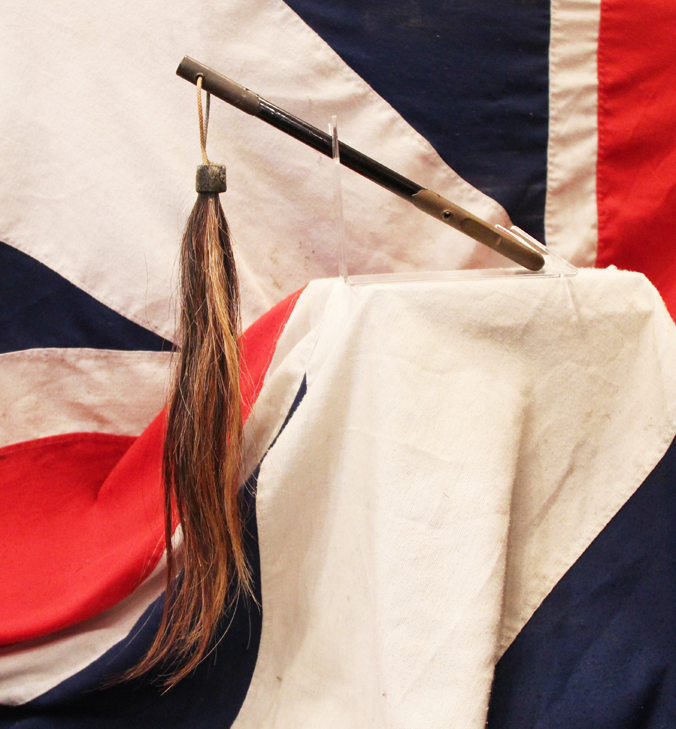

A Most Scarce Antique Edo Period Original Samurai Commander's Saihai (采配). A Samurai Army Signalling Baton
Edo period. From a pair of different forms of saihai acquired by us. The other is now sold.
For a samurai high ranking commander to signal troop movements to his samurai army in battle.
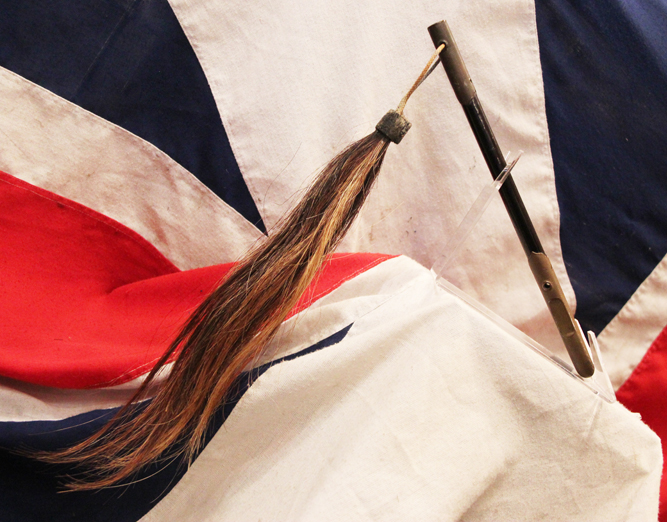
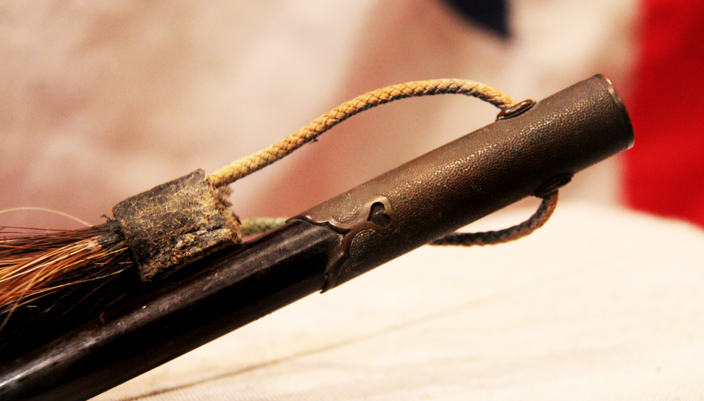
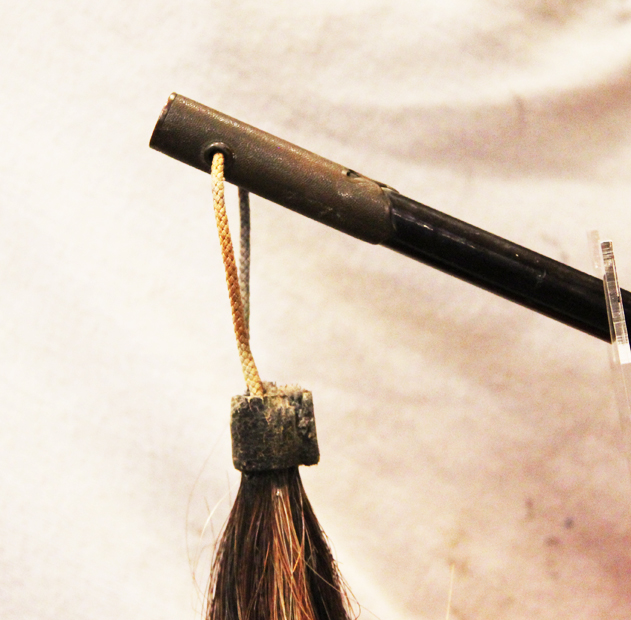
A Saihai, a most lightweight item of samurai warfare, and certainly a most innocuous looking instrument, despite being an important part of the control of samurai troop movements in combat, usually consisted of a lacquered wooden haft with metal ends.
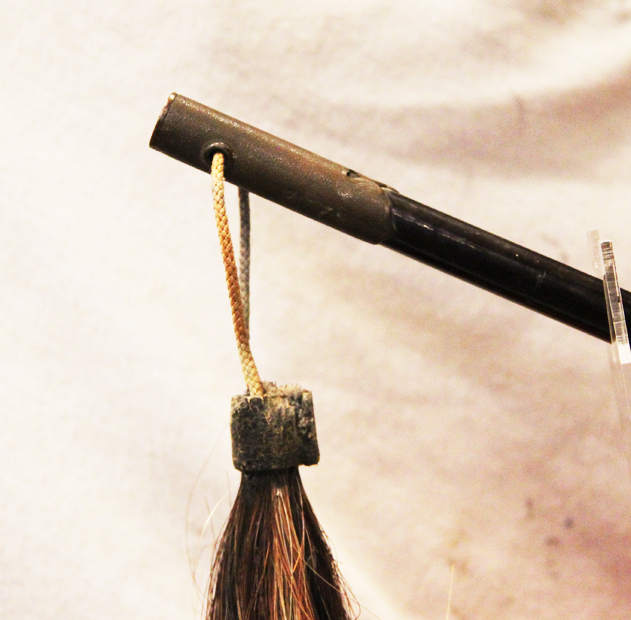
The butt had a hole for a cord for the saihai to be hung from the armour of the samurai commander when not being used. The head of the saihai had a hole with a cord attached to a tassel of strips of lacquered paper, metal, leather, cloth or yak hair
This example uses yak hair.
A saihai (采配) was a vital baton carried by high-ranking samurai commanders to direct troops and signal orders during the chaotic battles of feudal Japan.
A typical saihai consisted of a short, lacquered wooden baton (roughly 37 cm long) capped with ornamental metal ends, featuring a prominent, flowing tassel of washi paper, leather, cloth, or animal hair (like yak) attached to one end.
Commanders used it in several specific ways on and off the battlefield.
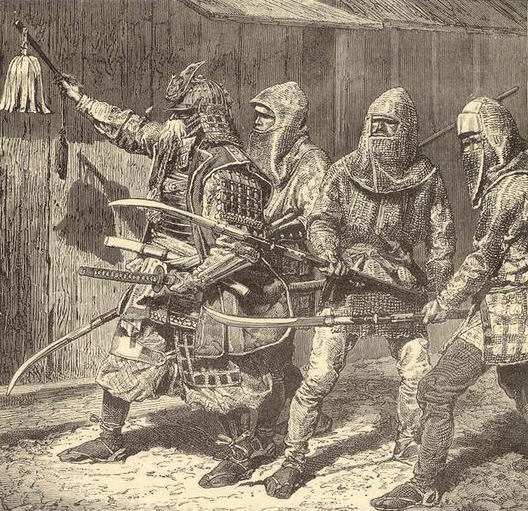
Commanders waved the saihai in various patterns to direct large troop movements. Because armies grew to massive sizes during the Sengoku period, commanders often directed the battlefield from the rear or elevated towers. Raising, lowering, or circling the highly visible tassel gave clear visual commands (such as ordering an advance, retreat, or flank).
When the commander aggressively whipped the saihai through the air, the stiff paper or leather tassel produced a sharp "crack" or snapping sound. This distinctive whip-like noise served as an auditory cue to alert nearby troops to look for the next visual command amid the din of war. Visually, the staff strongly resembled the shide (zigzag paper streamers) waved by Shinto priests in purification rituals. Waving the saihai also served as a symbolic prayer to the gods of war to bless their troops with victory.
Beyond its tactical function, it was an immediate marker of high status and authority, indicating a daimyo (lord) or general. When not in active use, the baton was hung from a small metal ring (saihai-no-kan) fixed to the left breast of the commander's armour.
By the peaceful Edo Period, the saihai evolved primarily into an accessory of prestige, power, and military legacy, often passed down through generations or presented as a distinguished gift
We show the lord Uesugi Kenshin holding his in an antique woodblock print in the gallery.
The saihai first came into use during the 1570s and the 1590s between the Genki and Tensho year periods. Large troop movements and improved and varied tactics required commanders in the rear to be able to signal their troops during a battle
Uesugi Kenshin (February 18, 1530 - April 19, 1578) would have used just such a sahai,
He was a daimyo who was born as Nagao Kagetora, and after the adoption into the Uesugi clan, ruled Echigo Province in the Sengoku period of Japan. He was one of the most powerful daimyos of the Sengoku period. While chiefly remembered for his prowess on the battlefield, Kenshin is also regarded as an extremely skillful administrator who fostered the growth of local industries and trade; his rule saw a marked rise in the standard of living of Echigo.
Kenshin is famed for his honourable conduct, his military expertise, a long-standing rivalry with Takeda Shingen, his numerous campaigns to restore order in the Kanto region as the Kanto Kanrei, and his belief in the Buddhist god of war Bishamonten. In fact, many of his followers and others believed him to be the Avatar of Bishamonten, and called Kenshin "God of War".
Code: 21517
650.00 GBP