
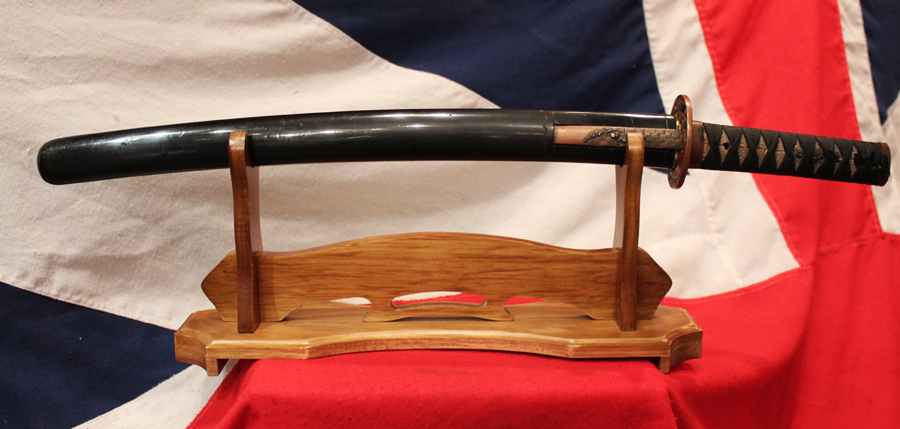
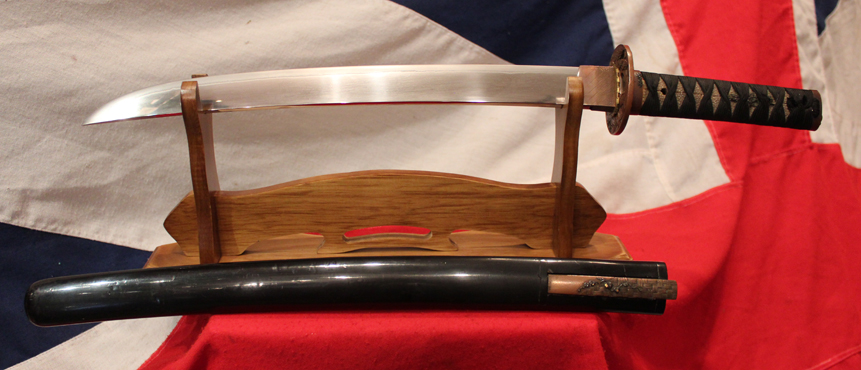
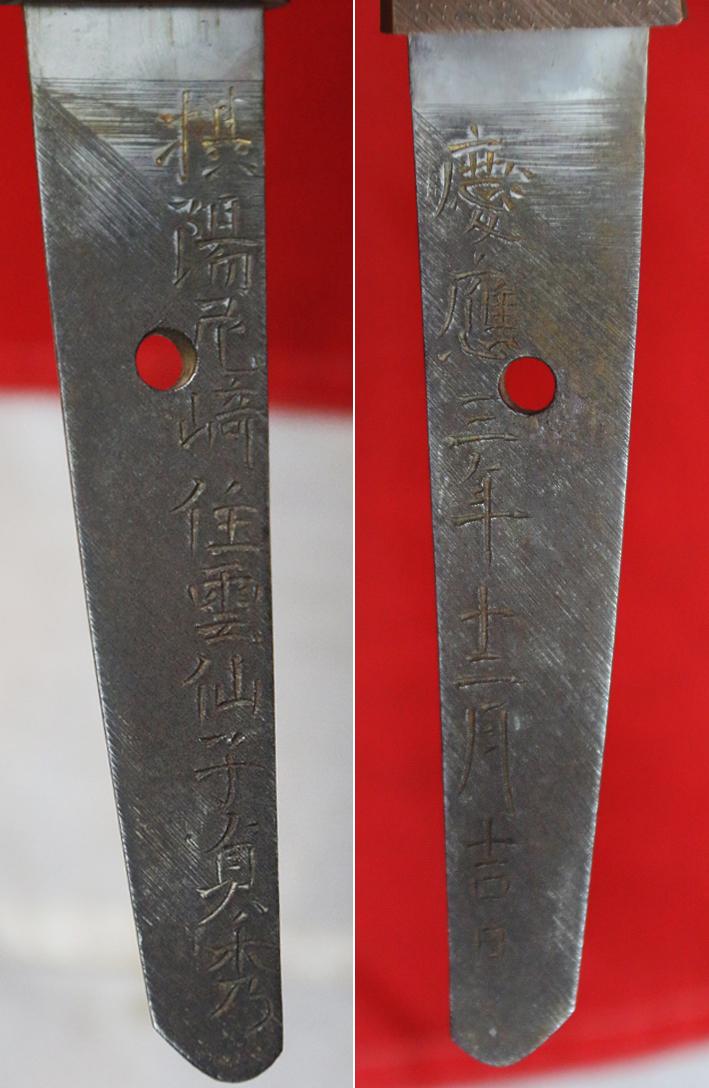
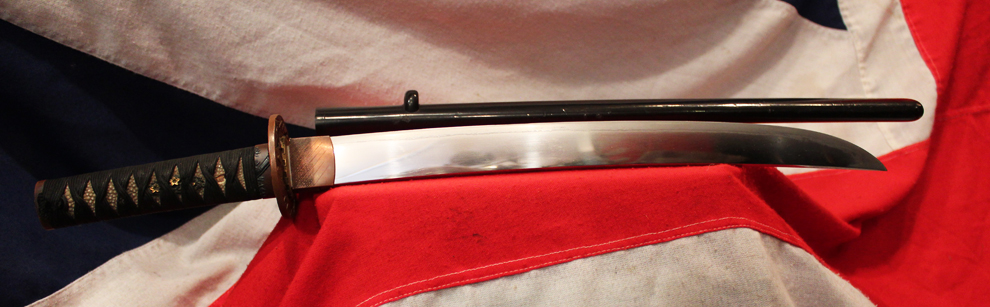
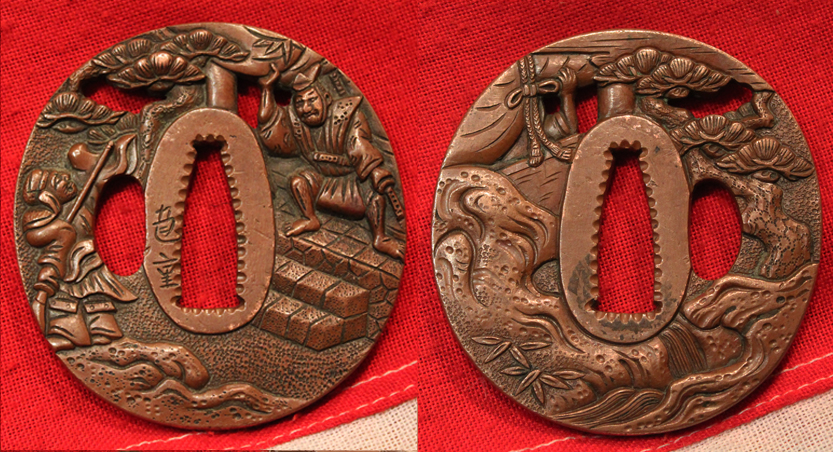
A Fabulous Wakizashi by Master Sadahide Student of Masahide Dated 1830
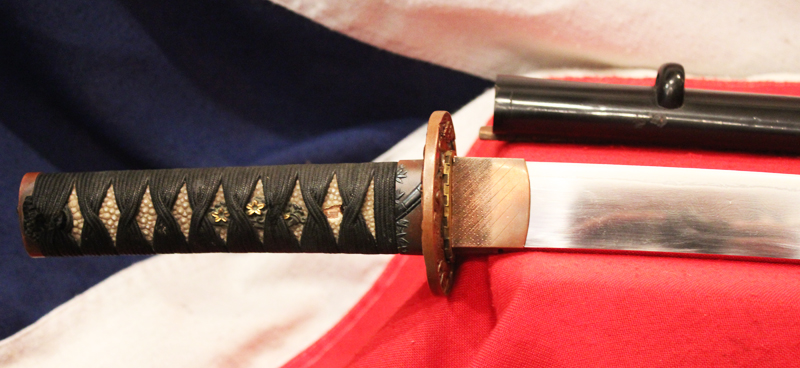
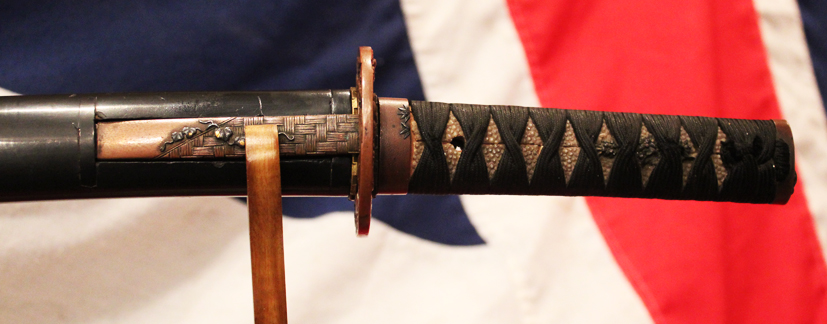
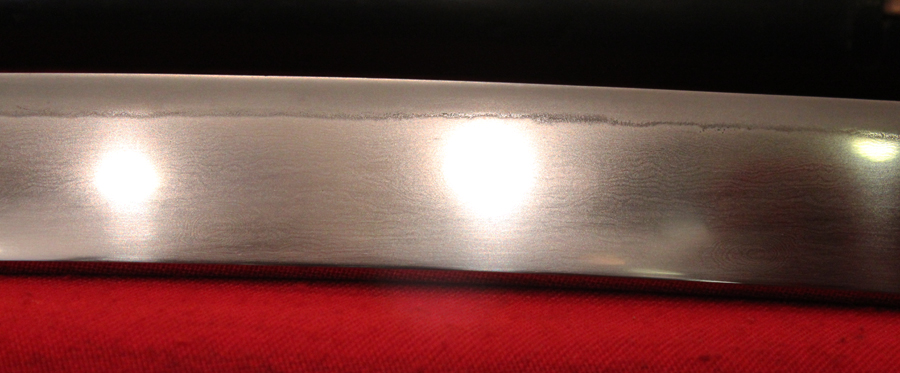
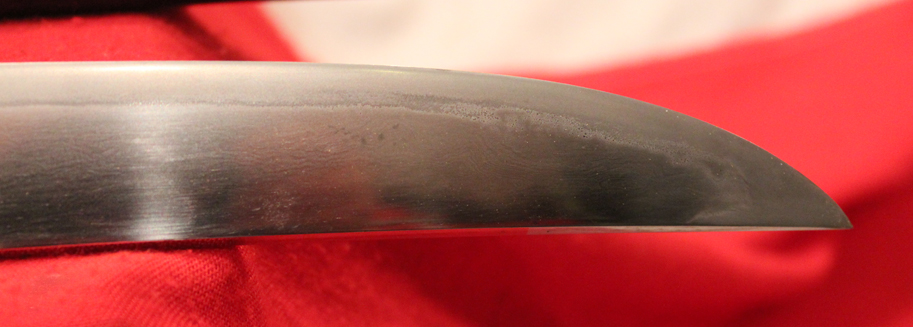
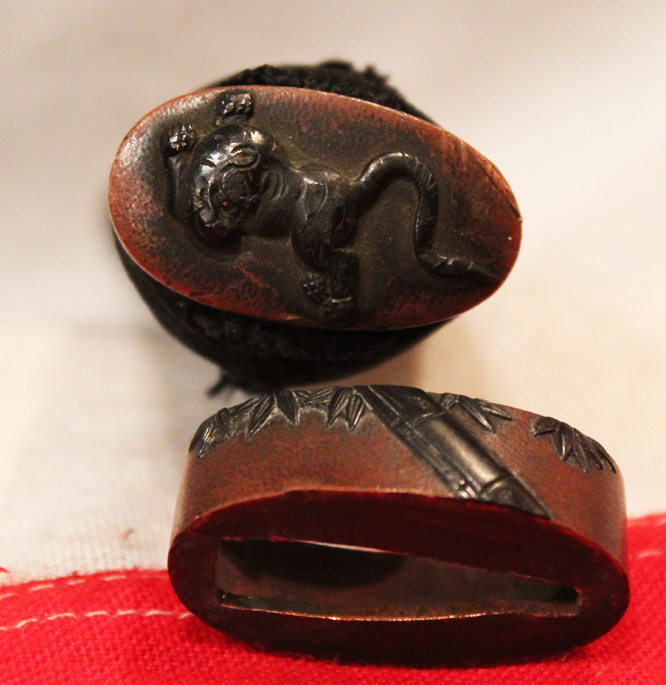
A simply wonderful wide and sizeable blade with fine hamon and incredible tight grain hada. Copper patinated fushi kashira of the ‘tiger in the bamboo grove’.
A very good signed copper tsuba with samurai. Original urushi black lacquer saya with fine kozuka utility knife.
As Sukehiro and Shinkai were highly praised by Kamada Natae in his book he wrote in this period swordsmiths begun to imitate their works making strong shape and Hamon in Toran-Ha. Swords in this period imitated the Osaka style.
Masahide ( one of most famous sword smiths in Shinshinto time ) advocated in his book that "we should make swords by the method of the Koto era." With this final aim swordsmiths begun to create their own steels trying to reach the quality of the ancient one. Combining materials which have different quantity of carbon, a good Jihada will appear. Therefore, swordsmiths used a lot of materials like old nails and the like to adjust the quantity of carbon to be suitable for swordmaking.
Even today this steel is called Oroshi-gane. As already said an easy way to produce Tamahagane was available in Shinto time and swordsmith could get good quality Tamahagane.
Therefore, it seems that most of them didn't make their own Oroshi-gane. But some swordsmiths like Kotetsu or Hankei followed Masahide suggestions and reached a top-quality level combining ancient iron/steel with modern one.
In effect Ko-Tetsu means "ancient steel".
Wakizashi have been in use as far back as the 15th or 16th century. The wakizashi was used as a backup or auxiliary sword; it was also used for close quarters fighting, and also to behead a defeated opponent and sometimes to commit ritual suicide. The wakizashi was one of several short swords available for use by samurai including the yoroi toshi, the chisa-katana and the tanto. The term wakizashi did not originally specify swords of any official blade length and was an abbreviation of "wakizashi no katana" ("sword thrust at one's side"); the term was applied to companion swords of all sizes. It was not until the Edo period in 1638 when the rulers of Japan tried to regulate the types of swords and the social groups which were allowed to wear them that the lengths of katana and wakizashi were officially set.
Kanzan Sato, in his book titled "The Japanese Sword", notes that the wakizashi may have become more popular than the tanto due to the wakizashi being more suited for indoor fighting. He mentions the custom of leaving the katana at the door of a castle or palace when entering while continuing to wear the wakizashi inside. Wakizashi were worn on the left side, secured to the obi waist sash. The Sengoku period Sengoku Jidai, "Warring States period") is a period in Japanese history of near-constant civil war, social upheaval, and intrigue from 1467 to 1615, straddling the end of the Koto era and into the early Shinto.
Exceptionally powerful 16inch blade
Code: 20552
5450.00 GBP