
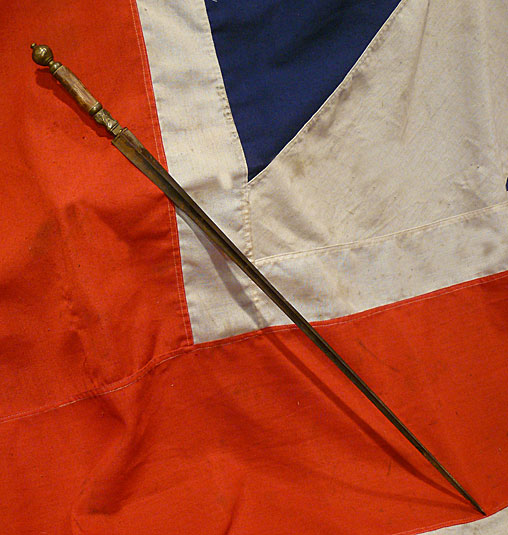
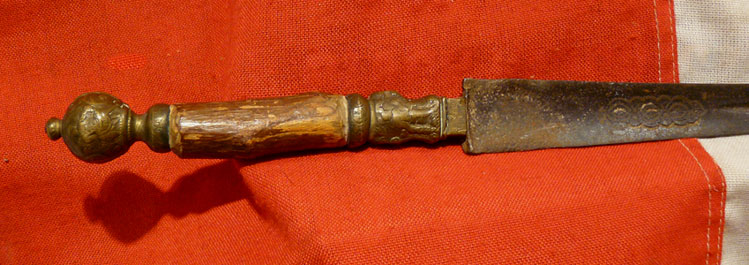
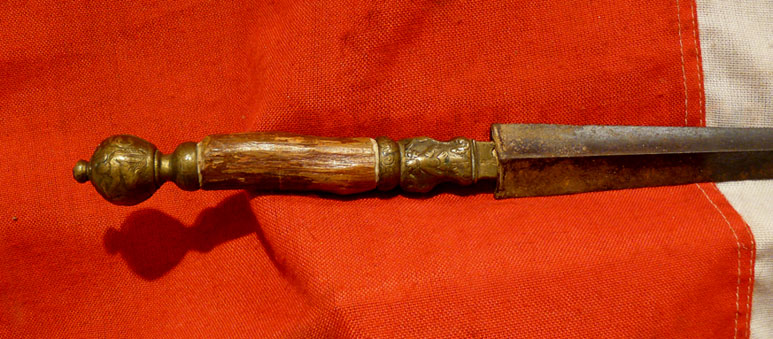
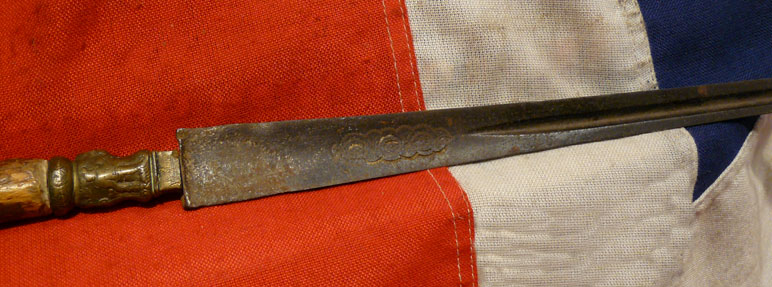
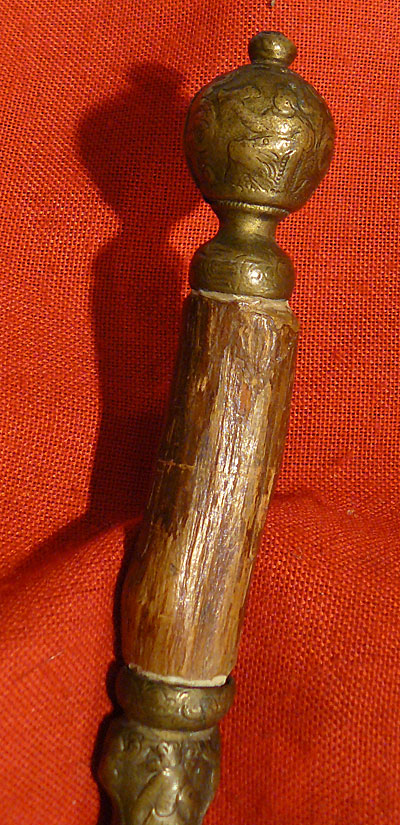
An Early 18th Century ‘Pillow’ Sword, Around 300 Years Old,. The Simplest of Sword Types Made, From The Era Of King George IInd, But None The Less Effective For That. Short Rapier Form Blade, Staghorn Grip Hilt
Cast brass hilt with relief figural decoration, and hawthorn wood grip. Steel rapier blade with engraving and deep fuller. Circa 1730. A pillow sword is a small, light 17th or 18th century European sword, often featuring a straight or triple-edged blade, designed as a compact personal weapon.
Popularly believed to be kept under a pillow for bedroom protection—hence the name—it was more likely a practical, stylish yet simple "town sword" worn daily, often associated with a waist sash. 17th to early 18th century status symbols and for personal defence, particularly in busy cities like Paris, Amsterdam, London, Seville, or Rome where long rapiers were thoroughly impractical, especially so at close quarter engagements. Interestingly the major cities of all countries have been scourged by forms of brigands and gangs since time immemorial. They often come out of nowhere and disappear just as fast. Paris, for example, was scourged from the late 19th century by gangs known as Apaches, silk scarf wearing members infamous for violent street crime. Glasgow in the 20th century had their version known as razor gangs, as did Brighton in fact, depicted in Graham Green’s famed novel Brighton Rock. In Graham Greene’s Brighton Rock (1938), the razor gangs represent a brutal,, pre-war criminal underworld operating behind the facade of a cheerful seaside resort. Led by the 17-year-old sociopath Pinkie Brown, these gangs—specifically the remnants of Kite’s gang—utilize violence, racketeering, and intimidation to control local racecourses. The razor is their signature weapon, symbolizing the sharp, sudden violence that defines their existence. * see below as how the razor gangs of Glasgow were stopped, literally over night!.
There has been a long held belief that the naming of the sword type was due to a flat sword that could be kept under the nobles pillow in order to make a rapid defence, during a nighttime’s slumber, against an assassin’s nefarious attack. There is no specific evidence to confirm this likely myth, however, as the saying goes ‘alls fair in love and war’, thus, if needs must, a flat ‘pillow’ sword would be the only form of sword that could be concealed at close quarter, and at instant reach, within the bedchamber, by a fearful potential victim.
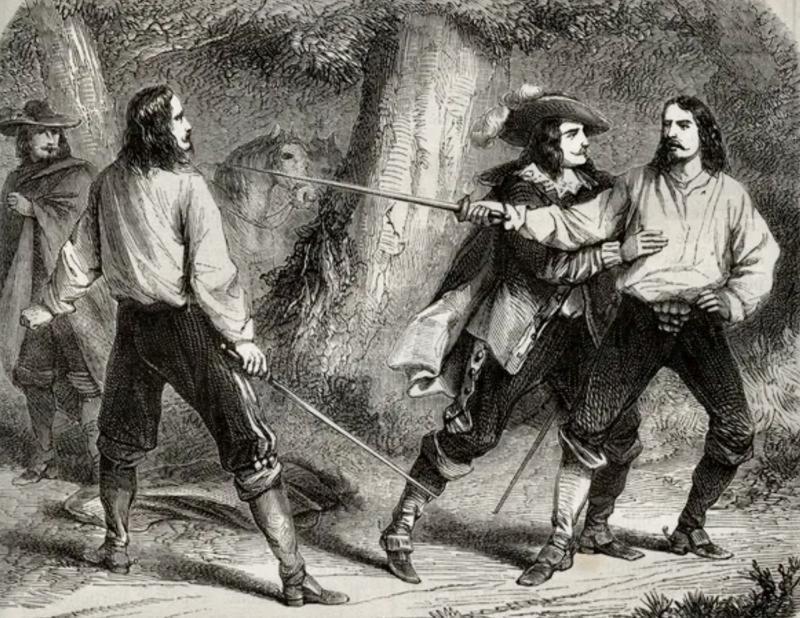
18th-Century Dueling: Noblemen of this period, such as those in France or Naples, frequently engaged in duels of honour, often using rapiers, daggers, or sabres to settle disputes, sometimes over trivial matters
These weapons featured smaller hilts, sometimes with a single side-ring, or none at all, making them far less cumbersome than full-sized rapiers. Many examples may or may not include cross-guards and plain wooden or wire-bound wooden grips. Often the simpler the better, and one couldn’t get more simple than this example. However, the pommel and quillon block are very nicely decorated in relief classical Romanesque figures, a jolly nice touch of quality.
29.75 inches long overall
* The Scottish judge credited with curtailing the Glasgow razor gangs through exceptionally harsh sentencing in the 1950s was Lord Carmont (John Carmont).
In 1952, Lord Carmont, a Senator of the College of Justice, went to the High Court in Glasgow specifically to address the surge in violence.
The Act: He warned that future sentences for carrying or using razor blades would be severe, then followed through by handing down prison sentences of up to 10 years for members convicted of inflicting injuries.
"Copping a Carmont": His actions were so successful and punitive that "copping a Carmont" or "doing a Carmont" became synonymous in the underworld and press for receiving a long, tough prison sentence for knife crime.
The Result: One week later, the Glasgow police reported their first weekend since the war without a single slashing attack.
Please note UK lawmakers how history has much to teach the incredibly ineffective law enforcers of today. Violent crime abounds in British cities today, yet in direct proportion reciprocal punishments are diminishing to the level of near non existence.
One of our oldest regular visitors, a London resident all his long life, remarked that he felt safer in London during the Blitz, when it was being razed to the ground by Hitler’s Luftwaffe night after night, than he does today!
Code: 13663
395.00 GBP